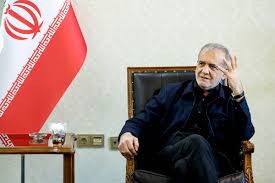
Iranian President Masoud Pezeshkian indicated on Monday that his country might return to the negotiating table with the United States for another round of peace talks in Islamabad, Pakistan. This comes despite Tehran's sharp criticism of what it calls Washington's contradictory diplomatic behavior and military aggression.
The potential for renewed dialogue follows a previous unsuccessful round of talks in the Pakistani capital. Iranian officials have publicly accused the US delegation, operating under the Trump administration, of undermining those discussions with unrealistic demands and shifting positions.
"While claiming diplomacy and readiness for negotiations, the US is carrying out behaviors that do not in any way indicate seriousness in pursuing a diplomatic process," said Iranian Foreign Ministry spokesperson Esmail Baghaei. He pointed specifically to a recent US military operation that involved seizing an Iranian-flagged cargo ship in the Gulf of Oman.
In a social media statement, President Pezeshkian criticized "unconstructive and contradictory signals" from US officials. "Honoring commitments is the basis of meaningful dialogue," he wrote, adding that Iranians hold a "deep historical mistrust" of the US government due to its past actions. "They seek Iran's surrender," Pezeshkian asserted. "Iranians do not submit to force."
US Threats and Regional Economic Shockwaves
The diplomatic maneuvering occurs against a backdrop of continued US military threats. US President Donald Trump warned that if a ceasefire expires without a deal, "lots of bombs start going off." He has previously threatened to destroy Iranian civilian infrastructure, including power plants and bridges—a move legal experts have labeled a potential war crime under international law.
The conflict's most significant impact on the Indo-Pacific region stems from Iran's effective closure of the Strait of Hormuz, a critical maritime chokepoint. The blockade has choked off approximately 20% of global petroleum shipments, with the effects being felt most acutely in East Asia.
Supply shortages are creating a ripple effect that threatens global economic stability. Analysts warn of months of canceled flights, surging food prices, factory pauses, and delayed shipments for a vast array of goods, from microchips and sportswear manufactured in China, Vietnam, and South Korea to vaccines and instant noodles.
"Even if the Strait of Hormuz stabilizes tomorrow, it could take years for oil and gas output and shipping to reach prewar levels," noted a recent analysis. Bob McNally, president of Rapidan Energy Group, explained that restarting Gulf production alone could take three to four months, with repairs to damaged facilities taking longer. The economic strain is a direct concern for major Asian economies like Japan, South Korea, and India, which are heavily reliant on energy imports through the strait.
This regional economic vulnerability underscores why Chinese officials have previously called for renewed US-Iran talks, seeking stability in a key shipping lane.
Domestic US Discord and Global Consequences
Within the Trump administration, discord is evident regarding the conflict's economic fallout. Energy Secretary Chris Wright suggested US gasoline prices might not fall below $3 per gallon until next year, a projection President Trump publicly dismissed as "totally wrong," insisting prices would plummet immediately after a peace deal.
Independent economists side with the more cautious outlook. Mark Zandi, chief economist at Moody's Analytics, projected continued financial pain for consumers. "It doesn't look like gasoline prices will return to pre-war levels anytime soon," Zandi wrote, noting that higher costs for groceries and airfare will further strain household budgets in the coming months.
The prolonged instability supports analysis suggesting the US-Iran-Israel conflict is likely to settle into a protracted stalemate, with ongoing repercussions for global trade routes that are vital to Asia's export-driven economies. The situation remains fluid, with Iran's final decision on attending the Islamabad talks pending as the ceasefire deadline approaches.



