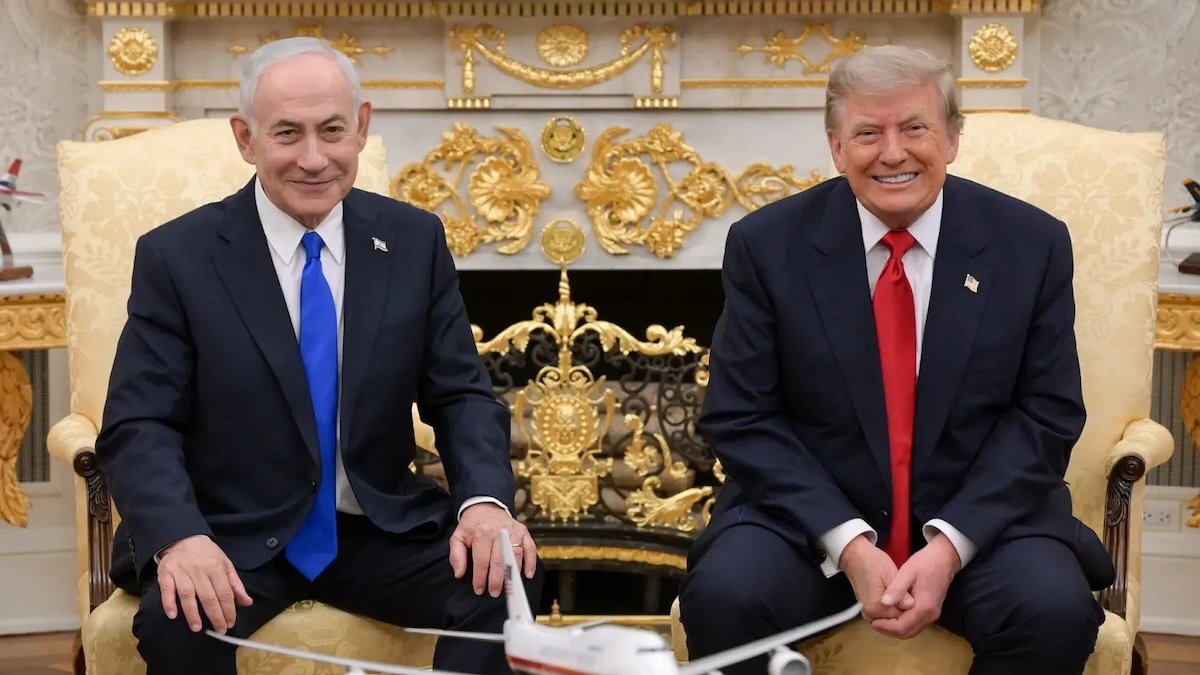
During a recent visit to Washington, a senior Israeli official—widely believed to be Prime Minister Benjamin Netanyahu—briefed the accompanying press delegation on plans for Israel to develop its own stealth fighter jet and an unmanned combat aerial vehicle (UCAV). The stated goal is to reduce Israel's dependence on foreign suppliers for its most critical military hardware, a concern sharpened by recent export suspensions from the UK and disruptions from France, as well as past delays from the United States.
Netanyahu has indicated a timeline of about ten years for the project. However, Israel's history with domestic fighter programs offers a cautionary tale. The Nesher and Kfir were successful, but the Lavi—a more ambitious fourth-generation-plus design—was cancelled in 1987 after costs spiraled and threatened other vital military priorities.
The Legacy of the Lavi
The Lavi program, which began in the early 1980s, was meant to produce an all-weather multirole fighter. But it quickly became a financial black hole, consuming more than half of US foreign assistance funds to Israel during that period. Internally, the Israeli army opposed the Lavi because it was diverting resources from projects like the Merkava tank and air defense systems. Meanwhile, US aerospace companies, fearing a low-cost competitor to the F-16 and F-18, lobbied the Pentagon and the Reagan administration to cut funding. In 1987, the Israeli cabinet voted 12 to 11 (with one abstention) to cancel the program.
Despite the cancellation, the US never stopped providing parts and equipment for the Lavi. Later, it was alleged that Israel sold Lavi technology to China, where it may have influenced the J-10 fighter program. The cancellation remains a sore point for many in Israel's defense establishment, who see it as a missed opportunity that damaged the country's aerospace industry.
Supply Chain Vulnerabilities
The push for self-reliance is driven by real experiences. The Obama and Biden administrations both suspended or delayed deliveries of Hellfire missiles, bombs, JDAM kits, tank ammunition, and helicopters to Israel. The UK recently halted about 30 export licenses, including parts for the F-16. France has interfered with supply chains and blocked Israeli access to major defense exhibitions like Eurosatory and the Paris Air Show. Even within the Trump administration, Vice President J.D. Vance has made hostile statements that alarmed Israeli officials.
These incidents underscore a fundamental vulnerability: Israel's advanced military depends on foreign components, especially engines and avionics. Any new stealth fighter or UCAV would require a propulsion system from the US or Europe, with the US the most likely supplier. That would put Israel in direct competition with American giants like Lockheed Martin, Boeing, and General Dynamics, potentially necessitating a joint venture or export restrictions to appease Washington.
The UCAV Alternative
Given the immense cost and technical challenges of a manned stealth fighter, a UCAV may be a more realistic option. Israel already operates advanced drones in conjunction with its F-35 fleet, and a UCAV offers advantages such as higher G-load tolerance and improved stealth by eliminating the cockpit canopy. Israel has strong expertise in combat experience, artificial intelligence, and systems integration, but it would still need a US power plant.
The US is already developing its own "Loyal Wingman" Collaborative Combat Aircraft, slated for initial operation around 2030. This program is designed to enhance the F-35's lethality and support the future NGAD sixth-generation fighter. Israel's UCAV would need to find a niche or partner with US industry to avoid being redundant.
Ultimately, Israel lacks the resources, manufacturing depth, and financing to simultaneously develop a stealth fighter, a UCAV, and maintain its existing programs. The country's major defense firms—IAI, Elbit, and Rafael—are already stretched thin with current orders and security demands. A new fighter project would strain the economy and could jeopardize other critical capabilities like air defense and smart weapons.
For now, the stealth fighter remains an aspiration rather than a concrete plan. Israel's strategic dilemma is not unique in the region; South Korea faces similar questions about balancing alliance dependence with autonomous defense. And as the US races to build up its own forces in the Indo-Pacific, the question of who supplies whom becomes ever more complex. Israel's next move will be watched closely, both by its allies and its adversaries.