On April 1, China's National Bureau of Statistics released updated GDP per capita rankings for provinces and municipalities, revealing a quiet but significant geographic realignment. Jiangsu and Zhejiang now occupy first and third place respectively, while Guangdong—long the undisputed leader—has slipped to fourth. Two decades ago, the order was reversed: Guangdong dominated, with its southern neighbors trailing far behind.
The trend is even starker at the city level. In 2005, nine cities from Guangdong ranked among the top 25 by GDP per capita. By 2025, only three remain. Meanwhile, Jiangsu's count has risen from five to seven, and Zhejiang's from two to four. Shenzhen, once the nation's richest city, has fallen from first to sixth; Guangzhou dropped from eighth to twenty-second.
All three provinces remain among China's most developed regions, beneficiaries of the post-1978 reform era that prioritized manufacturing and export-led growth along the eastern seaboard. Guangdong pioneered this model through special economic zones like Shenzhen and Zhuhai, leveraging proximity to Hong Kong and Macao. Yet the engine of growth is now moving north.
From Factory Floor to Lab Bench
Guangdong's manufacturing success gave rise to global giants: Huawei in telecommunications, DJI in drones, Tencent in digital services, and BYD in batteries and electric vehicles. But China's cutting-edge startup scene has shifted decisively to the Yangtze River Delta. The latest five-year plan, released March 12, makes the new centers of gravity explicit.
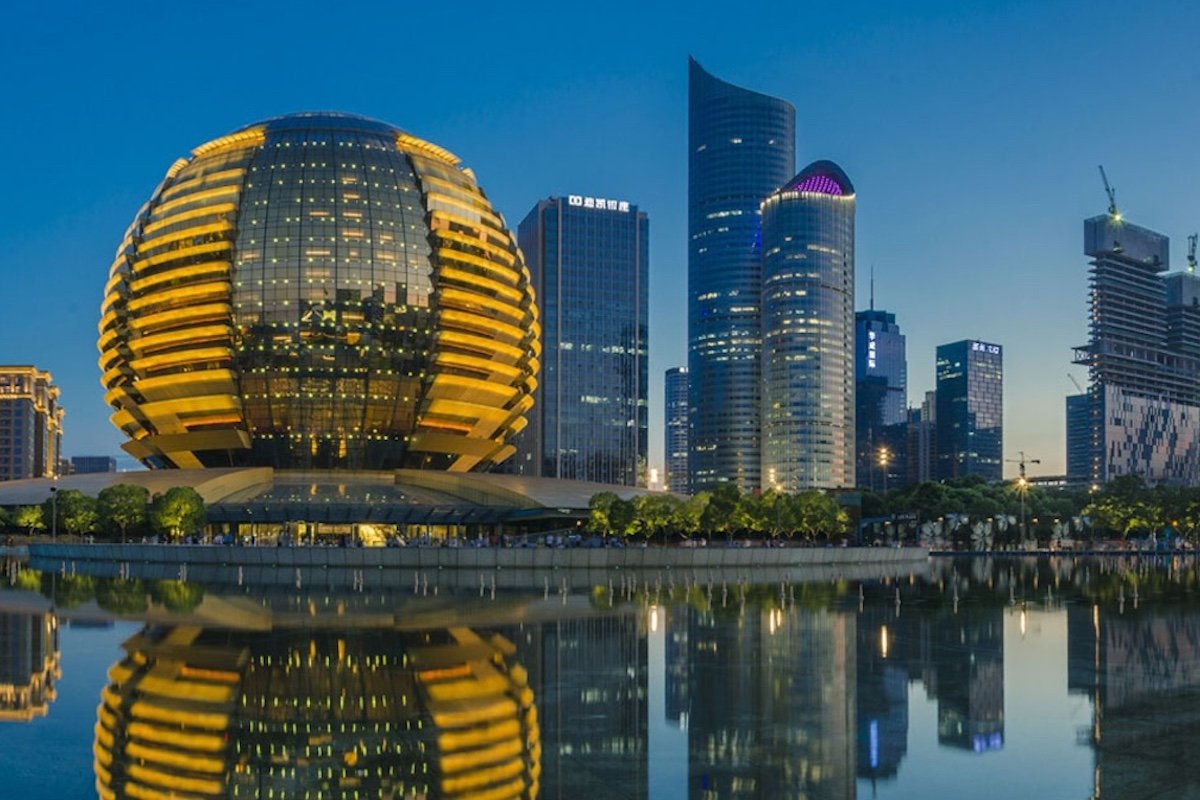
In artificial intelligence and robotics, Hangzhou—Zhejiang's capital—leads with local champions DeepSeek and Unitree, backed by hometown tech giant Alibaba. In biomanufacturing, national champion WuXi Biologics operates facilities in Hangzhou, Suzhou (which jumped from 25th to 7th place), and Wuxi (from 11th to 5th).
This divergence in high-tech entrepreneurship may be partly explained by educational infrastructure. Last March, The Economist profiled Zhejiang University, concluding that its presence is instrumental in turning Hangzhou into a startup hub—much as Stanford has done for Silicon Valley. University rankings consistently place Zhejiang University and Nanjing University—located in Jiangsu's capital Nanjing (31st to 11th)—alongside several institutions in nearby Shanghai and Anhui province among China's top ten. Guangdong has no entries.
Centuries in the Making
The educational advantage Jiangsu and Zhejiang hold over Guangdong has deep historical roots. Since the Southern Song Dynasty, Jiangnan—the region encompassing the southern bank of the Yangtze River, spanning parts of Jiangsu and Zhejiang—has been China's premier cultural and economic hub. Its agricultural productivity and trade networks fostered artistic and intellectual achievement, creating a tradition of scholarship that persists today.
In contrast, Lingnan, which encompasses modern-day Guangdong, was historically open to seaborne trade but remained culturally distant from the rest of China due to geographic isolation. Both regions have strong commercial traditions, but Jiangnan's intellectual heritage may give it an edge in producing the talent needed to push the technological frontier.
As Jiangsu and Zhejiang forge ahead economically, they may reclaim their role as China's cultural center. In the 1980s and '90s, Cantonese pop culture spread across China, buoyed by Hong Kong's prosperity, giving the province's native tongue unprecedented cachet. But that prestige has declined markedly as Hong Kong's economic standing has diminished. Meanwhile, Shanghai's rise as an economic powerhouse has elevated the profile of Jiangnan's local vernacular as a countercultural force—the formerly marginalized language is reasserting itself in the public sphere against the nationwide push for Mandarin.
Of course, it is not a foregone conclusion that the broader economic and cultural shift from Guangdong to Jiangsu and Zhejiang will continue. Much will depend on the success of individual entrepreneurs and their firms, wherever they may be located. Global demand for Chinese goods and services can shift quickly, shaped by ongoing restrictions on Chinese imports worldwide. But examining regional differences serves as a reminder that China is far from monolithic in its future economic trajectory. For a deeper look at how China's tech ambitions compare with global rivals, see our analysis of US and Chinese AI strategies.