While much of the world's attention is fixed on high-profile US midterm races in Michigan and Texas, defense planners would be wise to track a smaller but strategically vital contest in the Pacific. The Commonwealth of the Northern Mariana Islands (CNMI) is electing a new governor, attorney general, and a delegate to the US Congress, with the governor's race shaping up as a referendum on Beijing's murky influence in America's Asian frontier.
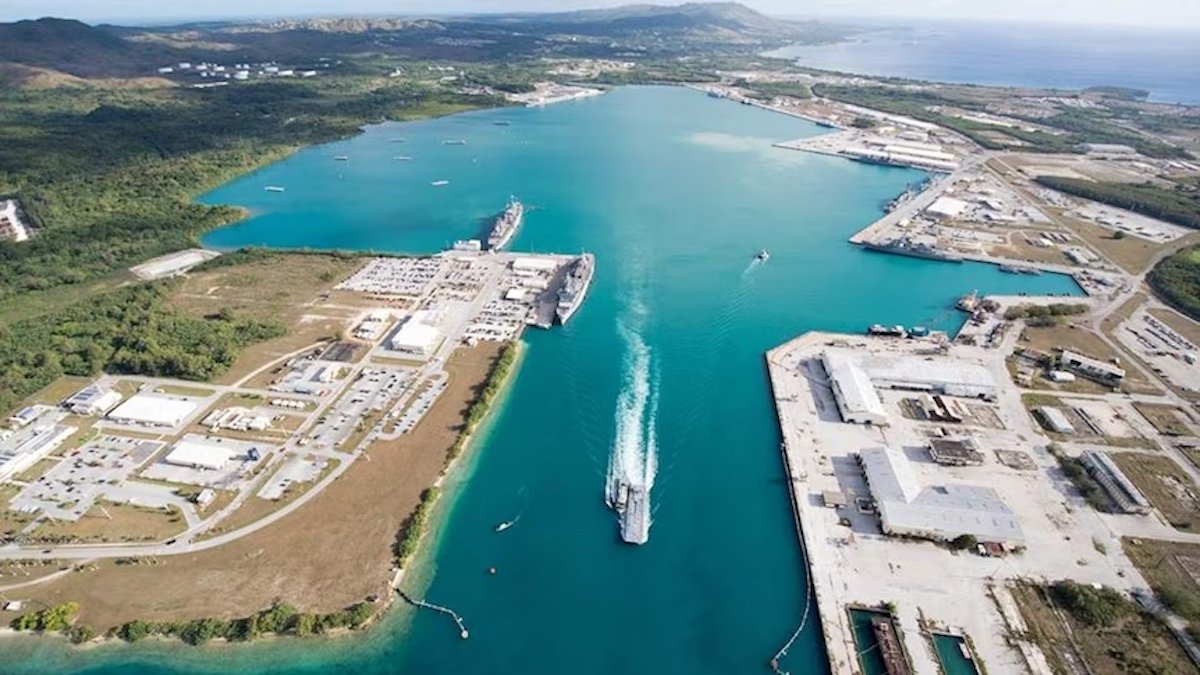
With a population of roughly 50,000, CNMI might seem insignificant. But its geography tells a different story. Saipan, the main island, sits about eight hours' flight west of Honolulu and just four hours from Taiwan. To the south lies Guam, another US territory; to the north, CNMI shares a maritime boundary with Japan. The archipelago forms the heart of the so-called Second Island Chain, a strategic arc that also includes Japan, the Philippines, and Taiwan.
The US military has been quietly reinforcing its presence here. The Air Force's Agile Combat Employment concept and the Navy's Distributed Maritime Operations doctrine both rely on dispersed bases across the region. On Tinian, the military is refurbishing World War II-era airfields, while Saipan and neighboring islands are being used for logistics and training. These efforts are part of a broader push to ensure the US can operate effectively even if its main bases in Japan and Guam come under threat.
China, for its part, has long recognized the region's importance. Over decades, Beijing has used a mix of strategic investments and political influence to expand its footprint across the Pacific, including in CNMI. The most visible vehicle was Imperial Pacific International (IPI), a Chinese-linked casino operator that arrived in Saipan in the early 2010s with promises of economic salvation. IPI's owners spread millions of dollars across the islands, including land deals at inflated prices to the family of then-Governor Ralph Torres, according to Bloomberg reporting.
Torres, who initially opposed granting IPI a gaming license, changed his stance after a 'fact-finding' trip to China. While its main casino was under construction, IPI operated a temporary casino in a shopping mall and reportedly moved US$2 billion a month—a figure industry experts call implausible. Such capital flows, they note, would require Chinese government approval, suggesting the operation was more than a simple business venture.
The IPI casino shut down around 2020 and filed for bankruptcy in 2024. But a new Chinese company, reportedly posing as Japanese, has acquired IPI's assets with the help of a former executive, signaling another attempt to gain a foothold. The FBI launched an anti-corruption probe in 2019, raiding IPI and Torres' offices amid reports of labor violations and other abuses.
Beyond the casino, the Torres administration has faced scrutiny over its handling of over a billion dollars in US Covid recovery funds. Limited audits by Ernst & Young flagged $349 million in doubtful spending, including $4,000-an-hour janitorial services linked to a Torres-connected company. No comprehensive accounting has ever been provided, and the territory remains in severe financial distress.
Now, the same political clique that welcomed IPI is seeking a return to power. Ralph Torres is again running for governor, with his brother vying for attorney general. Their campaign insists there is no alternative to Chinese investment and tourism, even though South Korea has consistently sent more visitors to CNMI than China. Until recently, CNMI was the only US territory where Chinese citizens could enter without a visa, a privilege that has since been revoked.
The stakes extend beyond local corruption. As billionaire cash reshapes US politics, the CNMI race offers a case study in how foreign influence can operate through commercial proxies. China's National Intelligence Law compels all citizens and organizations to support state intelligence efforts, blurring the line between business and statecraft. The result, as seen in Saipan, is a form of influence that aims to weaken ties to Washington and create dependency.
The outcome of this election will signal whether CNMI voters are ready to reject that influence or embrace it once more. For US defense planners, the answer could determine the reliability of a critical link in the Pacific's defense chain. As allies bolster deterrence elsewhere, the Marianas remain a quiet but pivotal front.