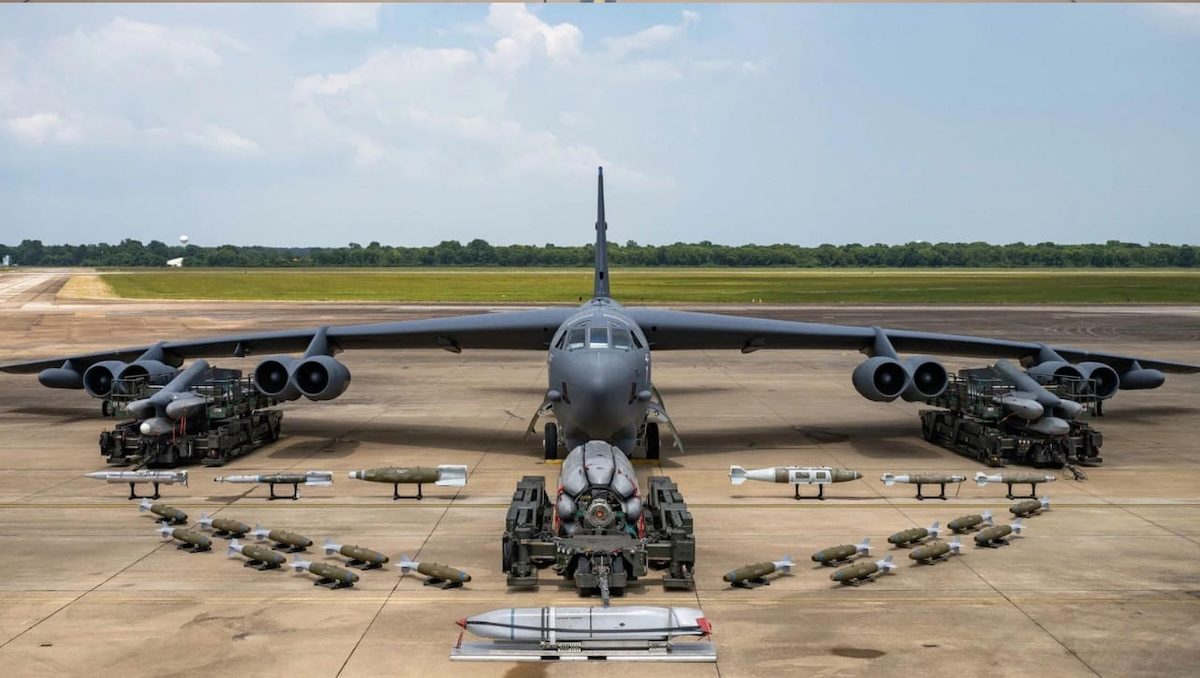
In early March, a series of unexplained drone incursions over Barksdale Air Force Base in Louisiana has raised serious questions about the security of America's nuclear deterrent. The base, which houses B-52H strategic bombers capable of carrying nuclear weapons, was repeatedly penetrated by unidentified drones over a week-long period. The sophistication of the drones and their ability to evade countermeasures suggest a state-level intelligence operation, with China emerging as the most likely suspect.
Timeline of Intrusions
According to data compiled from open sources, the first incident occurred on March 8, when a single high-altitude drone crossed the base perimeter late at night and maneuvered over weapon storage areas. The following night, between 3 a.m. and 7 a.m., 12 to 15 drones appeared over the flight line in waves, staying for roughly four hours. Their lights were on, and they forced a complete halt to air operations and loading work, with personnel ordered to shelter in place.
From March 10 to 13, smaller groups of three to five drones appeared intermittently between 10 p.m. and 2 a.m., flying in racetrack patterns along the base's northern and southern boundaries. On March 15, a final formation was detected moving at high speed toward the Bossier City side of the base before vanishing from radar.
Witnesses described the drones flying at around 1,000 feet, visible from the ground and tracked on radar. Despite being photographed, no images have been released, and the drone type remains unknown. The drones' endurance—some stayed aloft for four hours—suggests they were not typical commercial quadcopters, which are limited to about 90 minutes of flight. They likely used frequency-hopping radios and encryption, making jamming ineffective. Personnel equipped with handheld electronic jammers failed to disrupt them.
This incident is part of a broader pattern of suspected Chinese intelligence-gathering aimed at neutralizing U.S. nuclear capabilities. China has long sought to understand and counter the U.S. nuclear triad—bombers, land-based missiles, and submarines—which underpins American strategic deterrence. The drones' ability to loiter over sensitive areas and evade countermeasures indicates a level of sophistication that points to state sponsorship.
Barksdale is home to the 2nd Bomber Wing and the 307th Bomber Group, both operating B-52H aircraft. The B-52 is a dual-capable bomber, carrying conventional munitions like the AGM-158 JASSM and nuclear weapons such as the AGM-86B air-launched cruise missile. The base is also undergoing a modernization program, with new Rolls-Royce F130 engines and AESA radar, but the B-52J variant will not be fully operational for at least a decade.
The incursions come amid heightened tensions over nuclear deterrence in the Indo-Pacific. China's nuclear arsenal is expanding, and Beijing has conducted nuclear response drills amid rising Taiwan Strait tensions. Meanwhile, North Korea is advancing its sea-based deterrent with new destroyer tests, and India's INS Aridhaman submarine bolsters its credible sea-based nuclear deterrent. These developments underscore the growing complexity of nuclear security in the region.
Some initial speculation suggested the drones might be part of a U.S. government test of base defenses. However, this theory is weak: the Pentagon is well aware of the limited air defense capabilities at domestic bases, and the incursions occurred when B-52s were needed for potential wartime operations. The drones' behavior—systematic mapping of weapon storage areas and flight patterns—points to intelligence collection rather than a drill.
The failure of jamming countermeasures is particularly concerning. Many Chinese companies produce software-defined radios and frequency-hopping components commercially, which could be adapted for military drones. The drones may have used autonomous navigation with terrain recognition or satellite links via Starlink or other services, storing data onboard or transmitting it in real time.
This episode highlights a critical vulnerability in U.S. homeland defense. Unlike overseas bases, domestic installations lack air defense systems, making them soft targets for drone surveillance. As the U.S. military grapples with the challenge of cheap drones—a dilemma seen in conflicts like Iran's use of low-cost drones—the Barksdale incursions suggest that adversaries are exploiting this gap.
For the Indo-Pacific, the implications are clear: the security of America's nuclear triad is directly linked to regional stability. If adversaries can compromise U.S. nuclear forces through espionage, it could embolden aggressive actions in the Taiwan Strait, the South China Sea, or the Korean Peninsula. The U.S. must urgently reassess its domestic base defenses and invest in counter-drone technologies to protect its strategic assets.