The opening exchanges between Donald Trump and Xi Jinping in Beijing suggest a mutual desire to stabilize the world's most consequential bilateral relationship. Xi's remark that the United States and China "should be partners not rivals" was tempered by a pointed warning over Taiwan, but the overall tone was conciliatory. The Chinese leader also signaled expanded market access for American firms, setting the stage for a summit that both sides can present as a success—avoiding a trade war and opening the door to cooperation on global crises such as the conflict in Iran.
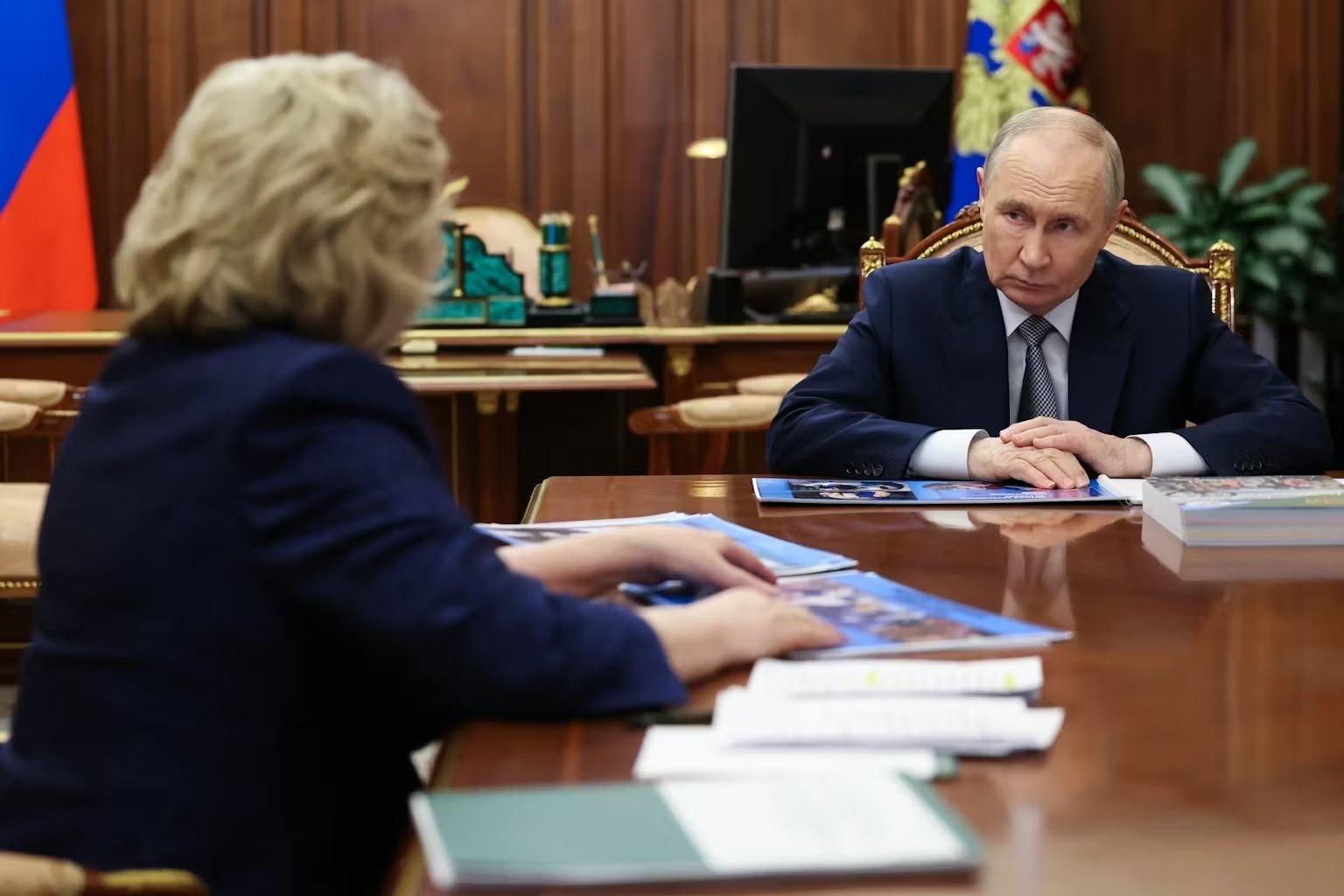
For Russian President Vladimir Putin, this rapprochement is deeply unsettling. Putin's grand strategy has long relied on Moscow being either indispensable to Washington and Beijing or disruptive enough to extract concessions. A more predictable US-China dynamic erodes both options. The Kremlin's relevance is shrinking, and its leverage is slipping away.
Putin's Diminished Hand
Russia's war in Ukraine, once a central preoccupation for the United States, has receded as a priority. Trump's key interlocutors in peace talks, Steve Witkoff and Jared Kushner, are now focused on Iran. Putin's April 29 phone call with Trump reportedly yielded little: his offer to take Iran's highly enriched uranium to Russia was rebuffed, with Trump telling him to concentrate on ending the war in Ukraine. Days later, the Kremlin scaled back its annual Victory Day parade in Moscow, citing fears of Ukrainian drone strikes.
On the Chinese side, the picture is equally troubling. Xi and Putin last met face-to-face in September 2025, and have held only one video conference since. A Kremlin statement during the Trump-Xi summit that Putin would visit China soon reads more like a plea than a plan. The Trump-Xi summit is a party to which Putin was not invited.
Leverage with Risks
Putin is not without cards. Russia remains central to the wars in Ukraine and Iran, global energy security, and the future of the international order. The Iran conflict, in particular, benefits Moscow: it disrupts energy flows, keeps oil and gas prices high, and diverts US arms from Ukraine. Russia has expanded support for Iran with intelligence, cyber aid, and unjammable drones. While this may not enable Tehran to win, it prolongs the war and raises costs for the US and its allies—a dynamic that frustrates Trump, who faces domestic pressure to end the conflict.
Yet exercising this leverage carries risks, especially where Chinese and American interests align. Beijing has helped Iran bypass Western oil sanctions, but its relationship with Washington is far more important. China's preference tilts toward ending the Iran war rather than prolonging it. As Trump's Taiwan arms sales discussion with Xi signals a policy shift, Beijing's calculus becomes even clearer: stability with the US outweighs solidarity with Tehran.
This does not mean China and the US will align against Russia. The Sino-Russian "no-limits partnership" remains deep, if increasingly asymmetric. Both share anti-American and anti-Western sentiments. Trump's transactional foreign policy—his urge to make deals rather than pursue a consistent strategy—offers Moscow openings. Ahead of the summit, Kremlin spokesman Dmitry Peskov suggested that if the White House decouples trade from the Ukraine war, "the path to the implementation of a whole range of economic projects will be open." Moscow is acutely aware of the need to offer Washington something Beijing cannot.
Still, the summit's outcome underscores Putin's declining influence. His efforts to position Russia as a great power, restoring Soviet-era status, have largely failed. The US and China are moving toward better-managed relations, and Putin's attempts to make his presence felt have been rebuffed. This does not mean he will give up—but it does mean his room for maneuver is narrowing.