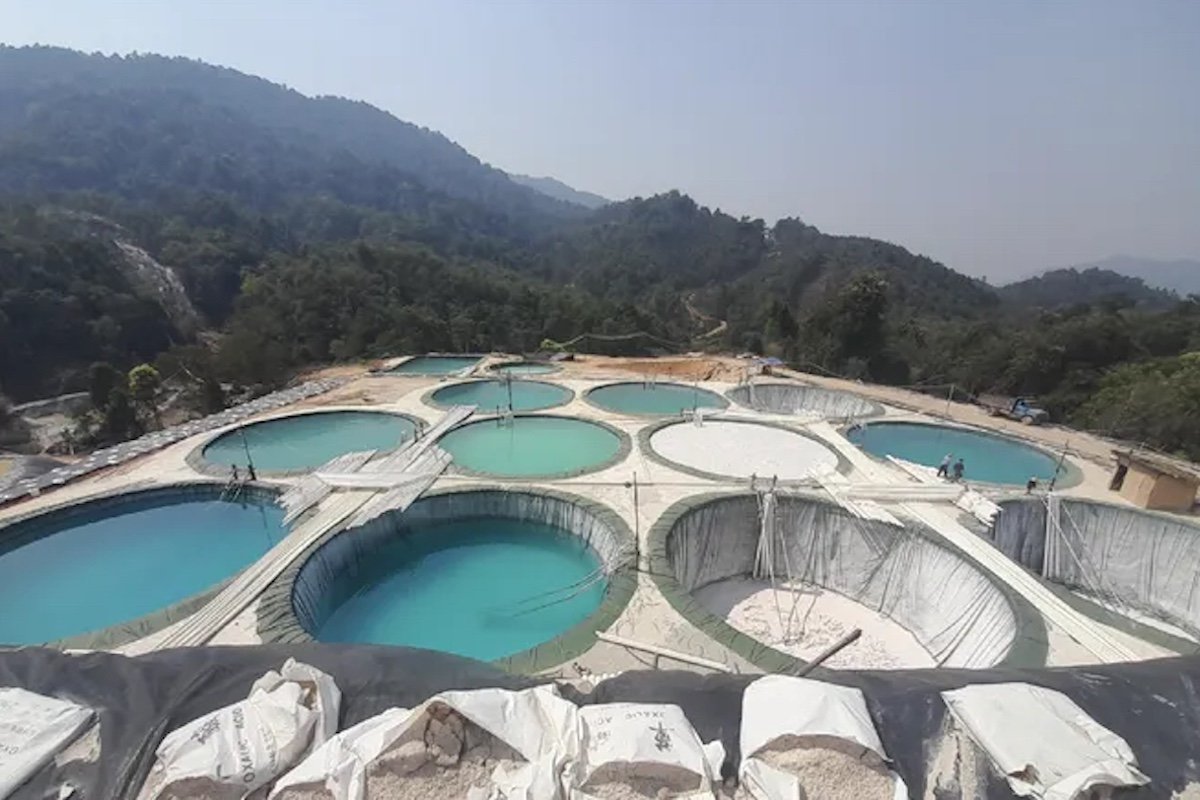
The strategic competition for critical minerals in the Indo-Pacific is exposing a fundamental disconnect: the most valuable resources are often found in places where international borders and lines of state control do not align. For the Quadrilateral Security Dialogue—the United States, India, Japan, and Australia—this reality is sharply focused in northern Myanmar's Kachin State, a primary global source for heavy rare earth elements (HREEs) like dysprosium and terbium.
The Refining Bottleneck
While much attention is paid to mining volumes, China's strategic leverage is anchored downstream. Its dominance lies not in owning Myanmar's mines but in controlling the complex, chemically intensive processes that transform raw ore into the permanent magnets essential for electric vehicles, wind turbines, and advanced defense systems. This refining "black box" represents the core challenge for the Quad's diversification efforts.
The alliance faces three hard constraints. Building competitive heavy rare earth separation capacity requires massive, long-term capital investment. The environmentally toxic nature of processing makes it politically contentious in democratic societies with strict compliance norms. Furthermore, sourcing feedstock from conflict zones like Kachin, controlled by the rebel Kachin Independence Organization (KIO) rather than the military State Administration Council (SAC), creates severe legal and reputational risks under international due diligence standards.
India's Delicate Position
Within the Quad, India occupies a uniquely complex position. Prime Minister Narendra Modi's government, through its National Critical Mineral Mission, seeks independent supply chains. However, New Delhi must simultaneously manage a volatile 1,600-kilometer border with Myanmar and avoid actions that could embolden insurgencies in its own northeastern states, such as Assam.
A potential path forward involves India developing processing hubs in Assam to import and refine concentrates, thereby diluting China's monopsony power. This would require a nuanced, dual-track diplomacy: maintaining formal ties with the SAC in Naypyidaw while engaging in quiet, technical dialogue with the KIO to secure transit corridors like the historic Ledo Road. The success of such a strategy is far from assured, given the region's instability.
Mineral security is no longer just about supply diversification—it is about whether the world's leading democracies can reconcile their climate ambitions with the brutal realities of conflict-affected resource governance.
Beyond State-Centric Strategy
The Quad's critical mineral agenda emphasizes "trusted" supply chains, a term defined almost exclusively in intergovernmental terms. Myanmar's fragmented reality forces a more difficult question: can the alliance design a framework for ethically sourcing from non-state-administered territories without enabling environmental collapse or further political fragmentation?
If the answer is no, the Quad's strategy remains structurally constrained. To move forward, the group must innovate in three key areas. First, it needs to develop conflict-sensitive sourcing protocols with robust traceability mechanisms for HREE concentrates. Second, it must execute a processing-led strategy, prioritizing the construction of separation and metallization infrastructure within Quad economies to build genuine industrial sovereignty. Third, establishing a pooled environmental remediation fund to address the devastating ecological impact of in-situ leaching in Kachin would align the green transition with human rights accountability.
The situation in Kachin is a microcosm of a broader dilemma. Mining camps have become hubs for public health crises and illicit trafficking. The Quad cannot credibly champion a "rules-based order" while ignoring the governance vacuum embedded within its own sought-after mineral supply chains. This challenge is part of a wider pattern where global economic institutions are reassessing state-led growth models as China's influence expands.
Strategic Scenarios Ahead
Three plausible scenarios now confront the region. Beijing could leverage its refining monopoly to reassert total control over the Myanmar rare earth trade. Alternatively, the Quad could succeed in building sufficient downstream capacity to meaningfully dilute China's leverage. A third, less desirable outcome would see Western compliance regimes triggering a corporate exodus, pushing the trade into even more opaque and unregulated channels.
The ultimate outcome will hinge less on who controls the hills of Kachin and more on who controls the solvent extraction plants across the Indo-Pacific. This struggle for industrial capability echoes technological competitions in other domains, such as the US and China racing to build fusion energy supply chains. For the Quad, breaking China's hold requires moving beyond extraction politics and mastering the complex industrial and diplomatic landscape where mineral security, conflict governance, and climate ambition intersect.