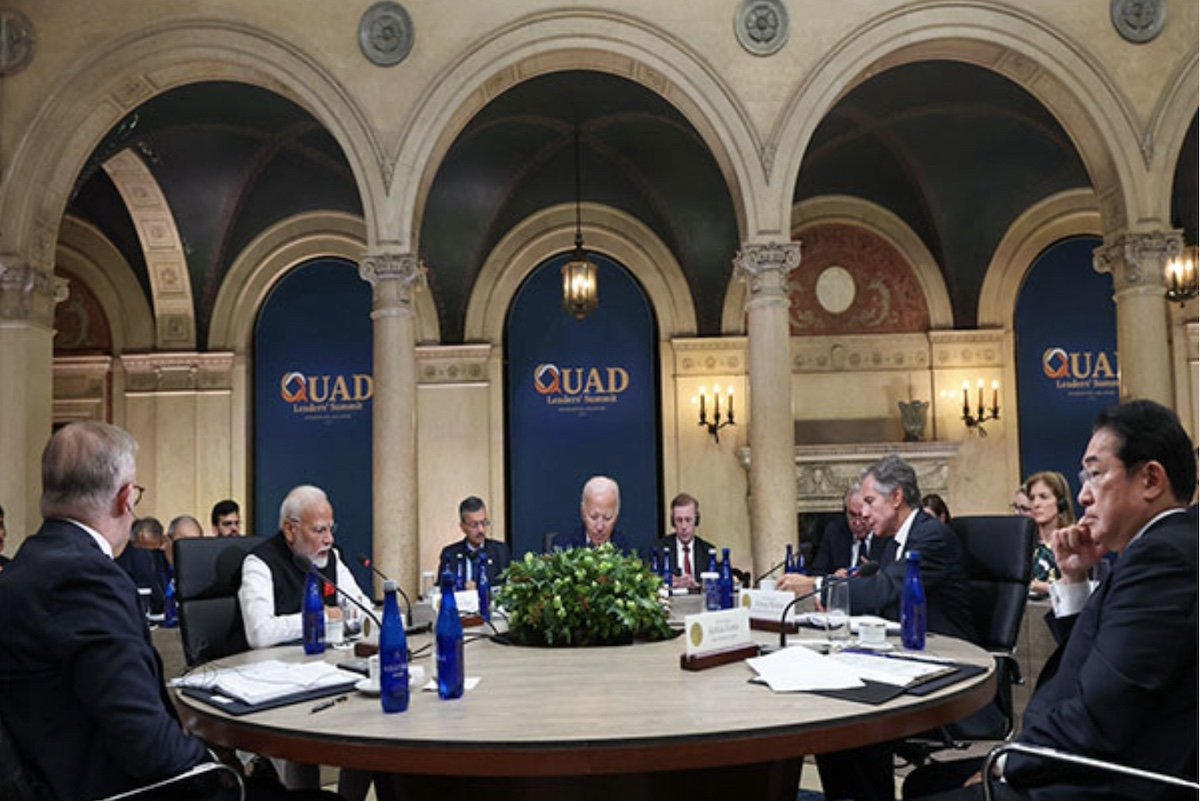
Analysts have struggled to pin down US President Donald Trump’s second term, applying labels from isolationist to neoconservative. But a clearer lens is the tension between agency and structure: Trump’s personal decisions clash with enduring geopolitical realities. This dynamic is especially visible in the Quad—the strategic grouping of the United States, Australia, Japan, and India—which critics now declare moribund.
This week, foreign ministers from the four nations met in New Delhi, but no leaders’ summit has occurred since 2024, when Joe Biden was president. India was slated to host in 2025, but the meeting never materialized, and 2026 remains uncertain. Such drift has prompted claims that the Quad is heading “toward irrelevance” or “on the brink of extinction.” Yet these judgments overlook the structural forces that keep the alliance relevant.
Structural Constraints on Trump’s Agency
Trump’s second term has seen aggressive use of executive power—tariffs, immigration crackdowns, and withdrawal from international agreements. But structural checks remain: the Supreme Court blocked his Liberation Day tariffs, and Congress released the Epstein files despite his opposition. In foreign policy, Trump can berate allies and impose tariffs, but he cannot alter the fundamental balance of power in the Indo-Pacific.
China’s rapid military modernization, maritime aggression, and wolf-warrior diplomacy have permanently shifted regional calculations. Before Trump took office in January 2025, the Quad nations had already expanded their cooperation to include cancer research, vaccine development, and cybersecurity. Their last leaders’ summit declared the Quad “a vital and enduring regional grouping that will buttress the Indo-Pacific for decades to come.”
US-India Tensions: A Test of Resilience
The most significant challenge to Quad cohesion under Trump has been the deterioration of US-India relations. Trump’s first term saw him befriend Prime Minister Narendra Modi, calling him “one of America’s greatest, most devoted and most loyal friends.” But since 2025, ties have soured over Trump’s immigration crackdown, tariffs on Indian goods, disputes over India’s Russian oil purchases, and his growing closeness with Pakistan. A tense phone call between Trump and Modi last June reportedly led Trump to cancel a planned visit to India for the summit.
Despite these frictions, the Quad’s structural logic persists. China remains the primary driver of alignment. Beijing has opposed the Quad since its inception, accusing it of a Cold War mentality. When the Quad first disbanded in 2008, one US scholar noted: “The Quad came down and China did exactly what it said it was going to do if the Quad persisted.” Since its revival in 2017, China has continued to view the Quad as an effective counterbalance.
At this week’s foreign ministers’ meeting, the Quad agreed to jointly build a port in Fiji, increase critical minerals cooperation, and expand maritime operations. China’s state media responded with the headline: “Beijing blasts exclusive cliques after Quad meeting.”
Public Support and Deepening Cooperation
Public opinion across Quad countries underscores the alliance’s durability. Polling by the US Studies Centre at the University of Sydney in 2025 found strong support for making the Quad a formal military alliance: 49% of Australians agreed, followed by 44% of Indians, 42% of Americans, and 41% of Japanese. Only 7-15% opposed the idea.
Cooperation is also deepening. Military exercises, humanitarian assistance, and maritime patrols are increasing annually. The Quad’s work on critical minerals and infrastructure in the Pacific directly counters China’s Belt and Road Initiative. Even as Trump’s $1.5 trillion military budget risks strategic overreach, the Quad’s practical projects offer a more sustainable approach.
The individual leaders of Quad nations will continue to change, and they will at times have significant reservations about each other. But China’s destabilizing behavior—from violent border clashes with India to economic coercion—ensures that the Quad remains a necessary tool for regional stability. As the resource dominance reshapes Trump's strategy toward China, the Quad’s role as a flexible, democratic counterbalance is more vital than ever.
The Quad is not dying. It is adapting to a world where structural realities trump presidential whims.