In a notable reversal of roles, Russia is preparing to supply its embattled partner Iran with one-way attack drones, just months after Iran provided similar systems to sustain Russia’s war in Ukraine. According to the Financial Times, senior Russian and Iranian officials began secret talks on drone deliveries soon after joint US-Israeli strikes on Iran, with shipments starting in early March and expected to conclude by the end of the month.
The Kremlin has denied the reports, with spokesperson Dmitry Peskov dismissing them as media fabrications. Yet Western intelligence assessments indicate that Russia’s support may extend beyond hardware to include intelligence sharing, satellite imagery, and targeting information—potentially enabling more precise Iranian missile strikes against US warships and bases in the Middle East.
Assessing Iran’s Drone and Missile Capabilities
US General Dan Caine stated in a recent Department of Defense briefing that Iran’s ballistic missile attacks have declined by 90% since the start of hostilities, while one-way drone attacks have fallen by 83%. He added that US and Israeli strikes have destroyed or damaged two-thirds of Iran’s drone, missile, and naval production facilities. However, Kelly Grieco, writing in Bloomberg and War on the Rocks, cautions that these reductions may reflect tactical recalibration rather than permanent degradation. Iran could be stockpiling for larger strikes, shifting operational priorities, or deliberately pacing its launches. Dispersed systems like the Shahed drone are inherently difficult to track, and uncertain stockpile estimates complicate assessment. Grieco warns that interpreting fewer launches as degraded capability risks overstating battlefield success and misjudging Iran’s remaining threat.
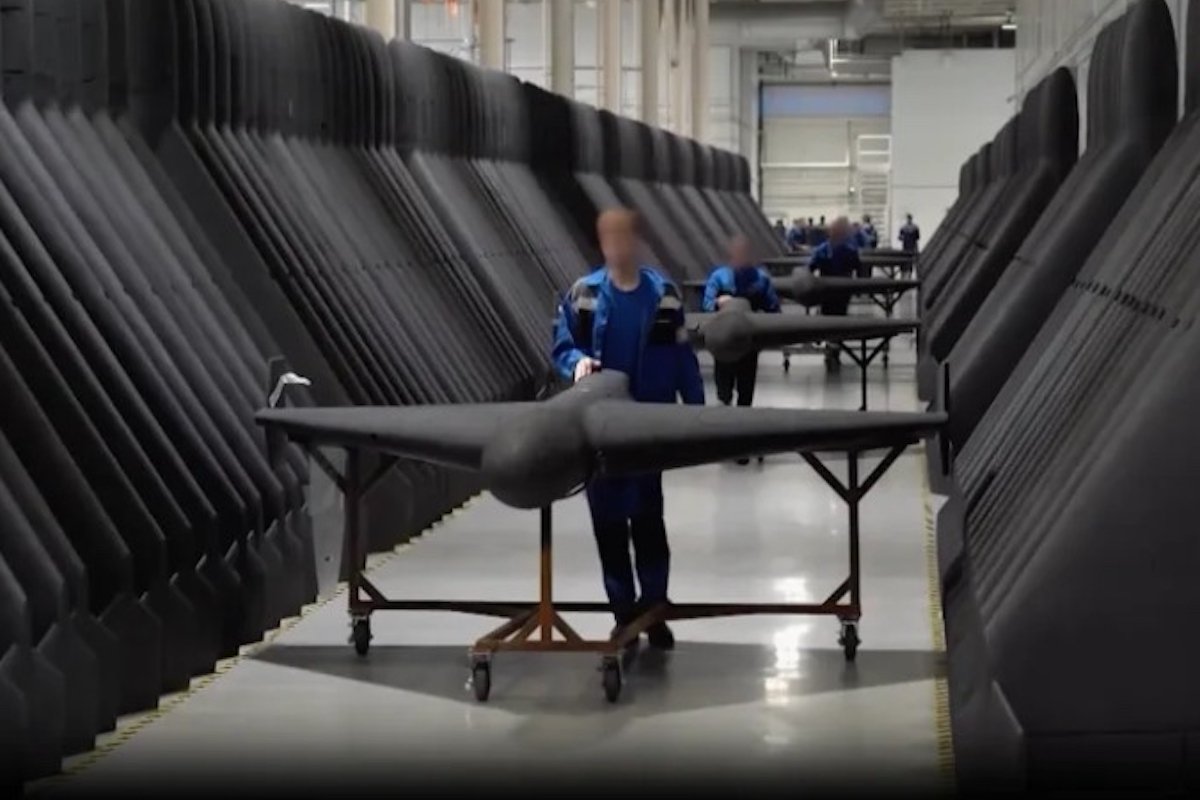
Still, Iran could use assistance in replenishing its drone capabilities, and Russia is well-positioned to provide it. Joseph Bermudez and colleagues at Beyond Parallel note that Russia’s Yelabuga drone factory produces 5,500 Iranian-designed Shahed-type drones per month, supported by a labor force of some 12,000 North Korean workers. This reflects a broader Russian strategy in Iran that, as Grégoire Roos of Chatham House describes, is calibrated and opportunistic: providing diplomatic backing alongside military-technical cooperation and economic coordination, while remaining distant enough to avoid direct confrontation with the US or Israel. Russia positions itself as a “spectator, beneficiary, and player,” benefiting from higher energy revenues and complicating Western strategy.
China’s Role in the Axis
Beyond Russia and Iran, China plays a critical enabling role. David Kirichenko of the Center for European Policy Analysis notes that China supplies 80% of the critical electronics used in Russian drones, as well as machine tools, gunpowder, and other materials to at least 20 major Russian military factories. More broadly, Beijing navigates the Iran war through what Eka Khorbaladze, writing for Think China, terms “strategic patience”—combining public diplomatic restraint with calibrated, deniable support. While China condemns violations of sovereignty and calls for ceasefire, it may provide indirect assistance including satellite imagery, BeiDou navigation support, and technical inputs to strengthen Iran without entanglement. Khorbaladze adds that China is insulating itself by stockpiling energy, diversifying supply, and leveraging Iran’s role in Eurasian connectivity, treating the conflict as secondary to its rivalry with the US and as an opportunity to turn regional instability into long-term geopolitical and economic advantage.
These dynamics form what Kimberly Donovan and Emily Ezratty of the Atlantic Council call an “Axis of Evasion”—indirect yet deeply integrated cooperation built around sanctions-resistant supply chains. China supplies dual-use technologies and procurement networks that feed Iran’s drone and navigation systems, while Russia scales production, exchanges drone technology, and shares operational insights. This has evolved into a self-reinforcing production network: Iran provides designs, China supplies key inputs and procurement channels, and Russia expands manufacturing capacity, dispersing production across jurisdictions to evade sanctions. The result is a resilient, multi-nodal system that challenges US and allied efforts to contain Iranian military power.
For an informed audience tracking the Indo-Pacific, this axis has direct implications. The same drone technologies flowing from Tehran to Moscow and back again are reshaping warfare from Ukraine to the Middle East, and increasingly feature in US Navy planning against China. The cost asymmetry between cheap Iranian drones and expensive US interceptors is a strategic challenge that Washington and its allies must address. As Russia, Iran, China, and North Korea deepen their cooperation, the region faces a more complex and interconnected threat environment—one where drone production is no longer a national capability but a networked enterprise spanning Eurasia.