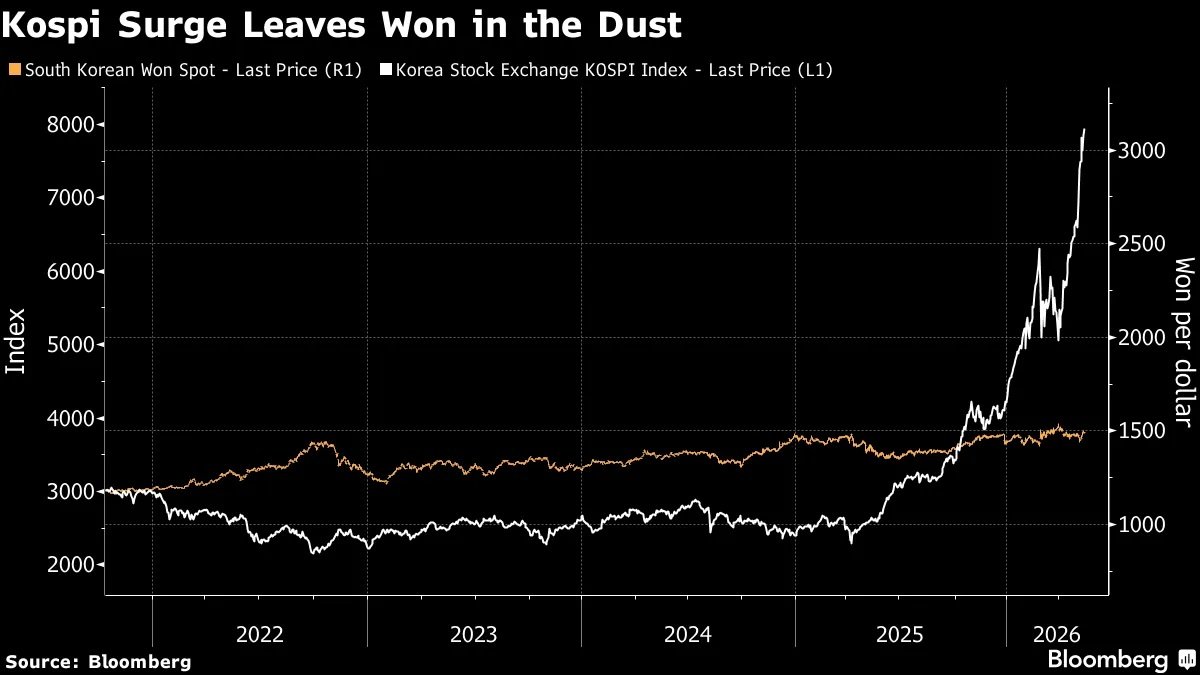
Samsung Electronics reported its most profitable quarter in history on Thursday, with operating profit of 107.4 trillion won on revenue of 195.3 trillion won. Yet its shares closed more than 4% lower, after dipping as much as 6.6% intraday. The KOSPI, which had briefly broken above 6,000 the previous day, slipped back below that level.
Investors had hoped Samsung would detail how it would return its cash windfall. The company confirmed a 30 trillion won dividend and an overall budget of up to 110 trillion won for the year, but left the remaining 55 trillion to 75 trillion won to a board meeting in late January. After a quarter like this, a promise to decide later fell far short of market expectations.
SK Hynix sets the bar
The contrast with SK Hynix made matters worse. On Wednesday, SK Hynix delivered blockbuster results alongside a commitment to return around $45 billion more to shareholders, and the KOSPI jumped 6.6%, its biggest gain in three months. Both companies are riding the same surge in memory demand, yet a day later investors were buying one and selling the other, almost entirely on how clearly each had explained its capital return plans.
Global investors should read this as a sign of how far Korea has come. For most of the past 30 years, owning Korean equities meant accepting a discount. The big groups were run by founding families, outside shareholders came a distant second, and cash and treasury shares piled up on balance sheets with little prospect of being handed back. Investors priced that in, and they were right to do so.
Reform has worn much of that logic away. Last year's amendment to the Commercial Act extended directors' duties to shareholders, and the government has made higher corporate valuations an explicit policy goal. Foreign investors have responded with real money. Even during Thursday's morning slide, they were net buyers on the KOSPI while domestic institutions sold.
The upshot is that Korea's biggest companies are now judged the way the best-run businesses in America or Europe are judged. Strong earnings are expected as standard. As ever, investors reward a credible, specific policy on capital returns, and they punish vagueness quickly.
Samsung has run into this twice since the summer. In August, when it first outlined the 90 trillion to 110 trillion won range, its shares fell 9% and the KOSPI dropped more than 3%, partly because it said nothing about canceling treasury shares. Two months later it offered the same range and asked for more time.
Samsung's caution has its logic. Its ownership structure makes large buybacks harder to arrange than at SK Hynix, and it's spending heavily to regain ground in advanced memory chips, with capital expenditure rising and chip profits short of forecasts this quarter. A firm facing those pressures has good reason to want flexibility. But shareholders who were promised a new era of returns have simply run out of patience with that argument.
Japan is the obvious comparison. Regulatory pressure on companies trading below book value led Japanese boards to sell cross-shareholdings, raise dividends and buy back stock, and global funds rerated the market accordingly. Korea seems to be going through a similar process, only faster and with far bigger daily swings.
My current view is that the discount will likely keep narrowing, but unevenly. Companies that commit early and in detail should continue to be rewarded, while those that keep deferring are likely to be marked down even when their earnings are excellent. For anyone investing in Korea from abroad, governance has become as important a driver of returns as the chip cycle, and the gap between leaders and laggards will probably grow.
Samsung's January board meeting will probably be the most important event for Korean equities this winter. If it announces substantial buybacks and share cancellations, Thursday's fall will be forgotten quickly. If it produces another range and another deadline, investors who've spent this year rotating toward SK Hynix will have little reason to come back.
Korea's reformers wanted a market where shareholders could hold even the biggest companies to account. On Thursday, they got a clear demonstration that it works. For more on the broader implications, see our analysis of Samsung's record profit and the circular funding issue in AI chips and the reckoning facing Samsung and SK Hynix.