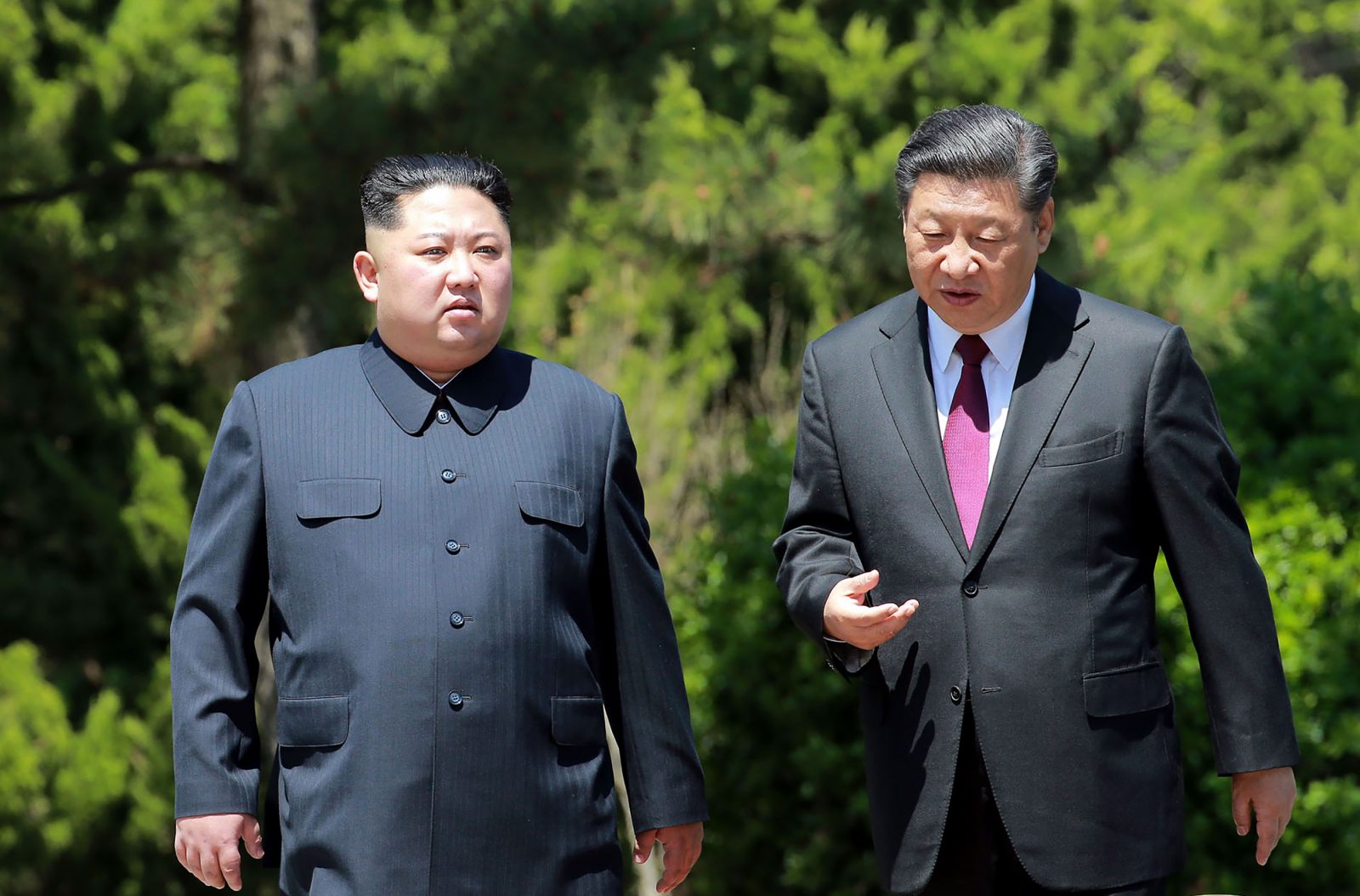
Recent reports indicate that North Korean leader Kim Jong Un attempted to arrange a visit to China, hoping to recreate the drama of his June 2019 encounter with then-US President Donald Trump at Panmunjom. But Beijing politely turned him down, a decision that speaks volumes about the strained state of Sino-North Korean relations.
Kim's primary motive was mounting frustration with Russian President Vladimir Putin, who had promised to mediate future US-North Korea summits but delivered few breakthroughs. Seeking to capitalize on his working relationship with Trump, Kim reportedly hoped to use a meeting with Chinese President Xi Jinping on the sidelines of the Asia-Pacific Economic Cooperation (APEC) summit in Shenzhen, scheduled for November 18-19, to nudge Beijing into facilitating another US-North Korea encounter.
While Pyongyang publicly dismisses unconditional dialogue offers from Washington, internal signals suggest Kim desperately wants a replay of the 2019 Hanoi and Panmunjom summits. Given that no other substantive agenda items underpinned his push for a Beijing trip, a mediation request remains the most plausible explanation.
In Seoul, the progressive administration of President Lee Jae-myung has favored a conciliatory approach, hoping Pyongyang would pivot toward direct engagement with Washington rather than outsourcing diplomacy to Moscow or Beijing. Instead, Kim opted to bypass Seoul entirely, looking once more to Xi to bridge the diplomatic gap.
Why Xi said no
Xi, however, declined. Several compelling geopolitical factors drove Beijing's decision to rebuff Kim's overtures. First, Trump had exhibited little immediate appetite for a new US-North Korea summit. Burdened by complex domestic challenges, Trump's stance remained that Kim must first accept Seoul's outreach and commit sincerely to denuclearization before any high-level meeting materializes.
Furthermore, with the November 3 midterm elections approaching, Trump's domestic and foreign priorities lay elsewhere: securing expanded South Korean manufacturing investments, forging naval shipyard partnerships to bolster the US Navy, and rallying South Korean defense contributions for allied air defense architectures in the Middle East.
These broader geopolitical calculations influenced Beijing as well. China has grown increasingly exasperated by North Korea's escalatory behavior and strategic missteps. At a time when Seoul is pressing for the early transfer from the US of wartime operational control (OPCON), Pyongyang has flagrantly violated the armistice agreement.
North Korea has laid landmines within the two-kilometer buffer zone of the Military Demarcation Line, signaled pro-Russian alignment through troop deployments to Ukraine, and displayed models of Hwasong-11-type hypersonic missiles and hypersonic glide vehicles (HGVs) modeled after Chinese designs at a Pyongyang defense exhibition.
Particularly grating to Beijing was Pyongyang's pursuit of an 8,000-ton nuclear-powered submarine – reportedly aided by nuclear reactor technology transferred from decommissioned, second-tier Russian submarines. This move backfired strategically, prompting the South Korean Navy to partner with the United States to pursue its own 5,000-ton nuclear-powered attack submarines (SSNs). In an extraordinary departure from form, Beijing's Global Times explicitly criticized Seoul's SSN ambitions as “unrealistic” last May.
Moreover, Xi had anticipated that North Korea – much like members of the Shanghai Cooperation Organization (SCO) and BRICS – would actively support Beijing's vision for a “New International Order for the New Era” as Trump systematically disrupts the post-war global architecture. Instead, Pyongyang's heavy-handed pivot toward Moscow proved deeply disappointing.
Compounding matters, Kim's desired dates for a Beijing visit overlapped with the 5th Plenary Session of the 20th Central Committee of the Chinese Communist Party (held October 26-29). For Xi Jinping – who needed to tighten party discipline and secure an unprecedented fourth term – hosting a self-proclaimed nuclear-weapons state leader in Beijing would have been a political liability.
Furthermore, coming just three and a half months after Xi's high-profile state visit to Pyongyang in June, Kim's rushed push for a Beijing summit betrayed an unmanageable sense of urgency.
A diplomatic slight in Dandong
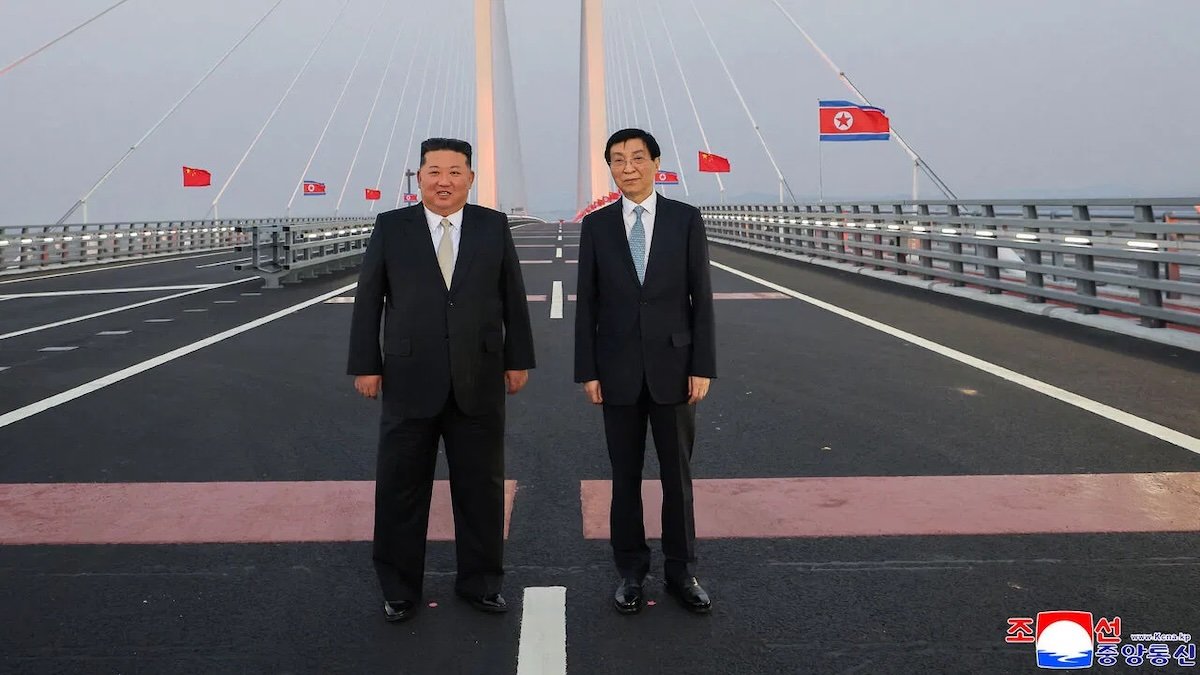
Ultimately, Kim's trip was truncated to a whirlwind, single-day visit to Dandong – a diplomatic slight carrying profound messages from Beijing. First, it served as a stark strategic warning. By dispatching Wang Huning – the Chinese Communist Party's fourth-ranking official and Xi's chief ideologue – rather than Premier Li Chang (No. 2) to greet Kim and then confer and dine with him, Beijing signaled its deep displeasure. Wang's reception underscored Beijing's sharp rebuke of Kim's delusions regarding nuclear statehood and his reckless destabilization of the Korean Peninsula in defiance of regional status-quo principles.
Second, Kim's commemorative wreath-laying and visit to the Memorial Tower of the Chinese People's Volunteers of the Korean War were anachronistic and ill-timed. On September 25, under intense pressure from Washington, Xi visited Washington and agreed with Trump that the US and China – having fought together against militarist powers in World War II – share a common stake in the forward deployment of US forces contributing to Indo-Pacific stability.
Kim's homage to the “War to Resist US Aggression and Aid Korea” directly flies in the face of this fragile US–China tactical truce. It has revived memories of a conflict that Beijing now prefers to downplay, especially as it seeks to manage its rivalry with Washington. The Dandong visit, while brief, was a clear message: Pyongyang's tactics are not welcome, and its reliance on Beijing has limits.
For more on the broader dynamics, see why the Korean Peninsula is edging toward a new crisis and how new bridges reveal China-Russia rivalry over North Korea.