Satellite imagery analyzed this month reveals that Saudi Arabia is significantly expanding its solid-propellant ballistic missile production complex near al-Duwadimi, roughly 200 kilometers west of Riyadh. The work, which began in April 2025, includes a larger motor-casting facility with 5-to-6-meter casting pits and blast-deflection walls, plus an adjacent site likely for storing propellant precursors or components. Experts estimate the upgraded facility could be operational by late 2026.
The expansion is underpinned by Chinese technical designs, following decades of Saudi acquisitions of Chinese missile systems, including the DF-3 and DF-15. By moving toward domestic solid-fuel manufacturing—which allows rapid launch preparation and longer storage—Riyadh aims to counter regional threats, deter Iran without risking its air fleet, and respond to Houthi attacks from Yemen, especially given restrictions on US ballistic weapons transfers.
A shift in strike doctrine
This industrial push reflects a broader operational shift. Saudi Arabia has lost a dozen helicopters, five fighter jets, and 30 drones over Yemen since 2015, according to a September 2026 report by The War Zone. Incidents include an F-15 crash in the Red Sea in 2015 and several jets damaged by surface-to-air missiles in 2018, demonstrating how the Houthis' mobile, passive infrared air-defense network can threaten advanced Western-supplied aircraft.
Houthi attacks on Saudi airbases, such as King Khalid Airbase, could destroy aircraft on the ground, inflicting damage comparable to the US loss of an E-3G Sentry at Prince Sultan Air Base. In this environment, road-mobile ballistic missiles offer a more survivable strike option than aircraft on exposed runways. Looming US munition shortages may also push Saudi Arabia to seek long-range strike weapons from alternative suppliers, including China.
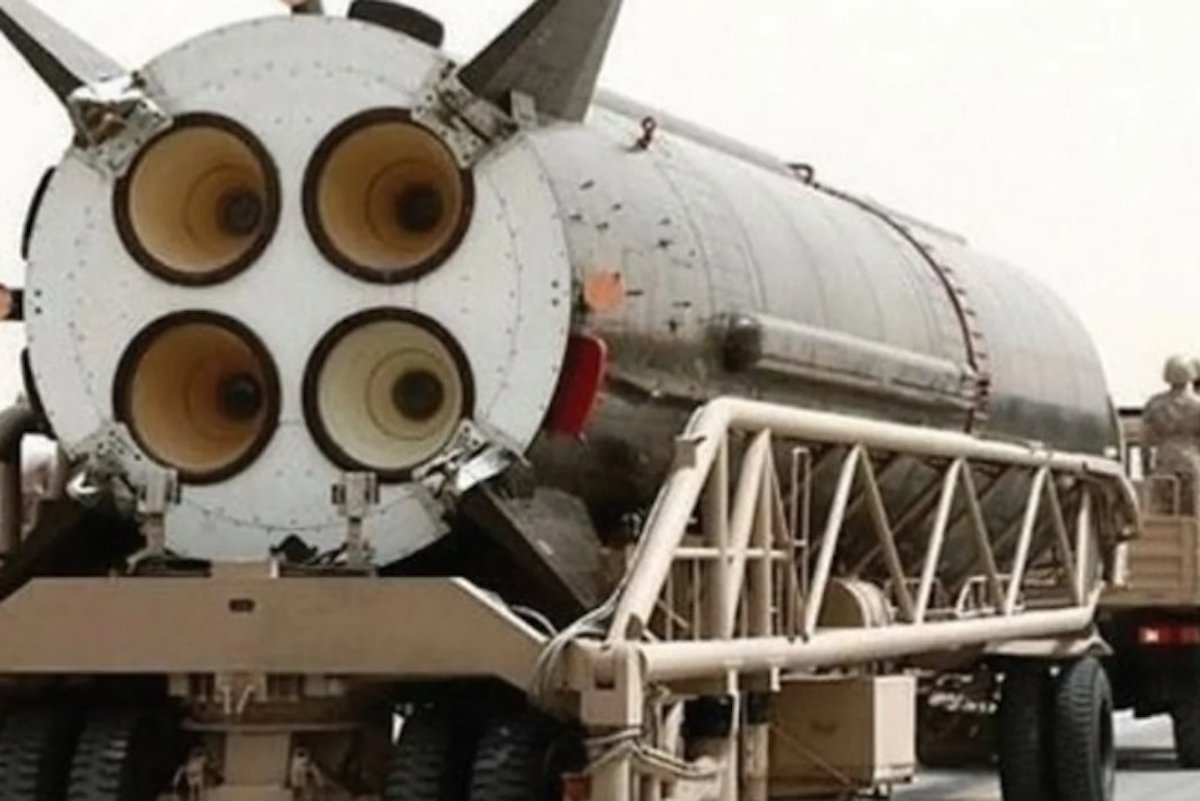
According to the Wall Street Journal, in September 2026, during the ongoing Iran war, Saudi Arabia appears to have fired a Chinese-made DF-15 ballistic missile in combat for the first time. Debris bearing “DF-15A” markings was discovered in the Yemeni desert. The missile, a road-mobile short-range ballistic missile, can deliver 500-to-750-kilogram conventional or nuclear warheads at ranges of 600 to 900 kilometers, according to Missile Threat. It is 9.1 to 10 meters long, weighs 6,200 kilograms, and can be deployed in 30 minutes. Variants feature advanced guidance achieving a 30-meter circular error probable, and specialized bunker-busting models can penetrate 25 meters of reinforced concrete.
The WSJ report notes it remains unclear if the warhead hit its intended target. The launch may have been a deliberate strategic signal to deter both the Houthis and Iran following repeated drone strikes on Saudi energy infrastructure.
Decades of Chinese missile ties
Saudi Arabia's history with Chinese ballistic missiles dates back to 1988, when it acquired liquid-fueled DF-3 intermediate-range ballistic missiles and built four underground bases to house them, despite their operational and accuracy limitations, according to Fabian Hinz in a February 2025 article for the Center for Strategic and International Studies (CSIS). Seeking more accurate systems, Riyadh procured solid-propellant DF-21 missiles in 2007. By 2022, intelligence reports revealed plans to import additional Chinese missiles under a program codenamed “Crocodile,” and assessments indicate the kingdom is now manufacturing solid-propellant missiles domestically with Chinese assistance at its al-Watah base.
This deepening reliance on Chinese missile technology has implications beyond the battlefield. It accelerates a regional arms buildup across the Persian Gulf and may harden bipartisan opposition in the US Congress to a proposed civilian nuclear cooperation agreement with Saudi Arabia. While China cannot replace the US as Saudi Arabia's primary security partner due to geopolitical constraints, its role as a missile supplier is growing.
The use of Chinese ballistic missiles against the Houthis signals a potential shift in Saudi airpower doctrine for asymmetric warfare. While top-end fighter jets like the F-15 and Eurofighter Typhoon remain premier precision-strike assets, Riyadh may be combining manned aviation with ballistic missile strikes to conserve dwindling Western munitions and reduce risks to its aircraft and airbases.
As Saudi Arabia expands its domestic missile production, the region watches closely. The move could further strain US-Saudi relations, complicate nuclear diplomacy, and intensify the arms race with Iran. For now, the desert factory near al-Duwadimi stands as a symbol of Riyadh's determination to secure its own deterrent—with Chinese help.
Related: India-Philippines defense ties and Iran's mountain airbases offer contrasting models of regional deterrence.