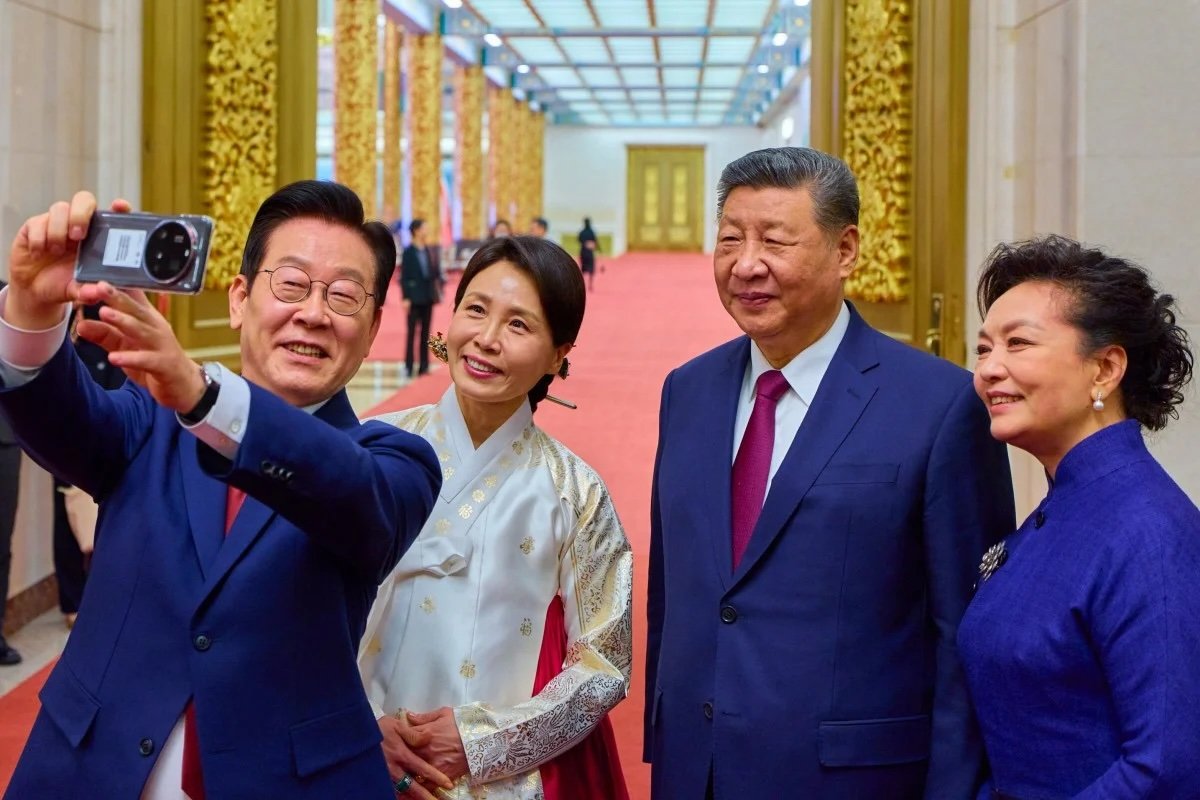
On April 10, 2026, South Korean President Lee Jae-myung ignited a debate by sharing a social media video that drew parallels between wartime killings and the Holocaust, alleging that Israeli forces had tortured and thrown a Palestinian from a rooftop in 2024. The timing seemed odd, disconnected from immediate Korean interests, but the contrast became sharper the following month.
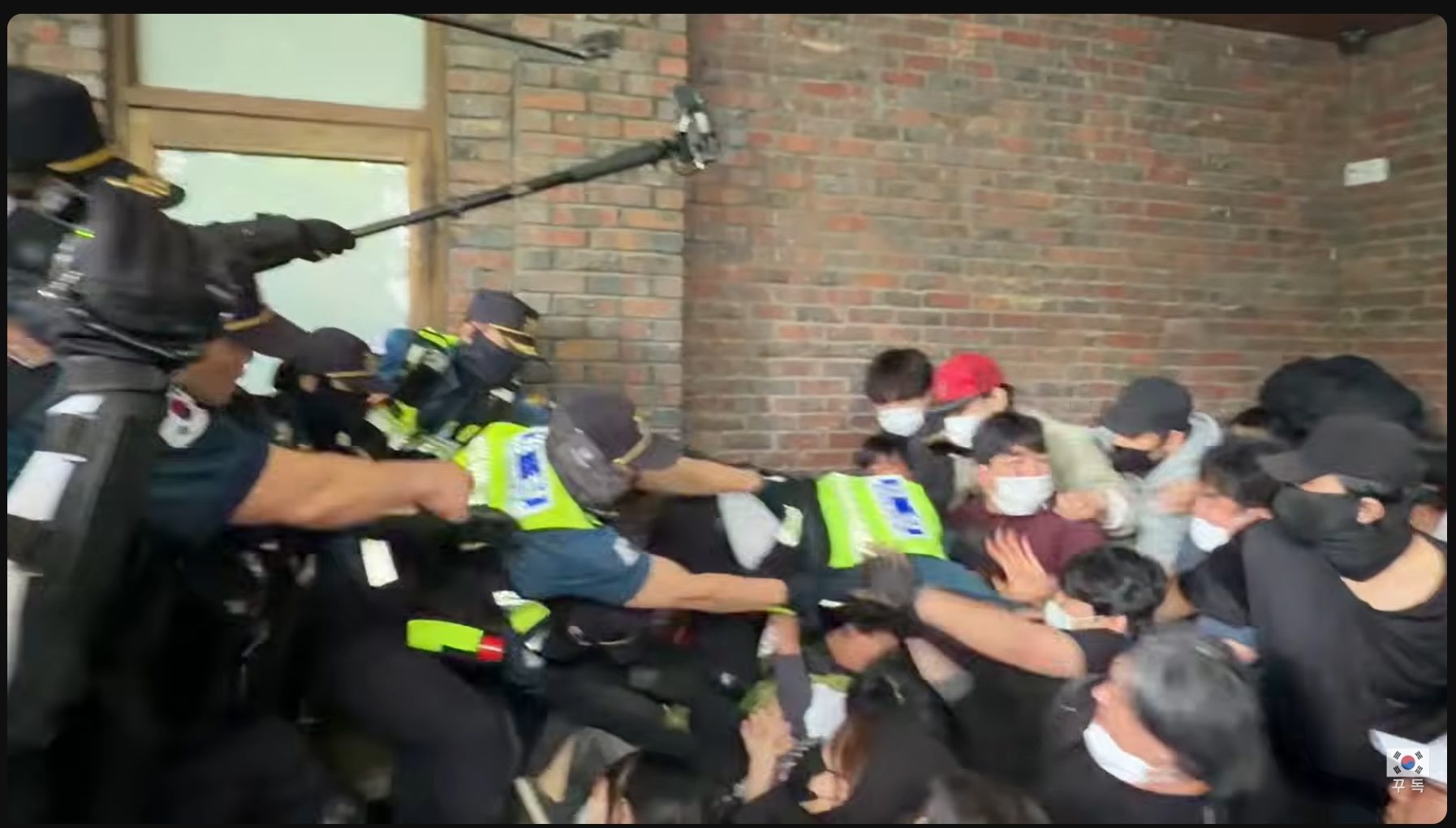
On May 20, after Israeli forces detained South Korean activists aboard a Gaza-bound flotilla, Lee reacted within hours. In a televised cabinet meeting, he questioned the legality of Israel's actions, called for a review of the arrest warrant against Benjamin Netanyahu, and declared that “under no circumstances can international humanitarian law be compromised; human dignity must be upheld as an absolute and paramount value.” The presidential office reinforced this stance, stating that “the safety and sovereignty of our citizens are paramount and are the very reason for the existence of the state and government.”
Seoul's Selective Humanitarian Approach
The issue is not that Seoul intervened quickly on behalf of South Korean citizens abroad, but that the principle appears inconsistently applied. In December 2025, Lee was asked by a foreign reporter about South Korean nationals detained in North Korea. His response was strikingly casual: he said he was hearing about the matter for the first time and would need to look into it. The presidential office confirmed the following day that six South Koreans have been held by Pyongyang since 2013–2016 on espionage and other charges. To this day, there has been little public indication that the detainees have been released or that Seoul has made their release a sustained priority.
The Chosun Ilbo editorial board captured the contradiction succinctly on May 22, 2026: “One cannot help but ask whether this principle is being applied equally to our citizens held in North Korea.” South Koreans detained by an ally while participating in political activism received immediate presidential attention in a televised cabinet meeting. South Koreans held in North Korea have not generated even a visible public campaign for their release.
Beijing's Red Line
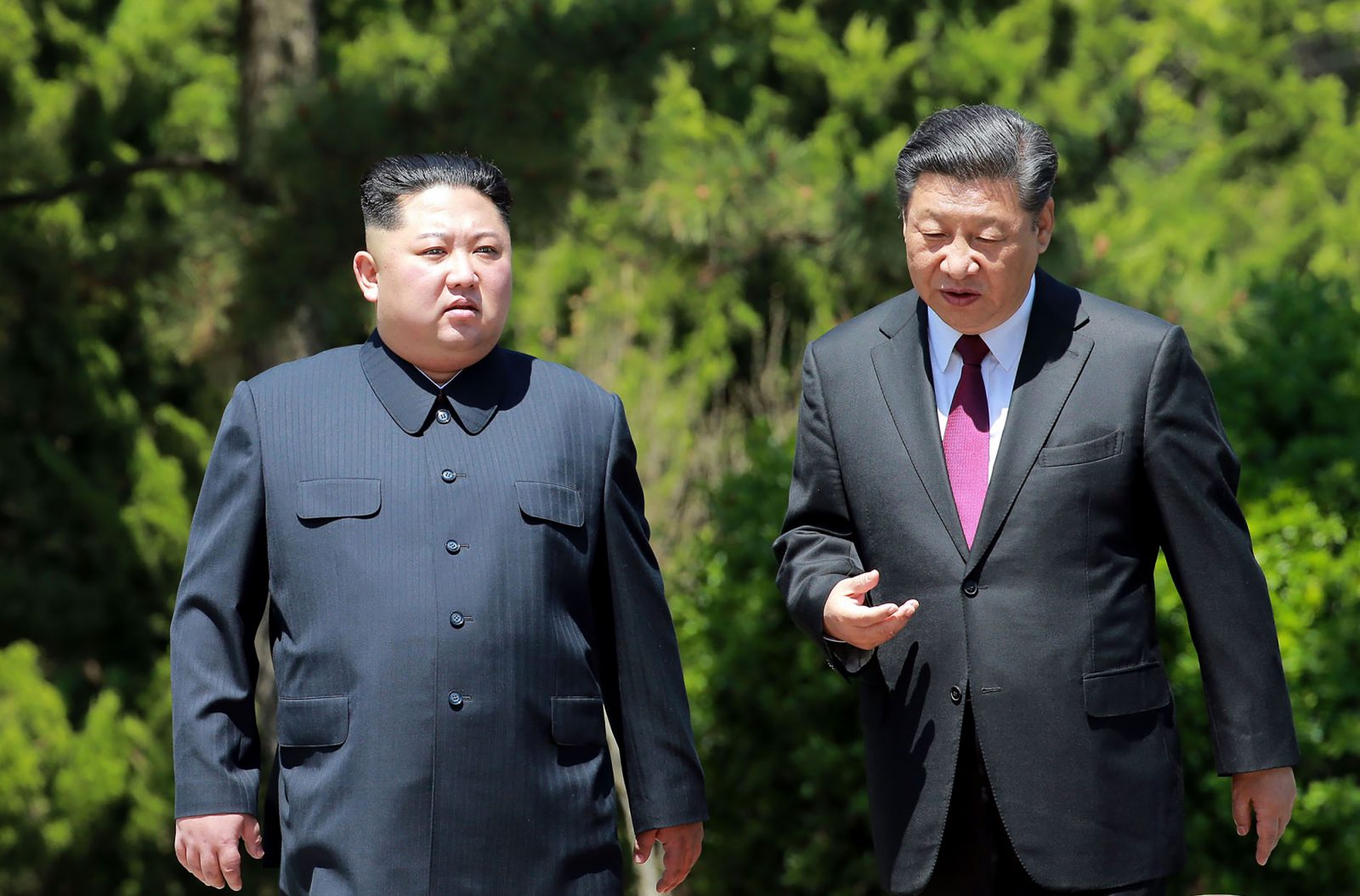
Seoul's double standard reflects a broader drift across the democratic world, where human rights are increasingly treated not as a consistent principle of foreign policy but as a negotiable political instrument. The implications become clearer when authoritarian regimes themselves identify what they fear most. Ahead of the Trump–Xi summit, the Chinese Embassy in Washington published what it called the “four red lines” in US–China relations: Taiwan, democracy and human rights, China's political system, and China's development rights. Most commentary focused on Taiwan, but the more revealing inclusion was “democracy and human rights.” In effect, the Chinese Communist Party publicly acknowledged that sustained human rights pressure threatens regime security itself.
Human rights matter strategically not only because repression is immoral, but because authoritarian regimes themselves treat information control as essential to regime survival. As I argued previously in Asia Times—in February 2025 and again in April 2026—authoritarian repression should be understood not merely as a moral issue but as part of regime security architecture. China is not North Korea, but under Xi Jinping, slowing economic growth, demographic decline, and political centralization have increased Beijing's dependence on coercive social control. The “wolf warrior” turn in Chinese diplomacy and repeated crises around Taiwan increasingly appear connected to those domestic pressures rather than entirely separate from them.
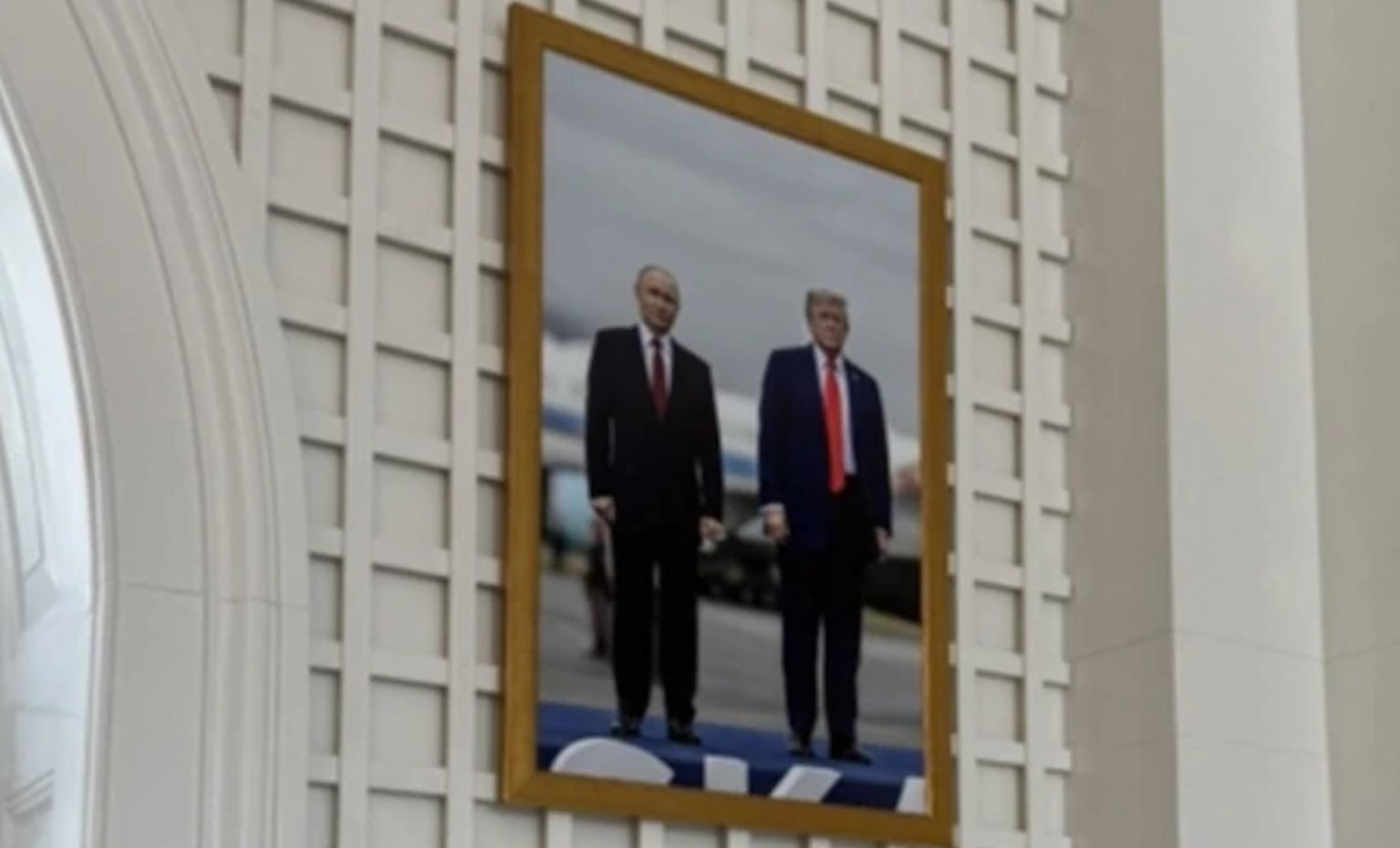
To his credit, Donald Trump reportedly arrived in Beijing prepared to raise the cases of imprisoned Hong Kong media figure Jimmy Lai and Christian pastor Ezra Jin. These cases matter, but Beijing has historically treated such disputes as manageable irritants rather than enduring pressure on regime legitimacy. What the Chinese leadership fears is something broader and more durable: a sustained American posture that treats human rights conditions inside China as a permanent structural issue in the bilateral relationship rather than a bargaining chip to be traded away.
The HRNK Paradox
The consequences of this drift are increasingly borne by the institutions that make serious human rights policy possible in the first place. A UN-accredited NGO, the Committee for Human Rights in North Korea (HRNK), has long been one of the leading authorities documenting North Korean crimes against humanity. Its satellite imagery analysis of prison camps and mapping of the regime's information environment have been cited by the UN, the US State Department, and governments across the democratic world. Yet on December 1, 2025, HRNK issued an extraordinary public appeal: “Defunded by the US government under the previous and the current US administrations, HRNK is facing an existential crisis.” With funding for its satellite imagery work having disappeared in March 2023, HRNK made it clear that without immediate outside support, it would be forced to close.
Satellite documentation of prison camps is not symbolic activism. It creates the evidentiary foundation for sanctions, strengthens deterrence narratives, and preserves the factual record upon which any future accountability process would depend. Allowing HRNK to collapse would represent a self-inflicted strategic error by the United States. At the same time, the technological toolkit for penetrating closed regimes is evolving rapidly. North Korean defector groups have long used balloons to send outside information into the North, while HRNK has relied heavily on satellite imagery. The South Korea's role as a US logistics hub further complicates Seoul's balancing act between its alliance obligations and its inconsistent human rights posture.
Seoul's blind spot is not just a moral failing—it is a strategic vulnerability that Beijing is keen to exploit. By treating human rights as a selective tool rather than a consistent principle, South Korea undermines its own credibility and gives authoritarian regimes the opening they need to dismiss democratic values as hypocritical. For the Indo-Pacific region, where the contest between democratic and authoritarian models is intensifying, such inconsistencies carry real costs.