South Korea is recalibrating its foreign policy under President Lee Jae-myung, pursuing a strategy of strategic autonomy that seeks to broaden its diplomatic and economic ties beyond the traditional great-power axis. This pivot, centered on Southeast Asia and India, reflects a recognition that the international order has entered what analysts call an age of 'Un-Order'—marked by cascading crises from the US-China rivalry to the Russia-Ukraine war and the US-Iran conflict.
For Seoul, strategic autonomy does not mean abandoning alliances. Rather, it entails re-evaluating all external relationships through the lens of national interest, ensuring that South Korea can design and execute its own priorities without being subsumed into the orbit of any single power. President Lee's approach builds on earlier initiatives like the New Southern Policy and the Indo-Pacific Strategy, but with a sharper focus on institutionalizing partnerships that are both substantive and diversified.
Summit Diplomacy and Institutional Upgrades
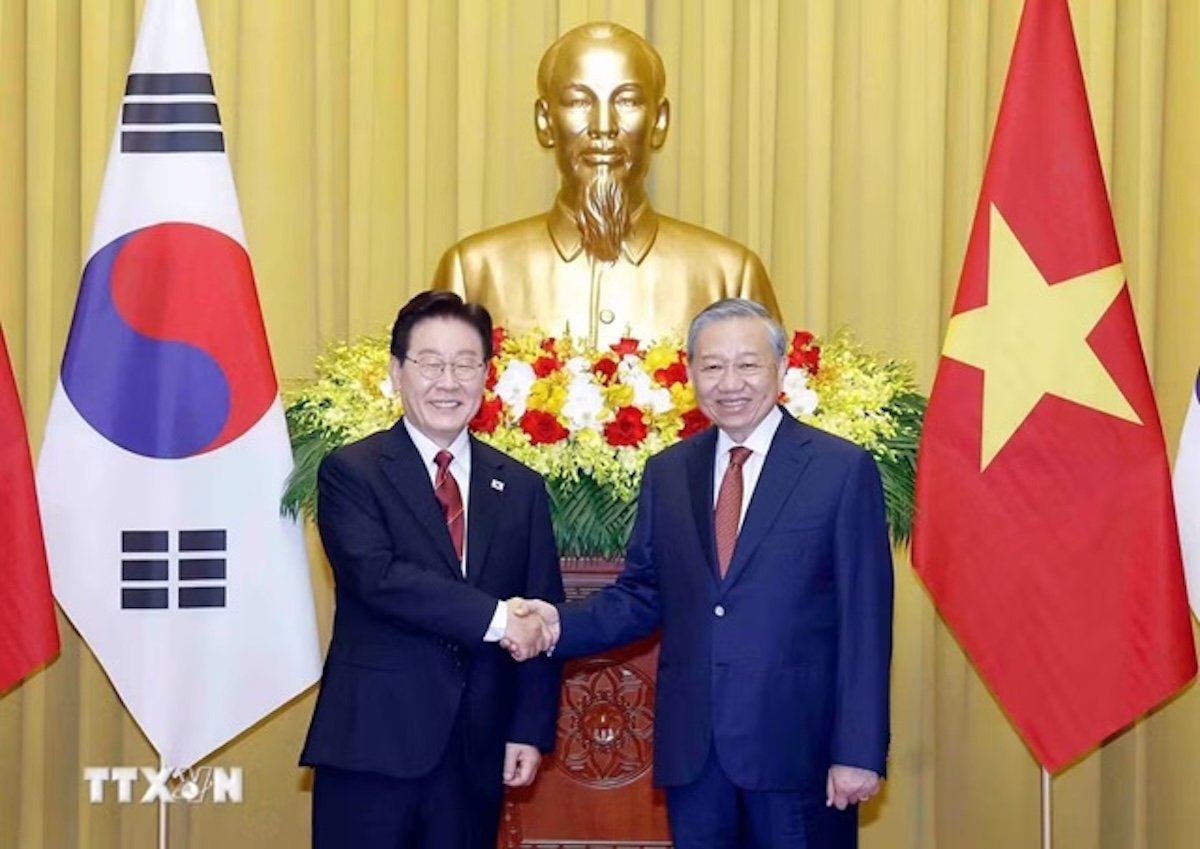
Since taking office in June 2025, Lee has embarked on an intensive round of summit diplomacy, including appearances at the G7, the United Nations, and the G20, as well as hosting the APEC summit in Gyeongju. These efforts aimed to restore Seoul's multilateral presence after a period of strain. The real institutional work came in 2026, with state visits to Singapore and the Philippines in March, Indonesian President Prabowo Subianto's visit to Seoul later that month, and visits to India and Vietnam in April.
Each of these relationships has been elevated to a higher tier. With Singapore, a strategic partnership established in 2025 was launched in earnest during the state visit, with Lee noting he could hardly 'understand why South Korea and Singapore had not forged a strategic partnership sooner.' With Indonesia, Seoul established a 'Special Comprehensive Strategic Partnership'—a designation it has accorded to no other country, institutionalizing a half-century of layered firsts since 1973, including the first overseas investment, first arms export, and first joint fighter-jet development.
With the Philippines, the two countries committed to a partnership to navigate geopolitical uncertainty and global technological competition. With India, the ambition extends to a roadmap to transcend the existing Special Strategic Partnership, aiming for a relationship where both nations pledge to be 'ideal partners in realizing each other's national development visions.' Particularly telling was Lee's declaration in Vietnam that 'Vietnam's Future Is Korea's Future,' a statement underscoring the depth of the envisioned interdependence.
Diversification of Agendas
The second logic driving this pivot is the diversification of agendas to address twenty-first-century challenges. The strategic industries that will define the new economic order—semiconductors, secondary batteries, artificial intelligence, nuclear energy, shipbuilding, and defense—along with the restructuring of supply chains for critical minerals and raw materials, have moved from optional to existential. In an era of economic warfare, even great powers feel insecure, and excessive dependence on any single country now implies strategic vulnerability.
Indonesia, the world's second-largest producer of nickel and cobalt and a supplier of LNG and coal to South Korea, occupies a decisive position in the secondary-battery and energy agenda. Vietnam, host to more than 10,000 Korean firms and South Korea's third-largest trading partner in ASEAN, is central to supply-chain diversification. These partnerships are designed to reduce dependence on any single power or region while expanding the depth and breadth of Seoul's diplomatic portfolio.
This southward pivot is not without precedent. Previous initiatives like the New Southern Policy and the Indo-Pacific Strategy promised similar lifts but fell short due to insufficient institutional foundations. The real test for Lee's administration is whether it has built the groundwork to sustain this ambition. Without that, as one analyst noted, 'ambition hardens into routine.'
The broader context includes shifts in the region's strategic landscape. As Indonesia's overflight debate and Southeast Asia's recalibration away from the US illustrate, middle powers are increasingly seeking multi-alignment. South Korea's pivot aligns with this trend, but its success will depend on whether it can translate diplomatic upgrades into tangible economic and security cooperation.
Ultimately, Lee's strategy represents a calculated bet: that by deepening ties with a heterogeneous group of partners spanning the Indian Ocean, the South China Sea, and the Western Pacific, South Korea can secure its prosperity and autonomy in a fragmented world. The coming years will reveal whether this pivot is a genuine restructuring or merely another iteration of past ambitions.