SEOUL — On the surface, South Korea's economy in 2026 appears to be riding a wave of success. The Kospi index has surged to unprecedented levels, driven by insatiable global demand for artificial intelligence chips from giants like Samsung and SK Hynix. In Seoul's co-working spaces, young professionals huddle over laptops, and international conferences celebrate the country's AI ambitions. But beneath this veneer of prosperity, long-standing structural weaknesses are intensifying, threatening to undermine Korea's economic future.
The China Challenge
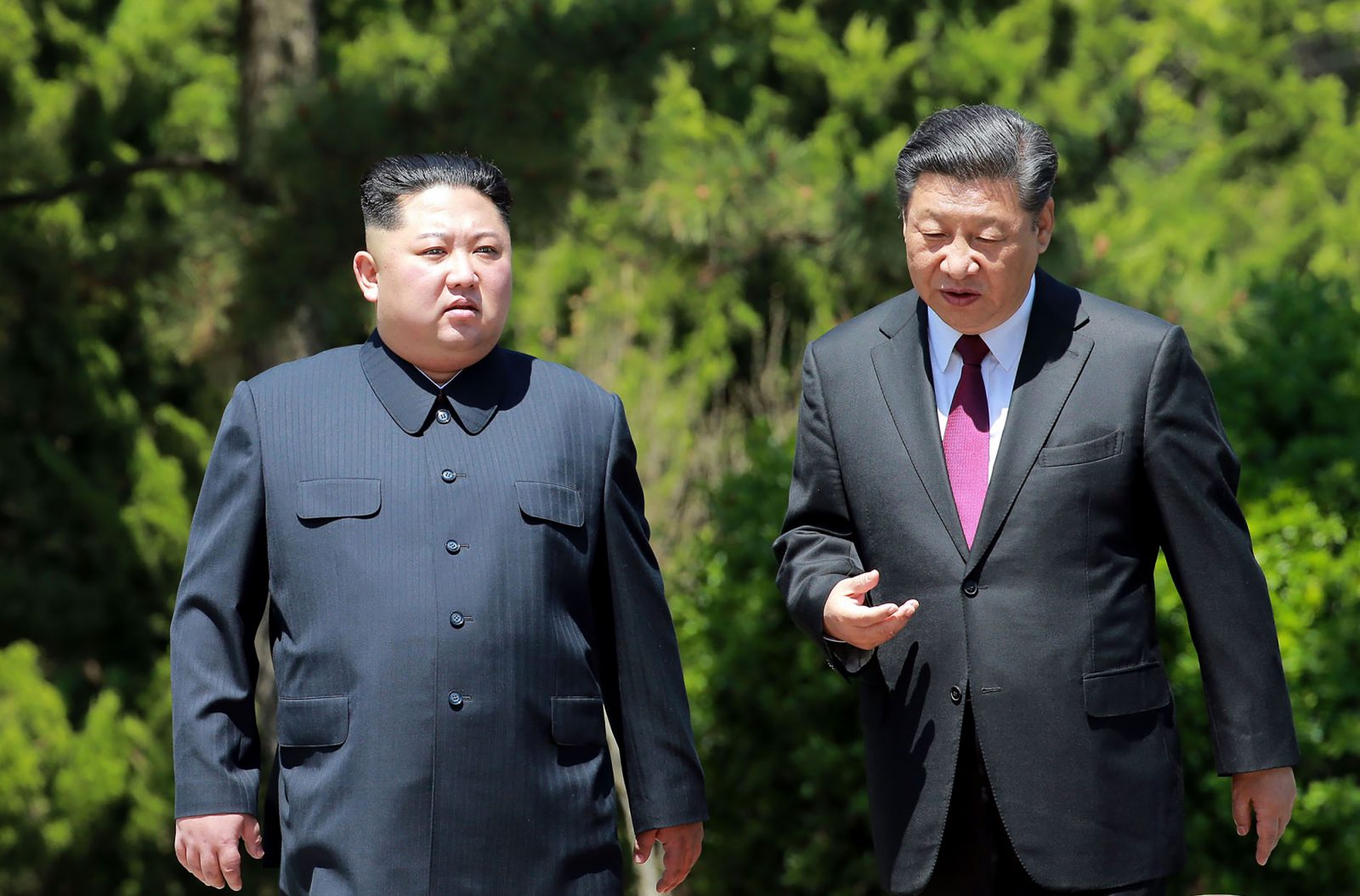
China's rapid technological ascent is reshaping global competition in sectors where Korea has long excelled: automobiles, electronics, semiconductors, robotics, shipbuilding, and even popular entertainment. Beijing's "Made in China 2025" initiative, launched a decade ago by President Xi Jinping, is now bearing fruit. Chinese electric vehicle makers like BYD are directly challenging Korean automakers, while state-backed advances in AI, batteries, drones, biotechnology, and renewable energy are eroding Korea's competitive edge.
As China's industrial overcapacity reshapes global trade, Korean manufacturers face pressure not only on price but also on innovation. For less developed Southeast Asian economies, the next China shock may mean mass deindustrialization; for Korea, it means a slow but steady loss of market share in its most profitable industries.
Domestic Weaknesses
Korea's economy remains dominated by a handful of family-owned conglomerates, the chaebols, which absorb much of the capital and talent needed to nurture startups. Household debt is dangerously high, productivity growth is lackluster, and labor markets are rigid. These preexisting conditions make it difficult for new, disruptive companies to scale up and challenge incumbents.
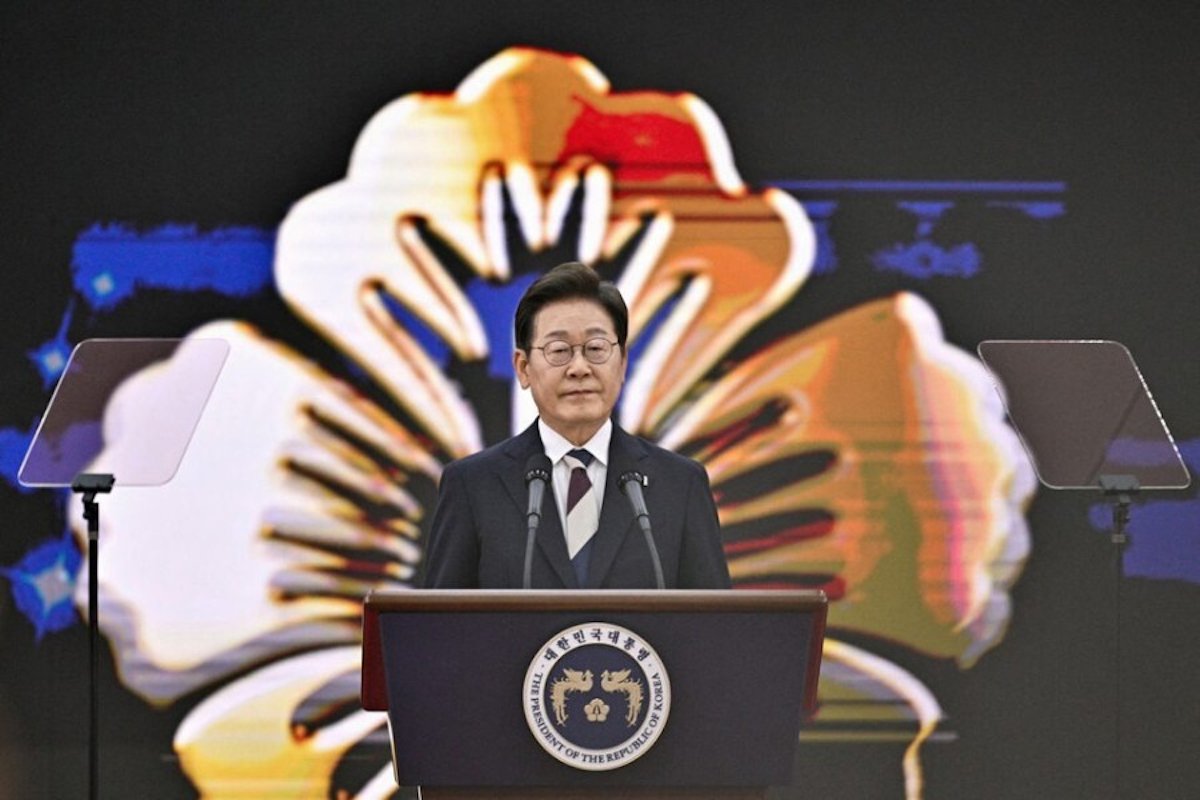
President Lee Jae-myung, now 324 days into his administration, has acknowledged the urgency. "The global trade order is at a critical turning point amid the decline of free trade and intensifying geopolitical risks," he said on April 16. "For a country like ours with a heavy reliance on manufacturing, we must undertake bold and transformative innovation with the nation's future at stake."
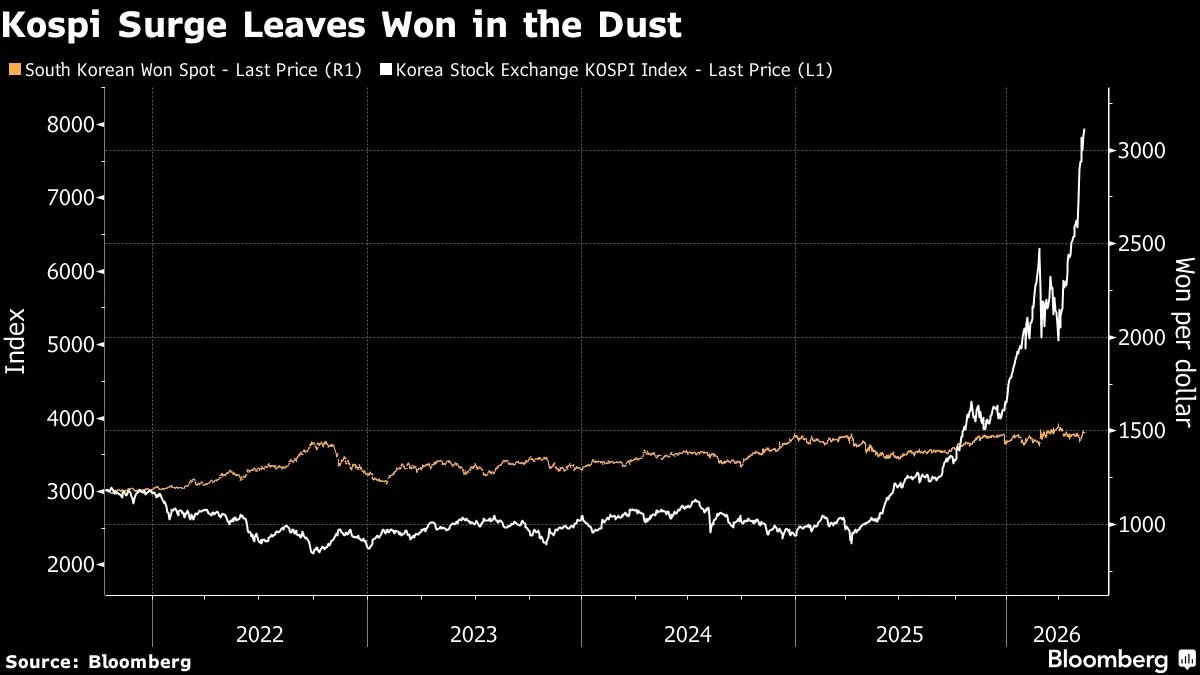
Yet translating rhetoric into action is difficult. Lee's promise to end the "Korea discount" — the long-standing undervaluation of Korean stocks relative to global peers — has been helped by the AI boom. He pledged to double the Kospi to 5,000 within five years; it took just five months. In February, Korea's overall market capitalization surpassed those of France and Germany. Last week, the index hit an all-time high above 6,400, up 160% over the past year.
Resilience vs. Innovation
Korea has a proven track record of weathering crises. It recovered faster than any other nation from the 1997-1998 Asian financial crisis, navigated the 2008 Lehman shock, survived the 2013 taper tantrum, and managed the Trump 1.0 trade war. During the Covid-19 pandemic, Korea became a global model for low infection rates. The Bank of Korea was the first among the top-12 central banks to tighten policy in 2021.
But as one Seoul-based analyst put it, Korea is highly skilled at economic defense but not always great at offense. In 2026, both skills will be essential. The country must convince the world it is not losing its innovative edge. When tech meant cool smartphones, Korea was at the center of the universe. Today, the metric is not just manufacturing high-end chips for AI, but inventing game-changing technologies that put Korea at the center of global disruption.
Meanwhile, external shocks persist. The Iran conflict has strained global supply chains, and Japan's experience with supply chain disruptions offers a cautionary tale for Korea. Trump's tariffs remain a clear and present danger, but they are temporary; China's state-subsidized tech push is structural and long-term.
To secure its future, Korea needs to move beyond riding the AI wave and start shaping its direction. That means fostering a risk-taking culture, incentivizing R&D, and creating ecosystems where startups can grow into mid-sized innovators — not just suppliers to the chaebols. Without such reforms, the current boom may simply mask the next crisis.