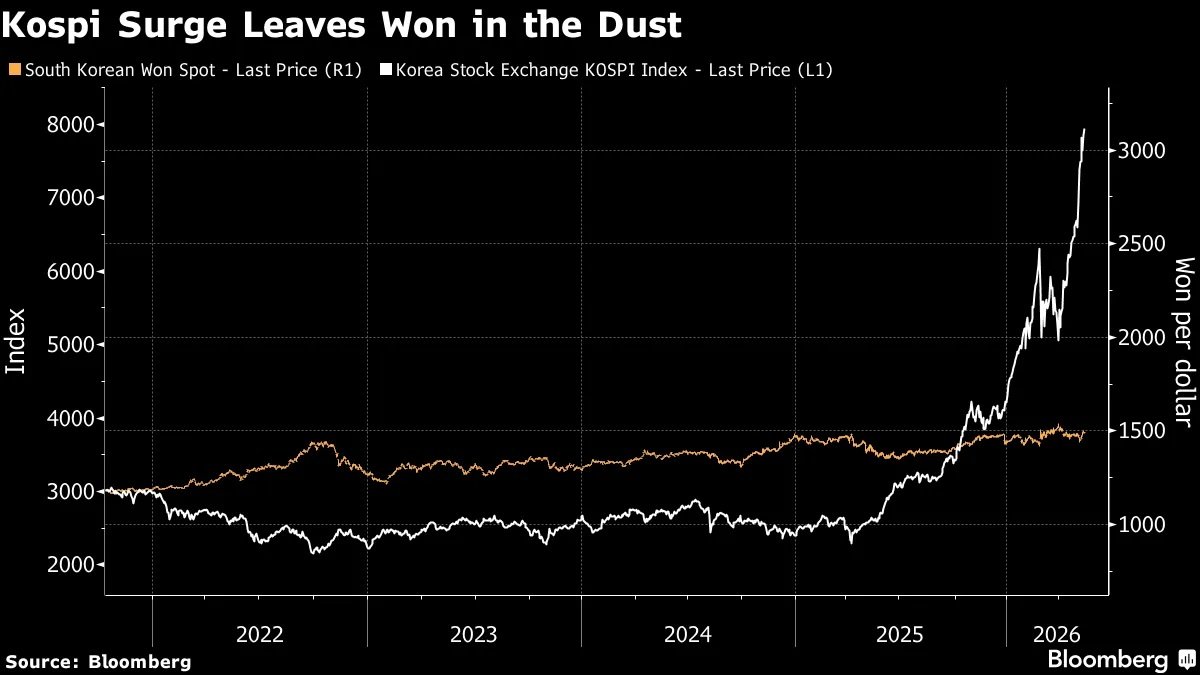
Recent projections from the International Monetary Fund suggest that South Korea's nominal GDP per capita could reach approximately $49,000 by 2027, surpassing Japan's estimated $37,000–38,000. This milestone has sparked admiration across the region, where many view South Korea as a model of technological prowess and economic dynamism. Its leadership in semiconductors, advanced manufacturing, and innovation is undeniable.
Yet beneath this glittering surface lies a multidimensional crisis that threatens the country's social fabric, economic resilience, national security, and strategic autonomy. Rapid population decline, accelerating aging, weakening family structures, uneven growth, political polarization, and an increasingly dangerous military environment are converging in ways that could fundamentally alter South Korea's trajectory as a major regional power.
A demographic winter
South Korea is experiencing one of the world's most severe demographic declines. Preliminary government data for 2025 recorded approximately 254,500 births against 363,400 deaths, a natural population decrease of nearly 109,000. Although births ticked up slightly from 2024, the fertility rate remains far below the replacement level of 2.1 children per woman.
The aging crisis is equally stark: in 2025, over 21% of the population was aged 65 or older—more than one in five South Koreans. A shrinking workforce will strain manufacturing, healthcare, construction, and other essential sectors, while rising pension and healthcare costs will burden younger generations. The military, too, faces a dwindling pool of conscription-age citizens, complicating defense planning amid growing threats from North Korea.
Depopulation is hollowing out provincial towns, where schools, hospitals, and businesses are closing. The gap between metropolitan centers like Seoul and rural areas widens, fueling resentment and inequality. High housing costs, precarious employment, expensive education, and the difficulty of balancing career and family discourage young people from marrying or having children. Loneliness, mental health struggles, and suicide rates remain alarmingly high.
This demographic crisis is not merely a matter of fewer births. It threatens labor supply, productivity, social institutions, fiscal sustainability, and military readiness. As these trends are likely to persist for decades, they could significantly erode South Korea's long-term economic potential and strategic influence.
Two-speed economy
South Korea's economy increasingly resembles a two-speed model. Export champions in semiconductors, artificial intelligence, automobiles, shipbuilding, batteries, and defense are thriving, while small businesses, self-employed workers, construction, and domestic-facing sectors struggle. The success of conglomerates like Samsung and SK Hynix does not automatically translate into secure jobs, affordable housing, or improved living standards for ordinary citizens.
Household debt is among the highest in the developed world, domestic demand is weak, and labor-market inequalities persist. Young South Koreans face daunting barriers to stable employment and homeownership, while the prohibitive cost of raising children further depresses birth rates. Regional disparities between the capital area and the rest of the country remain pronounced.
Dependence on a narrow set of globally competitive industries also exposes the economy to technological cycles, geopolitical tensions, and supply-chain disruptions. The semiconductor sector, for instance, is vulnerable to fluctuations in global demand and intensifying competition from China and the United States. The challenge is not merely to sustain growth but to make prosperity more inclusive and resilient. Without structural reforms, stronger support for small businesses, and broader productivity gains, export success may coexist with growing social dissatisfaction and a pervasive sense of hopelessness.
Security in a dangerous neighborhood
South Korea faces a formidable military threat from North Korea, whose nuclear weapons, ballistic missiles, drones, and emerging capabilities increasingly challenge Seoul's deterrence. Although South Korea possesses sophisticated armed forces and benefits from its alliance with the United States, its geographic vulnerability is severe. Seoul, major industrial complexes, ports, and critical infrastructure could suffer devastating damage in any future conflict, where traditional military superiority may no longer guarantee victory.
China's growing regional influence adds another layer of strategic complexity. While South Korea seeks to balance its economic ties with Beijing and its security alliance with Washington, the room for maneuver is narrowing. As South Korea's hypersonic test demonstrates, Seoul is investing in advanced capabilities, but the strategic calculus remains fraught.
Political polarization at home further complicates coherent policy responses. Deep divisions between conservatives and progressives have paralyzed reforms on labor, education, and demographics. The National Assembly has become a battleground of partisan gridlock, eroding public trust in institutions and hindering the long-term planning that these crises demand.
South Korea is not facing imminent collapse, but economic achievements alone cannot guarantee its long-term resilience. Regional partners and allies must look beyond favorable economic headlines and assess these underlying vulnerabilities to avoid strategic miscalculations and protect their own interests. The stakes are not just South Korean—they are regional and global.