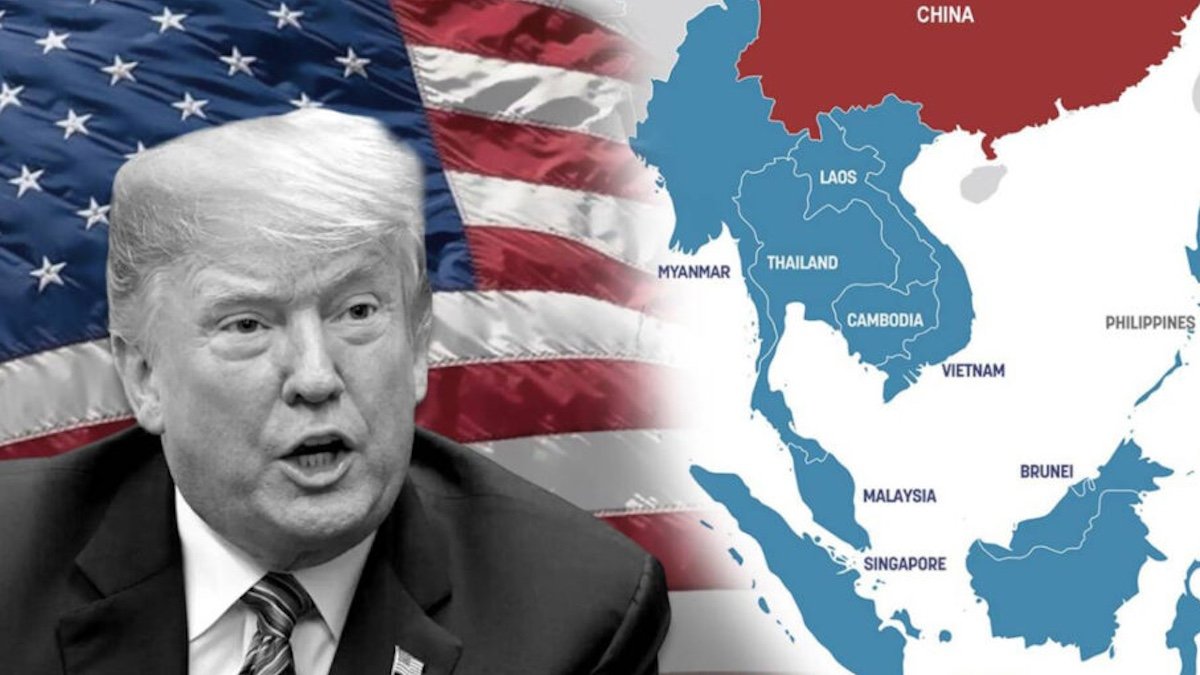
A recent decision by the United States Supreme Court has introduced significant uncertainty into the trade relationships between Washington and its partners in Southeast Asia. The court's 6–3 ruling invalidated tariffs imposed by President Donald Trump under the International Emergency Economic Powers Act (IEEPA), a primary legal tool used in his administration's bilateral trade negotiations.
For nations like Indonesia, Malaysia, and Cambodia, which recently concluded trade agreements with the US under the threat of these now-invalidated tariffs, the ruling presents a strategic dilemma. The core question is whether the concessions made in those deals remain binding, or if the legal shift resets the negotiating table entirely.
Deals Built on a Faulty Foundation
The timing of the court's decision is particularly acute for Indonesia. Just one day before the ruling, Jakarta signed a reciprocal trade agreement with Washington. The deal, announced during President Prabowo Subianto's participation in a Trump administration Board of Peace meeting, committed Indonesia to eliminating tariffs on 99% of American goods, removing non-tariff barriers, and lifting export restrictions on critical minerals. In return, the US lowered its tariffs on Indonesian goods to 19%, down from a previous rate of 32%.
Similar agreements were reached with the Philippines, Cambodia, and Malaysia, setting their tariff rates at 19% or 20%. Crucially, these were not treaties ratified by the US Senate but executive arrangements based on presidential authority the Supreme Court has now deemed unlawful. As Justice Brett Kavanaugh noted in his dissent, the ruling's impact on existing international trade deals is a significant concern left unaddressed by the majority.
A New, Lower Ceiling for Tariff Pressure
The Trump administration's response was swift, announcing a new 15% global tariff under Section 122 of the Trade Act of 1974. This statute, designed for balance-of-payments emergencies, caps tariffs at 15% for a maximum of 150 days without congressional approval—a far narrower authority than IEEPA provided.
This creates a paradoxical situation. For nearly every Southeast Asian country that negotiated a deal at a rate above 15%, the new legal baseline is actually lower than the rate they agreed to. While Treasury Secretary Scott Bessent argues alternative authorities will keep tariff revenue "virtually unchanged," the structural constraints of statutes like Section 122 and Section 301 introduce real checks that IEEPA did not. The administration has also signaled it will not voluntarily refund an estimated $160 billion in IEEPA duties already collected, leaving that to further litigation. This move, along with the enactment of the new 15% tariff, underscores a strategy of maintaining pressure through procedural friction and alternative mechanisms.
Southeast Asia's Strategic Calculus
Governments across ASEAN now face a pragmatic choice. They can honor their concessions—which include zero tariffs on US goods and access to critical minerals—to preserve goodwill with an administration that may yet find new legal tools. Alternatively, they can leverage the new legal uncertainty to revisit the terms of their agreements.
The US-ASEAN Business Council has characterized the ruling as adding "uncertainty and confusion" rather than acting as a definitive "deal breaker," a framing that likely captures the short-term reality. ASEAN members are pragmatic; they recognize the enduring importance of the US market and the risks of antagonizing Washington over a legal technicality. However, pragmatism is a two-way street. If the Trump administration cannot credibly threaten tariffs above 15% without congressional cooperation, the fundamental bargaining power behind these deals has shifted.
The trade negotiations are also entangled with wider diplomatic and security commitments, complicating any simple unwind. Indonesia's deal was announced alongside President Prabowo's commitment to deploy troops to a Gaza stabilization force. Similarly, Vietnam's participation in the Board of Peace appears linked to seeking favorable trade terms. These linkages, reminiscent of how a Hormuz blockade raised stakes before major power summits, show trade policy is deeply interwoven with strategic geopolitics.
A Temporary Respite in a Volatile Climate
The Supreme Court ruling offers Southeast Asia a window of recalibration, not a permanent resolution. The removal of the IEEPA tariffs provides immediate relief, but other pressures remain, including Section 232 national security tariffs on steel and aluminum and potential new Section 301 investigations.
For ASEAN, the situation is neither a full reprieve nor a return to the pre-2025 trade environment. It is a period of reduced bargaining asymmetry, allowing governments to reassess what they are willing to offer. This recalculation occurs against a backdrop of broader global volatility, where actions like the Iran conflict risk energy shocks for Asian economies and the administration pursues a massive defense budget increase.
The domestic political landscape in Washington adds another layer of uncertainty. Southeast Asian capitals must now navigate a trade policy arena where legal foundations are unstable, executive power is being tested, and economic negotiations are inextricably linked to security partnerships. The coming months will test the region's diplomatic agility as it weighs its options in this newly uncertain framework.