Taiwanese authorities have dismantled a smuggling network that routed high-end Nvidia artificial intelligence chips through Japan to circumvent US export restrictions targeting China. The Keelung District Prosecutors' Office arrested three individuals—identified by the surnames You, Wang, and Chen—and seized approximately 50 servers valued at more than US$15 million, according to Taiwan's Central News Agency.
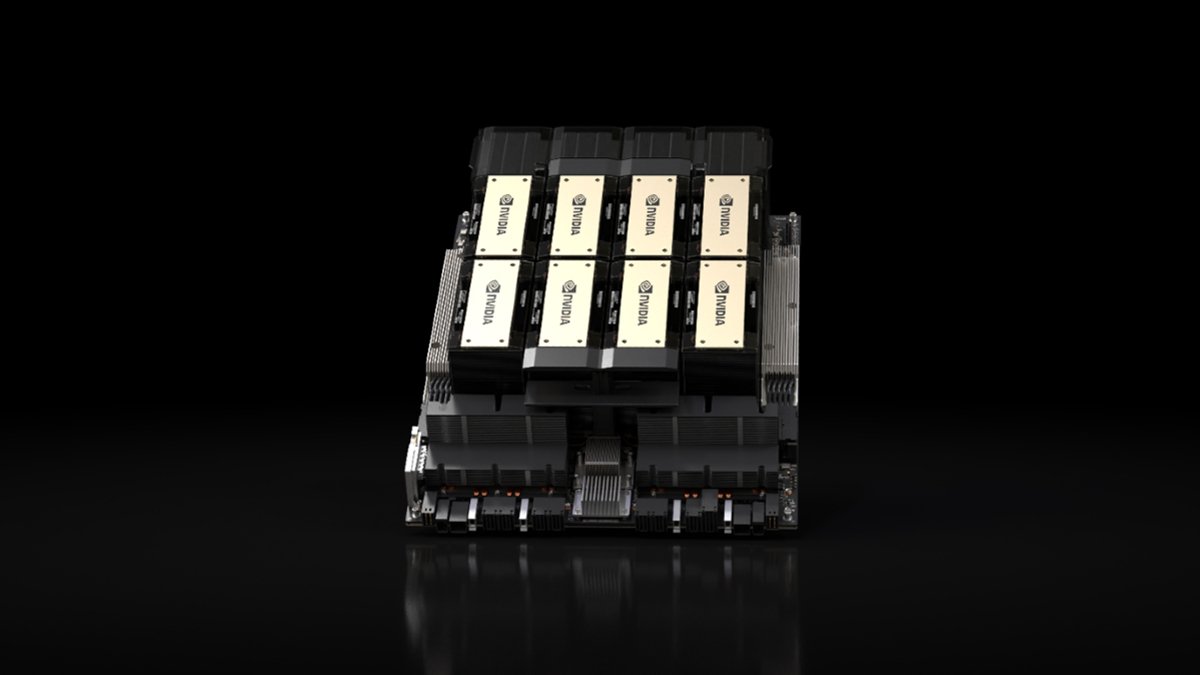
The servers, built by Super Micro Computer and loaded with Nvidia's H200 and other advanced chips, were shipped from a northern Taiwanese port under falsified export documents. Prosecutors said the suspects listed a Northeast Asian country as the destination, later identified by Bloomberg as Japan. Investigators believe at least one shipment transited Japan and reached Hong Kong, with mainland China as the intended final destination. A second planned shipment was intercepted before leaving Taiwan.
This is the first known case of smugglers using Japan as a waypoint for Nvidia chip trafficking. In March, a separate US operation exposed a transshipment network running through Taiwan, Thailand, and Hong Kong, leading to the arrest of a Super Micro co-founder.
Gray Market Grows as US Curbs Tighten
The crackdown comes as US export controls on advanced semiconductors have driven a surge in gray-market activity. Nvidia's H200, B200, and GB200 chips are subject to strict US restrictions barring their sale to China, Hong Kong, and Macau. Nvidia CEO Jensen Huang, speaking in Taipei on May 23, acknowledged the challenge: “Ultimately, Super Micro has to run their own company. I hope that they will enhance and improve their regulation compliance.” He added that Nvidia rigorously explains export rules to all partners.
Super Micro, a Nasdaq-listed company, issued a statement praising the Taiwanese authorities' action. “Supermicro is committed to protecting our advanced technologies and intellectual property, and we are proud to have worked closely with Taiwanese authorities on the recent event,” the company said. “Our collaboration with authorities in Taiwan resulted in the arrest of three suspects and the seizure of 50 servers that had been deceptively acquired.”
Beijing downplayed the arrests. Chinese Foreign Ministry spokesman Guo Jiakun dismissed a journalist's question on May 22, saying, “It is not a question about foreign affairs. I'm not aware of that.”
Beijing's Push for Domestic Chips
The smuggling case unfolds against a broader backdrop of US-China tech competition. Washington's approval of H200 exports to China has been effectively nullified by Beijing, which has urged local firms to buy from domestic chipmakers like Huawei Technologies. In an interview with CNBC on May 20, Huang revealed that Nvidia's share of China's AI accelerator market has collapsed from roughly 95% to effectively zero after successive US export restrictions. Huawei's Ascend chip line is on track to generate $12 billion in revenue by 2026.
“The demand in China is quite large,” Huang said. “Huawei is very, very strong. They had a record year, they'll likely, very likely, have an extraordinary year coming up.” He added that Nvidia had largely conceded the Chinese market to local competitors but remained eager to return if conditions change.
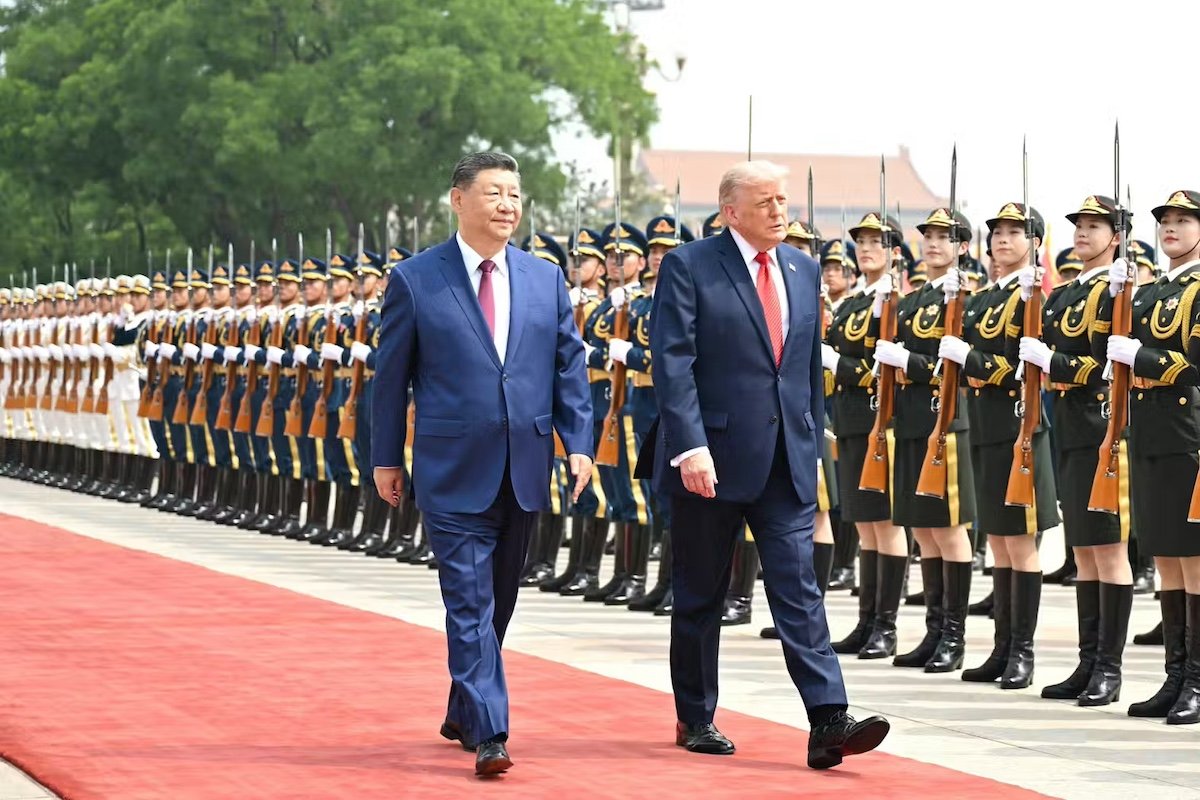
Huang's inclusion in US President Donald Trump's delegation to China from May 13 to 15 had briefly raised market expectations that Beijing might approve H200 imports. Instead, Beijing not only withheld approval but also reportedly banned Nvidia's GeForce RTX 5090D V2, a graphics card engineered specifically for the Chinese market to comply with US rules.
Some Chinese commentators seized on Huang's remarks as evidence that China had won the chip war. A Gansu-based columnist wrote that Huang “laid bare a truth that many had pretended not to see.” However, the smuggling case suggests that demand for Nvidia's advanced chips remains strong in China, even as official channels close.
The case also underscores the growing compliance pressure on technology giants like Nvidia and Super Micro. As the US-China AI race intensifies, Taiwan's enforcement action sends a clear signal against violations in the semiconductor supply chain. After Bloomberg identified Japan as the transit country, China-based columnists and news outlets went silent on the story, highlighting the sensitivity of the issue.