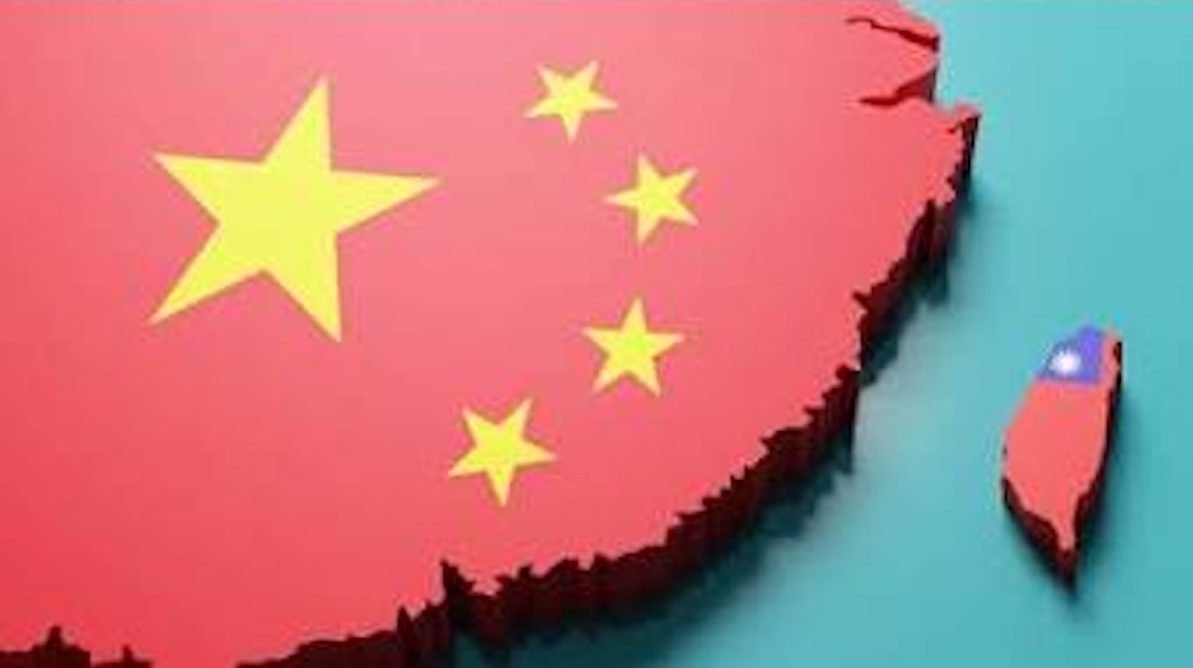
Taiwan's external security environment has rarely looked more forbidding. China, equipped with a modernized arsenal, regularly rehearses scenarios for forcibly incorporating the island. Meanwhile, confidence in Washington's commitment has eroded: the Trump administration has delayed a congressionally approved arms package in hopes of a trade deal with Beijing, and the president has publicly mused that Taiwan is indefensible, should pay for its own protection, and "stole" America's semiconductor industry. The pressure on Taiwanese firms to build fabs in the US only deepens doubts about America's willingness to intervene in a cross-strait crisis.
Given this bleak picture, some observers argue that Taipei should cut its losses and accept Beijing's terms. A recent South China Morning Post column by Alex Lo urged Taiwan to "give up now." The PRC would welcome such an outcome, which would mean Taipei negotiating a settlement on Beijing's terms, trading away its de facto independence for peace.
But surrendering now would be a grave mistake, and not only because of the moral and political costs. Taiwan's people have overwhelmingly rejected unification with the PRC, and for good reason. The island endured a brutal occupation by a mainland government after 1945, when the Kuomintang regime treated Taiwanese as disloyal subjects, suppressed their self-government movement, and plundered the island's wealth. The 2-28 Incident of 1947, an island-wide uprising, was crushed with thousands killed. While today's circumstances differ, the sudden imposition of PRC rule would mean the end of Taiwan's three decades of liberal democracy—free elections, open criticism of officials, and a vibrant civil society. Beijing would tolerate none of this.
China's record with restive communities is instructive. In Tibet, the government has been credibly accused of mass killings of protesters; in Xinjiang, it has imprisoned hundreds of thousands in so-called "re-education centers." In Hong Kong, since 2022, even minor dissent—such as wearing a T-shirt with a political slogan—has led to imprisonment. PRC officials have been explicit about their intentions: Ambassador to France Lu Shaye said Taiwan's people would be "re-educated" to "become patriots again," and Ambassador to Australia Xiao Qian warned that "secessionists" would be "punished according to law." Under Chinese law, advocating "splitting the country" carries a penalty of five years to life in prison. By continuing to resist, Taiwan retains a fighting chance to avoid this fate; by giving up now, it would have none.
China's military advantage is not decisive
China's ability to forcibly annex Taiwan is far from assured. Beijing is leveraging its manufacturing capacity to overwhelm potential adversaries with numbers, while challenging US technological superiority and closing operational gaps. But Taiwan, the US, and Japan are also investing heavily in countermeasures. Washington is expanding its precision-strike capabilities and naval shipbuilding, and is exploring outsourcing production to Japanese and South Korean shipyards. The net result is that China's odds of winning a cross-strait war are improving, but for the foreseeable future it will not achieve the kind of overmatch that guarantees victory. Any conflict would involve massive losses on all sides, making the military option a last resort for Beijing—a terribly costly victory at best, and a potentially catastrophic failure.
Moreover, the idea that Taiwan will get a better deal by settling sooner rather than later is no longer credible. In the pre-Xi era, Beijing offered a unification package that included Taiwan keeping its military and political system, with no mainland troops or officials stationed on the island. Those sweeteners have been dropped. Beijing now insists on the "one country, two systems" model, which has been thoroughly discredited by the dismantling of civil liberties in Hong Kong. The new stipulation of "patriots governing Taiwan" signals an intention to replace Taiwan's political system entirely.
Some argue that Americans won't fight for Taiwan, and polls suggest that half or more of the US public is reluctant to intervene. But that is not the same as saying Taiwan should surrender. As Iran's mountain airbases show, a determined defender can complicate an aggressor's calculus. Taiwan's own new F-16Vs and other modernizations are designed to buy time and raise the cost of an attack. The delays in US arms deliveries are a political problem, not a strategic inevitability, and they can be reversed.
Taiwan's semiconductor industry is another source of leverage. The island produces the vast majority of the world's most advanced chips, and its silicon shield is a critical asset in the AI era. If Taiwan were to fall, the global economy would be severely disrupted, giving the US and its allies a strong incentive to prevent that outcome. Surrendering now would squander this leverage and hand Beijing a victory it could not achieve by force.
In sum, Taiwan's situation is serious, but not hopeless. The path of resistance is fraught with risk, but the alternative—accepting Beijing's rule—would mean the end of Taiwanese democracy and the beginning of a repressive regime. Taipei should not assume that war is inevitable, nor should it rush to surrender. The island's best strategy is to continue strengthening its defenses, deepening ties with like-minded partners, and making clear that any attempt to annex it would be a costly and destabilizing act.