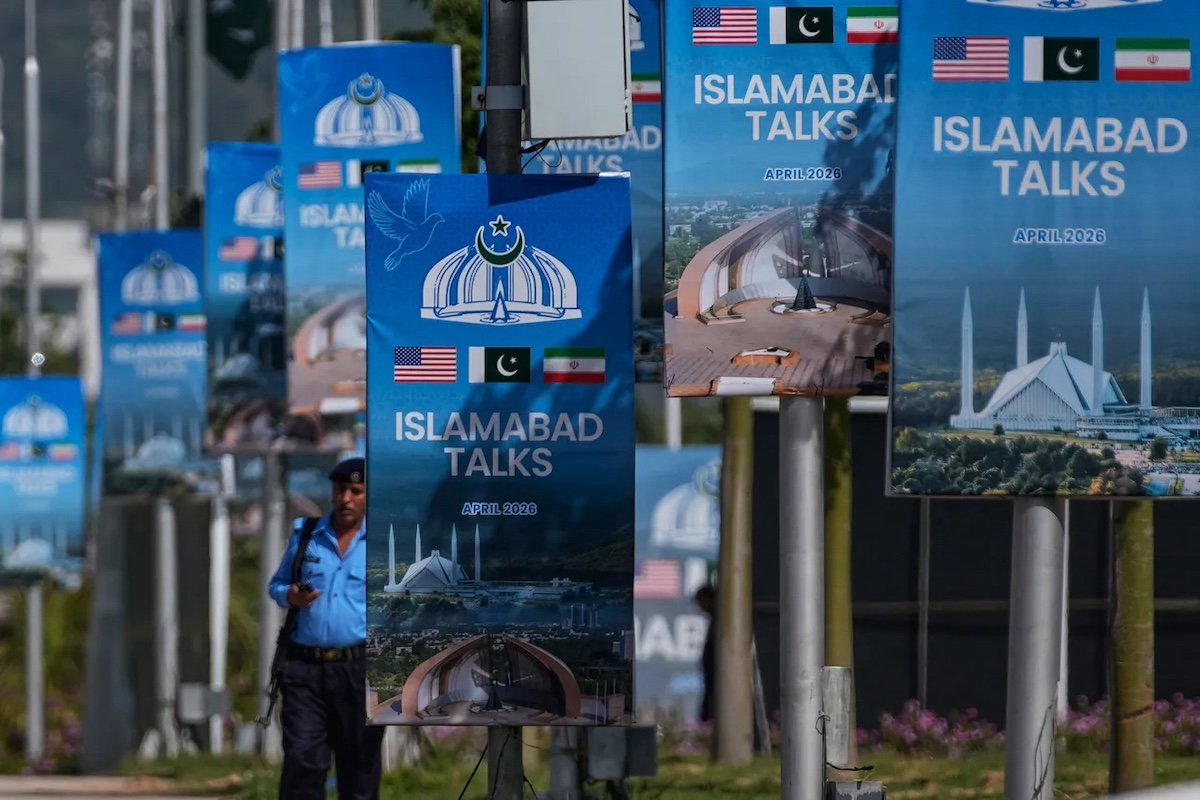
For those who have tracked the long, often tragicomic arc of American diplomacy in the Middle East, the sight of US Secretary of State Marco Rubio convening Israeli and Lebanese officials at the State Department in April 2026 felt like a familiar script. The optics were carefully staged—the first direct talks between the two countries in decades, hosted in Washington. Optimism was performed, expectations dutifully tempered, and history, as always, was not invited to the room.
Yet history has a way of crashing the party. For the first time since the collapse of the May 17 Agreement of 1983—reached after another Israeli invasion of Lebanon—Israel and the Lebanese government have announced direct negotiations aimed at a peace deal and the disarmament of Hezbollah. That the 1983 accord fell apart within a year under Syrian pressure and domestic Lebanese opposition should give even the most ardent optimist pause. In the Levant, history does not always repeat itself, but it has a particular fondness for doing so.
The Structural Problem Nobody Wants to Name
The fundamental obstacle to any durable arrangement is not a lack of goodwill in Beirut or a shortage of American diplomatic energy. It is the continuing reality of a Lebanese state that does not fully control its own territory, military decisions, or foreign policy. Lebanon's new government, which took office in January 2025, adopted the “National Shield” plan—a five-phase roadmap to disarm Hezbollah—backed by a $230 million US investment in the Lebanese Armed Forces (LAF). Phase one, officials claimed, was completed. Then, on March 2, 2026, Hezbollah resumed strikes against Israel from southern Lebanon, undermining that claim entirely. This is the Lebanese state in microcosm: willing in Beirut, unable in the south.
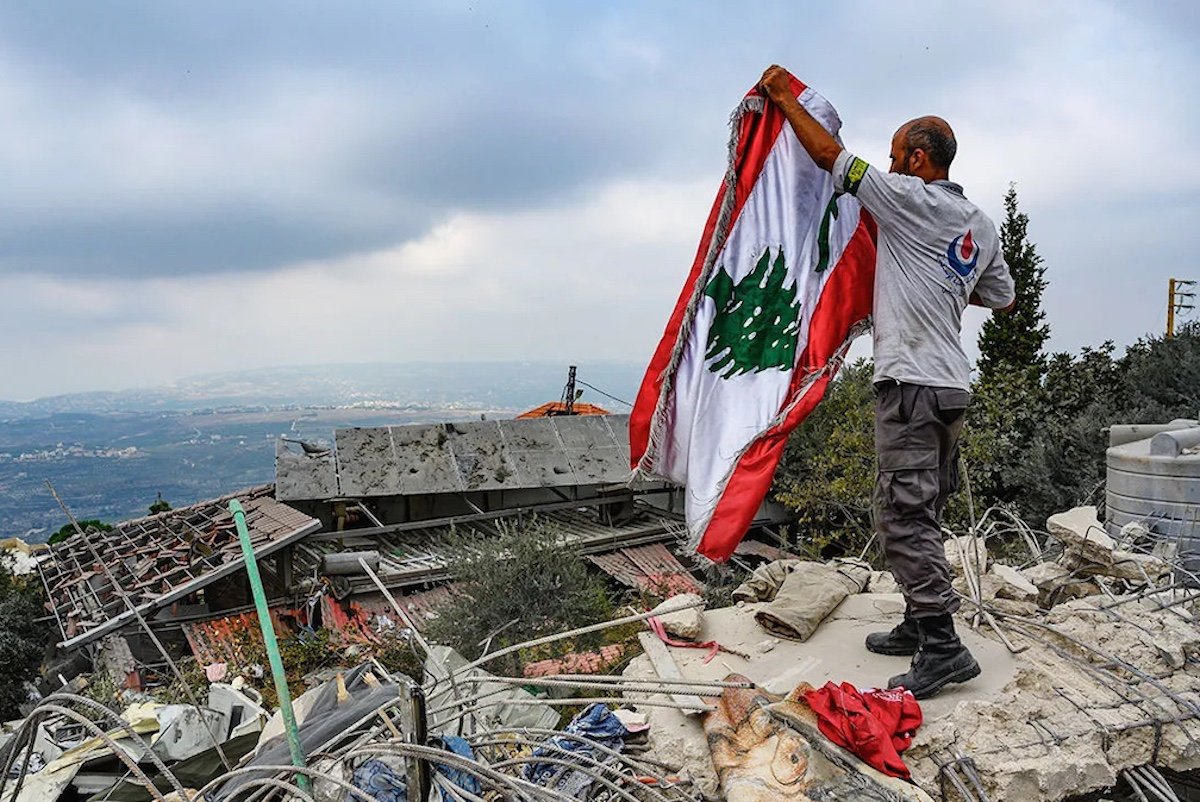
When Israeli ground forces crossed the Blue Line in mid-March 2026, the LAF withdrew rather than engage, citing operational limitations and a lack of orders from Beirut. This was not a failure of nerve but an accurate reflection of institutional reality. The LAF is modest in size, ill-equipped to defend borders, and unauthorized to confront invading forces without explicit government orders. That $230 million, it turns out, does not buy sovereign control over a militia with 30 years of entrenched infrastructure, Iranian patronage, and armed constituencies.
The 1983 Ghost
Washington's enthusiasm for the current talks uncomfortably echoes the May 17 Agreement four decades ago. Then, as now, an Israeli military campaign had devastated Lebanese territory and weakened Hezbollah's predecessor forces. Then, as now, a US administration believed it had created a diplomatic opening. Then, as now, the agreement was contingent on the Lebanese government's ability to impose its will on forces that did not recognize its authority. The 1983 agreement collapsed due to internal opposition and pressure from Ba'athist Syria, backed by the Soviet Union. Syria is weaker today, but Iran is not. And Hezbollah, though battered, has survived the killing of its leadership before.
It would be intellectually dishonest to dismiss the current moment entirely. Something genuinely new has occurred. Lebanon's current government came to power on a reformist platform that included disarming non-state actors, and officials were openly angered by Hezbollah's decision to enter a new war. For years, Lebanese governments maintained studied ambiguity about Hezbollah's armed wing, treating it as a permanent, awkward houseguest that paid no rent but wielded enormous leverage. The current Aoun-Salam government has dispensed with that pretense—at least rhetorically. Moreover, Iran itself is in an unprecedented moment of strategic disarray. The killing of Iranian Supreme Leader Ayatollah Ali Khamenei has removed the ideological anchor of the Islamic Republic's regional project. Hezbollah without a confident Iranian patron is a different entity, though it remains to be seen how different.
Limits of American Brokerage
Here, the realist must issue a familiar warning. American diplomacy in the Middle East has a long and undistinguished history of mistaking process for progress, of assuming that summoning parties to Washington is itself a form of statecraft. It is not. As the Council on Foreign Relations carefully noted, the US-brokered talks in April 2026 offer an opportunity for peace—an opportunity, nothing more. Opportunities in the Levant have a long tradition of expiring unused. The deeper question is whether Washington has the sustained attention and leverage to see a complex, multi-year disarmament and normalization process through—particularly when the Trump administration's instincts run toward dramatic announcements rather than grinding, unglamorous institution-building. A peace agreement between Israel and Lebanon that lacks a credible enforcement mechanism for Hezbollah disarmament is not a peace agreement. It is a press release.
None of this is an argument for fatalism. The case for genuine rapprochement rests on one under-appreciated fact: both Lebanon and Israel have strong material incentives to end a conflict that has cost them enormously. Lebanon's economy has been in freefall for years; another war accelerates the collapse. Israel, for its part, has no strategic interest in permanently occupying southern Lebanon—an enterprise that historically produces insurgency, not security. If there is a path forward, it runs through practical security arrangements on the ground rather than grand diplomatic gestures. For now, the mirage persists, shimmering in the desert of American diplomacy.
For more on the shifting dynamics, see our analysis of Trump's Leaked Fury at Netanyahu and Israel's Lebanon Campaign.