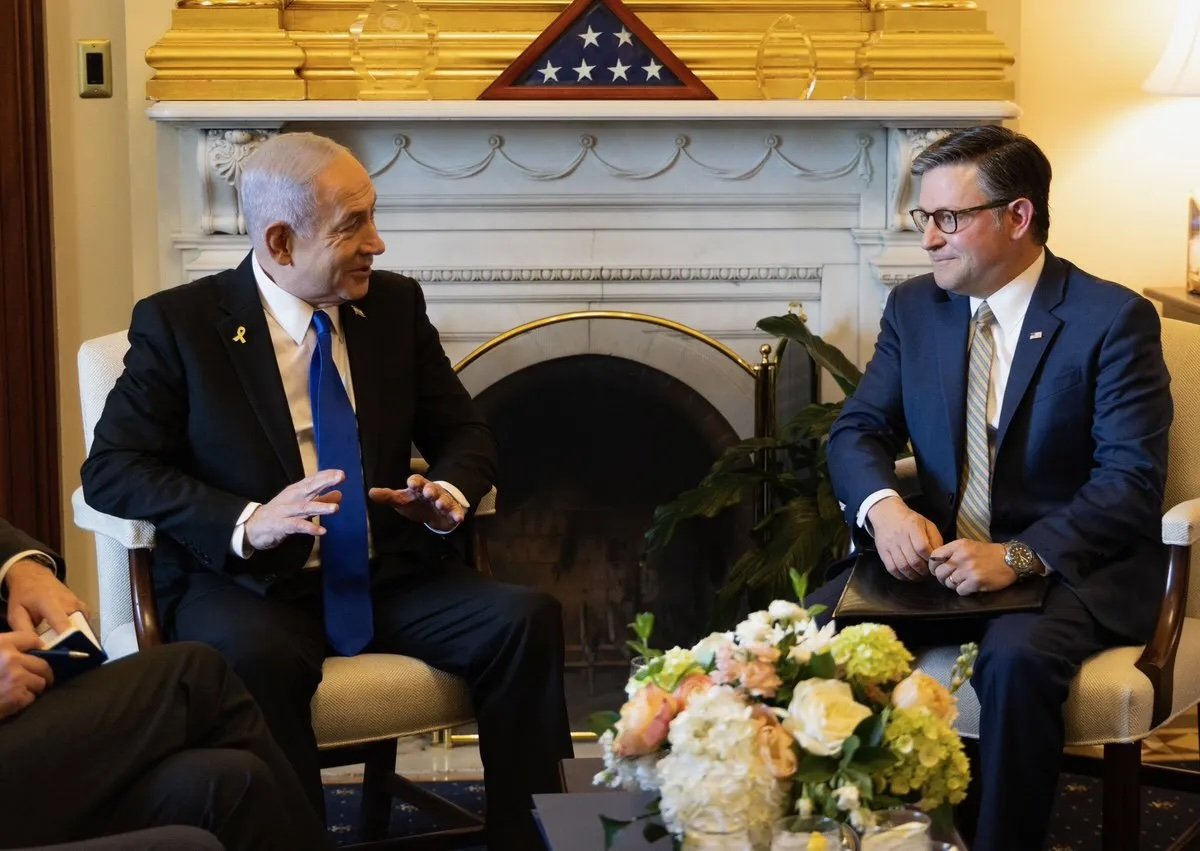
US President Donald Trump met unexpectedly on Thursday, November 5, with Kirill Dmitriev, a special representative of Russian President Vladimir Putin. Dmitriev, who also heads Russia's sovereign wealth fund, the Russian Direct Investment Fund, was in Washington ostensibly to attend an event hosted by First Lady Melania Trump marking a six-day local ceasefire near the occupied Ukrainian town of Oleshky. But his presence was widely seen as cover for deeper high-level negotiations involving Trump, Putin, and, to some extent, Ukrainian President Volodymyr Zelensky.
Trump offered an unusually upbeat readout after the meeting. "I can't tell you what I discussed. But I'm just telling you, it's going to be an agreement, it's going to be a big agreement," he told reporters. He added that the deal "is going to involve more than Ukraine, and I could even say it might involve all of Europe," promising a "big, beautiful agreement, and everyone is going to be thrilled."
Abu Dhabi talks and the European dimension
The next round of trilateral negotiations is scheduled for November 10-11 in Abu Dhabi, though it remains unclear how these talks align with Trump's grand vision. Russia is sending a senior delegation, including presidential aide Vladimir Medinsky, Deputy Foreign Ministers Sergei Ryabkov and Mikhail Galuzin, and senior general staff officials Igor Kostyukov and Yuri Zhigarlovsky. The US side is led by Steve Witkoff, the special presidential envoy, and Jared Kushner, who is also developing a post-war European security framework.
Kushner has outlined five principles for European security, including permanent security consultations, reliable crisis communications, greater military transparency, reciprocal escalation-reduction measures, and a lasting stability framework. Notably, his framework treats Russia as a partner with NATO countries, a stance that has drawn both interest and skepticism. Reports indicate that US negotiators are consulting with NATO and US European Command leaders in Brussels, though no top Pentagon officials are directly involved.
The Ukrainian delegation includes Zelensky's chief of staff Kyrylo Budanov and national security adviser Rustem Umerov. French Foreign Minister Jean-Noel Barrot has confirmed that European delegations will join the Abu Dhabi talks, adding a layer of complexity to an already crowded negotiating table.
Murky proposals and regional implications
The White House has offered no official readout on the proposals Dmitriev brought to Washington, and neither side has commented publicly. The only detailed account comes from the Ukrainian news service Euromaidan Press, which, given Ukraine's strict press environment, is likely to reflect official positions. According to that report, the Kremlin has proposed a two-stage ceasefire: an energy truce lasting until the New Year, followed by preparations for a full peace agreement by spring 2027.
The Russian conditions include halting Ukrainian strikes on Russian oil and gas infrastructure, a reduction in the size of the Armed Forces of Ukraine, limits on armaments, and concessions on the status of the Russian language and the Russian Orthodox Church inside Ukraine. In exchange, Russia might accept a territorial compromise that preserves Ukrainian control over the unoccupied parts of Donbas. Dmitriev also suggested that Russia could allow foreign troops to be deployed in western Ukraine, provided its demands are met.
These proposals carry significant implications for the wider Indo-Pacific. A settlement that freezes the conflict in Europe could free up US and allied military resources, potentially shifting Washington's focus toward Asia. However, any deal that legitimizes Russian territorial gains could set a precedent that worries allies like Japan and South Korea, who face their own territorial disputes. The midterm sweep reshaping Trump's Ukraine calculus may also influence how much political capital he can invest in this deal.
Meanwhile, the involvement of European leaders, hinted at by recent calls between Finnish President Alexander Stubb and Norwegian Prime Minister Jonas Gahr Store with Putin, suggests a broader diplomatic effort. But the lack of transparency raises questions about what exactly is being negotiated and who will ultimately be bound by it. As Trump's team pushes for a grand bargain, the details remain as murky as the new Yalta-style summit that some analysts fear could redraw the map without the consent of all parties.
For now, the world watches as Trump teases a deal that could reshape Europe's security architecture. Whether it will bring lasting peace or merely a temporary pause remains to be seen. The coming weeks in Abu Dhabi will be critical.