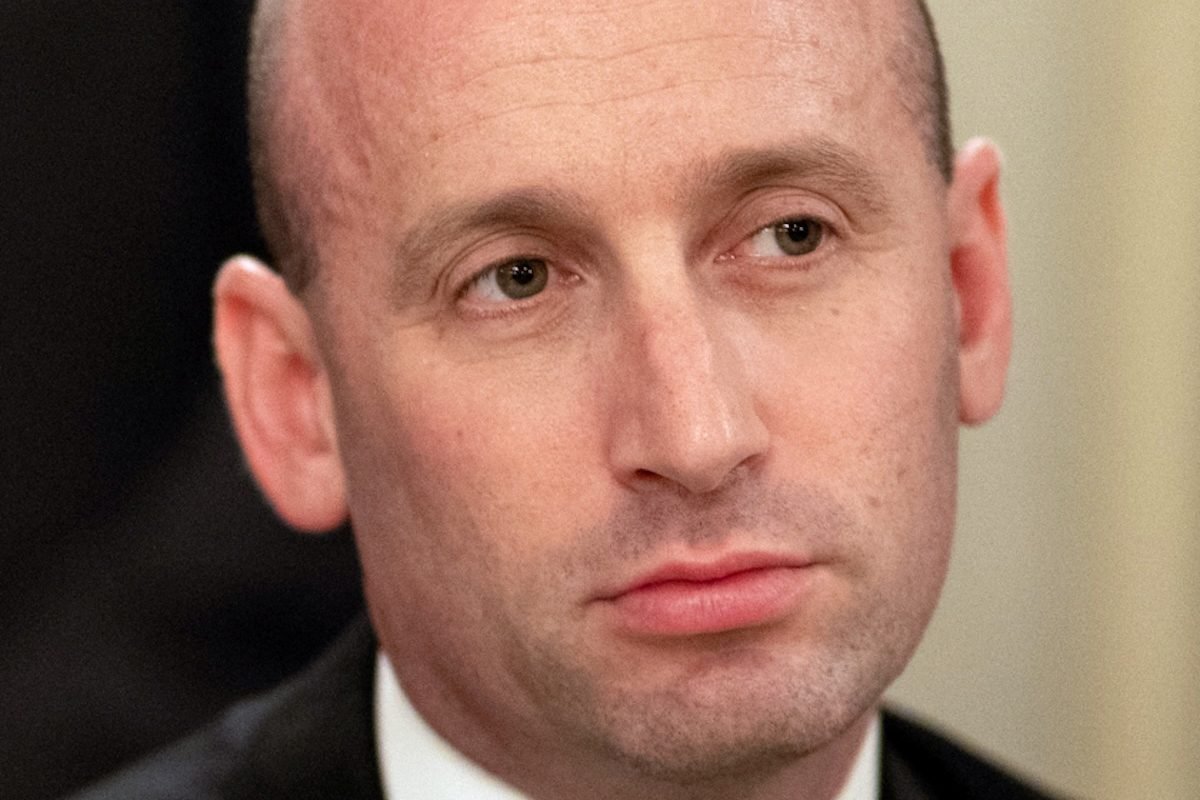
President Donald Trump announced on Friday that Stephen Miller, the chief architect of his administration's mass deportation policy, will become the next White House chief of staff, replacing Susie Wiles. Wiles had held the position for two years but was dismissed earlier this week.
The promotion, announced via a social media post, elevates a figure long associated with hardline immigration policies and controversial rhetoric. Miller has been a central figure in shaping Trump's immigration agenda, including the family separation policy and the recent ICE raids that have drawn widespread condemnation.
Bipartisan backlash
Democrats were quick to denounce the appointment. The House Homeland Security Committee's Democratic account called Miller "a vile, hate-filled extremist who has made cruelty his life's work," adding that "America just rejected the fear and bigotry he peddles and Trump handed him a promotion."
House Minority Leader Hakeem Jeffries (D-NY), likely to become the next Speaker, described Miller as a "dangerous xenophobe and reckless extremist who has American blood on his hands." He called for Miller's immediate dismissal, saying his "presence in government should be eradicated like a malignant tumor."
Rep. Robert Garcia (D-Calif.), in line to chair the House Oversight Committee, warned Miller to "lawyer up," citing his role in the "unconstitutional ICE raids that have terrorized our communities." Garcia promised that oversight Democrats would investigate Miller's conduct and fight his policies in Congress and the courts.
Rep. Pramila Jayapal (D-Wash.) called the appointment "a giant middle finger to every single voter who came out to the polls and demanded a change." She vowed that Democrats would deliver "real accountability for the corruption that Stephen Miller and Trump profited from."
Even some Republicans criticized the decision. Rep. Marlin Stutzman (R-Ind.), who had earlier called for Miller's firing, told Semafor that making him chief of staff was a "horrible decision." Outgoing Rep. Don Bacon (R-Neb.) said on CNN that Miller was "not a good choice," noting that his immigration stance had turned a two-to-one favorable issue into a two-to-one unfavorable one, costing the party seats in Texas and Arizona by alienating Hispanic voters.
Olivia Troye, former homeland security adviser to Vice President Mike Pence, expressed disgust, writing: "Stephen. Fucking. Miller. What a dangerous joke. Except no one is laughing."
The appointment comes just days after Trump's party suffered a historic defeat in the 2026 midterm elections, which saw Democrats sweep both chambers of Congress. Some analysts see the move as a signal that Trump intends to double down on his base rather than moderate his approach. As Democrats swept Congress, Trump had struck a conciliatory tone, but Miller's promotion suggests a different course.
New York Times columnist Jamelle Bouie mused that the appointment could benefit Democrats in the long run, potentially opening the door to a 60-plus Senate majority in 2029. MSNBC host Chris Hayes echoed that sentiment, suggesting that putting Miller in charge could trigger a landslide victory for Democrats in 2028.
For Asia watchers, the shift in Washington carries implications. Miller's hardline stance on immigration and trade could affect U.S. relations with Asian nations, particularly on issues like visa policies and economic partnerships. The dollar's strength and economic policy remain key areas to monitor as the new chief of staff takes office.