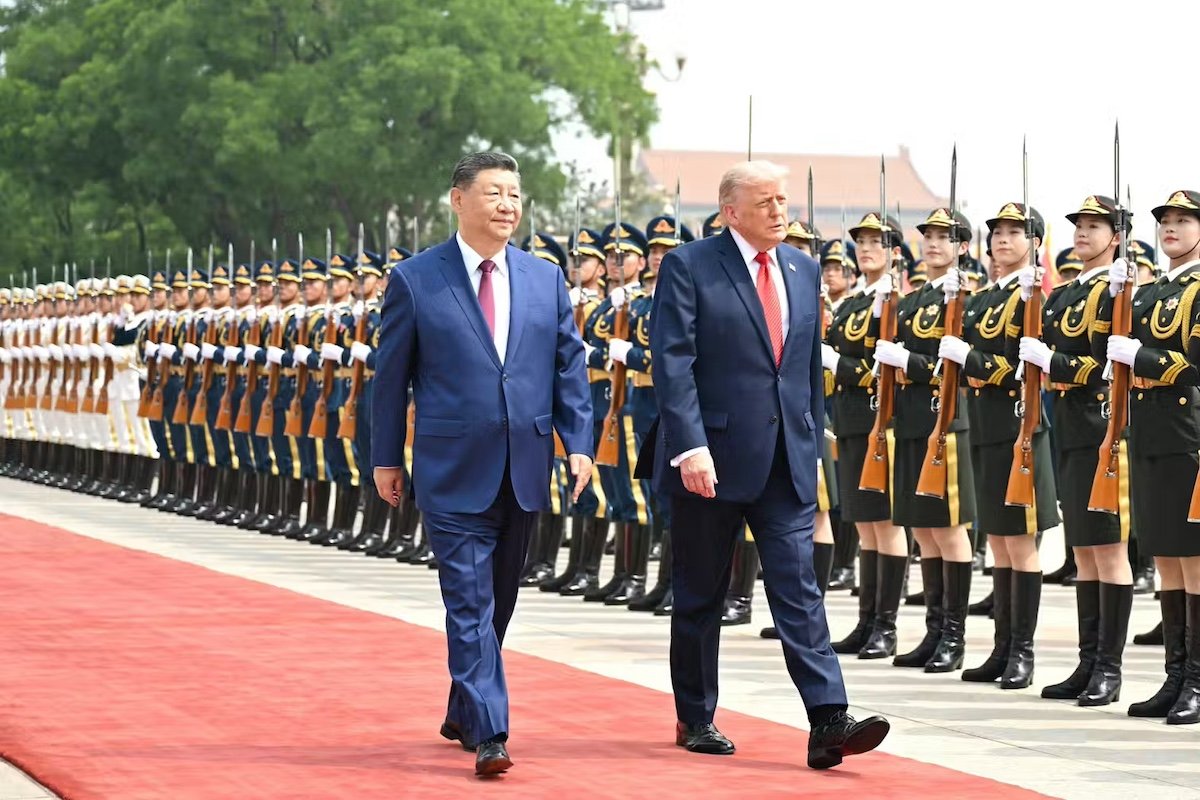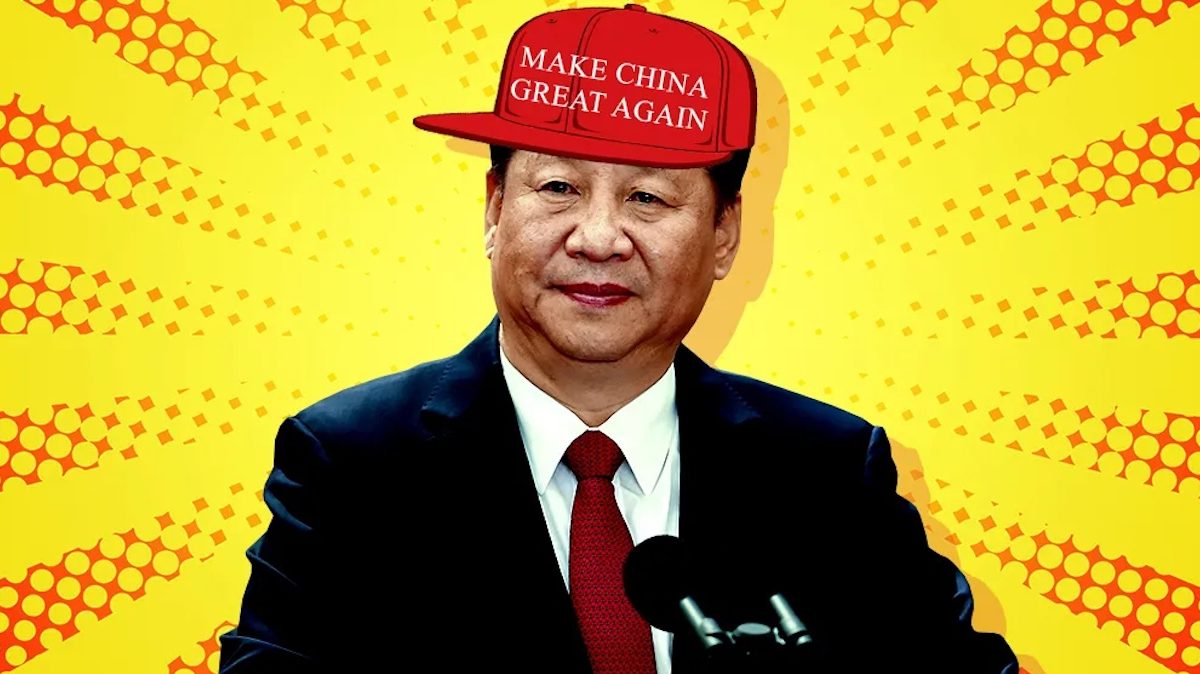
Donald Trump's return to Beijing as US president was meant to be a grand stage for deal-making. Instead, it became a showcase of how little he achieved, with the real spotlight stolen by a CEO who arrived late and left with the most tangible prize.
President Xi Jinping hosted Trump with full ceremonial honors, offering enough face-saving gestures—talk of cooperation on trade tensions and the Iran conflict—to let Trump claim a win back in Washington. But beneath the photo ops, the substantive outcomes were thin.
The most striking development was the presence of a $20 trillion entourage of CEOs, representing a market value roughly equal to China's annual GDP. Among them, Nvidia's Jensen Huang was a last-minute addition, so late that he had to catch up with Air Force One during a refueling stop in Alaska. His inclusion signaled to markets that Trump was willing to go far to curry favor with Beijing.
According to Eurasia Group analyst Amanda Hsiao, Huang's participation makes it increasingly likely that China will announce purchases of Nvidia's H200 chips, a critical component for the artificial intelligence boom. This would be a major win for Nvidia, which is approaching a $6 trillion market capitalization, and for the AI trade driving global stock markets. It also underscores how Trump's trip may ultimately benefit a single company more than US strategic interests.
Beyond the CEO parade, the tangible outcomes were modest. There were discussions of Boeing plane orders, soybean purchases, and a reciprocal visit by Xi to Washington later this year. But the truly big issues—unfettered access to rare earths, AI coordination, or reopening the Strait of Hormuz—were left unresolved. As former US Congressman Adam Kinzinger put it, Xi treated Trump "like a salesman that he's going to politely entertain, and this particular salesman appears to be flying home with very little in his bag."
Uncertainty Beneath the Surface
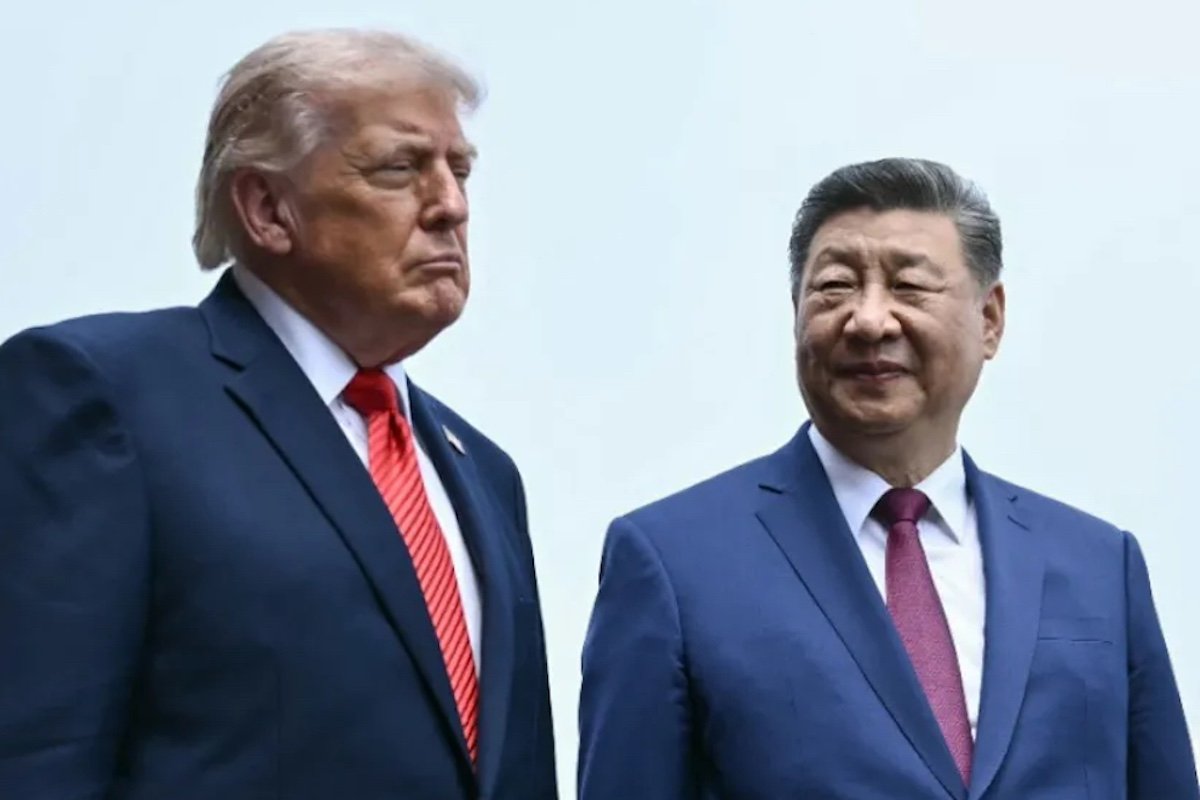
The warm optics of the Trump-Xi summit masked deep strains. Xi issued a stern warning on Taiwan, raising the specter of "collision or even clashes" if the issue is mismanaged. Trump, standing beside Xi, refused to answer reporters' questions on Taiwan—a telling silence that highlighted his limited leverage.
Economists are also parsing Xi's reference to the "Thucydides trap," the risk of military conflict when a rising power threatens to displace an established one. Xi proposed a "constructive, strategic and stable relationship" between the two economies, which together account for $53 trillion in GDP. Yet the very fact that the two leaders could meet and clink glasses is an unambiguous positive for global markets.
But Trump's core goal—a "grand bargain" trade deal that would force deep concessions from Beijing—remains elusive. Carlos Casanova, an economist at Union Bancaire Privee, notes that a notable diplomatic breakthrough "remains improbable." More likely are modest gestures, such as a tariff truce on select categories and assurances on critical materials access.
One area of potential progress is rare earths. China's rare-earth exports surged 197% year-on-year in April, a sign of goodwill. Casanova suggests a mutual understanding to maintain stable supply in exchange for restraint on punitive measures would be a logical, market-friendly outcome. Yet China retains the capacity to cut off these minerals, vital for EVs, semiconductors, and military systems, at any moment.
As Trump returns to a White House in disarray, his base may be unimpressed. The trip's biggest winner was not the president but a CEO who flew in late and left with the promise of chip sales. For an administration that entered office vowing to bring China to heel, the Beijing visit was a reminder of how little has changed.