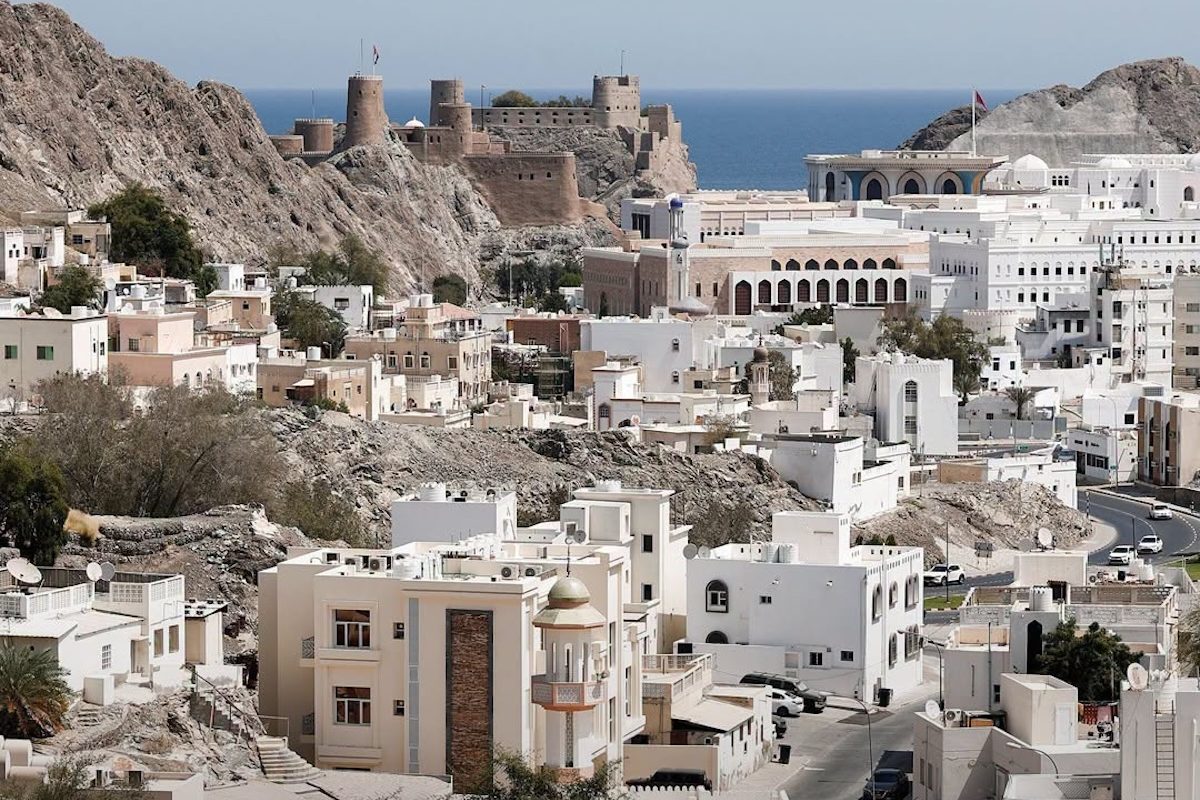
President Donald Trump has issued a stark warning to Oman, a long-standing US ally in the Middle East, threatening to bomb the sultanate if it obstructs efforts to reopen the Strait of Hormuz. The threat, made during a Fox News interview on Monday, comes amid ongoing negotiations between Iran and Oman over joint oversight of the strategic waterway, which has been closed since the start of the US-led military campaign against Iran in late February.
Trump's remarks reflect growing frustration in Washington over the failure to restore maritime traffic through the strait, a vital conduit for global oil supplies. When asked about the Iran-Oman talks, Trump replied: "If Oman gets in the way, we'll bomb the shit out of them." The blunt language underscores the administration's aggressive posture, but analysts question its effectiveness given the US military's depleted munitions and Iran's resilience.
Military strains and diplomatic fallout
The US military has expended vast quantities of precision-guided munitions in the conflict, with sources telling The Military Times that stocks of Army Tactical Missile Systems (ATACMS) and Precision Strike Missiles (PrSM) are "virtually all" used up. This raises doubts about Washington's capacity to sustain a prolonged campaign, a point echoed by Trita Parsi of the Quincy Institute for Responsible Statecraft, who noted that Trump previously threatened Oman when it proposed compromise solutions for the strait's control.
The threat to Oman, a neutral mediator in the region, risks alienating a key partner and could further destabilize an already volatile region. Oman has historically played a bridging role between Iran and the West, and its exclusion from diplomatic efforts may undermine prospects for a negotiated settlement.
Economic shockwaves
The closure of the Strait of Hormuz is already having tangible economic consequences. According to a Monday report from Reuters, vessel tracking data from Kpler shows shipping traffic has ground to a near standstill, with only five commodity vessels transiting the strait on Saturday and none on Sunday, compared to an average of 130 ships per day before the conflict. This disruption has sent Brent crude prices above $89 per barrel, while US gasoline prices have risen to an average of $4.06 per gallon, up from $4.01 the previous week.
The economic pain is being felt globally, particularly in Asia, where countries like Japan, South Korea, and India rely heavily on Gulf oil imports. The prolonged closure could exacerbate inflationary pressures and disrupt supply chains across the Indo-Pacific, a region already grappling with tariff-related cost increases.
Iran's strategic calculus
Meanwhile, Iran appears to be preparing for a prolonged confrontation. The Wall Street Journal reported on Sunday that Tehran believes the war is going well and has devised a "secret plan" to escalate, using the June ceasefire to rebuild and prepare for a larger fight. Arab intelligence officials have reportedly detected a strategic shift within Iran's hard-line leadership to widen the conflict and raise costs for the US, aiming to prevent a repeat of the 12-day war last year and the current ongoing hostilities.
This assessment aligns with experts' views that the war is lost for Washington, leaving the US without leverage. The combination of depleted munitions, Iranian resolve, and the threat to a key ally suggests a precarious path forward.
For Asian nations, the stakes are high. The Strait of Hormuz is a chokepoint for energy supplies to China, India, Japan, and South Korea. Any prolonged disruption could have severe repercussions for their economies. As the crisis deepens, the region watches anxiously, hoping for a diplomatic breakthrough that seems increasingly elusive.
The Trump administration's approach, marked by threats and military pressure, has yet to yield results. The earlier threat to annex the strait has not materialized, and the current warning to Oman may further complicate efforts to find a peaceful resolution. With oil prices climbing and shipping at a standstill, the world—and Asia in particular—awaits a de-escalation that appears far off.