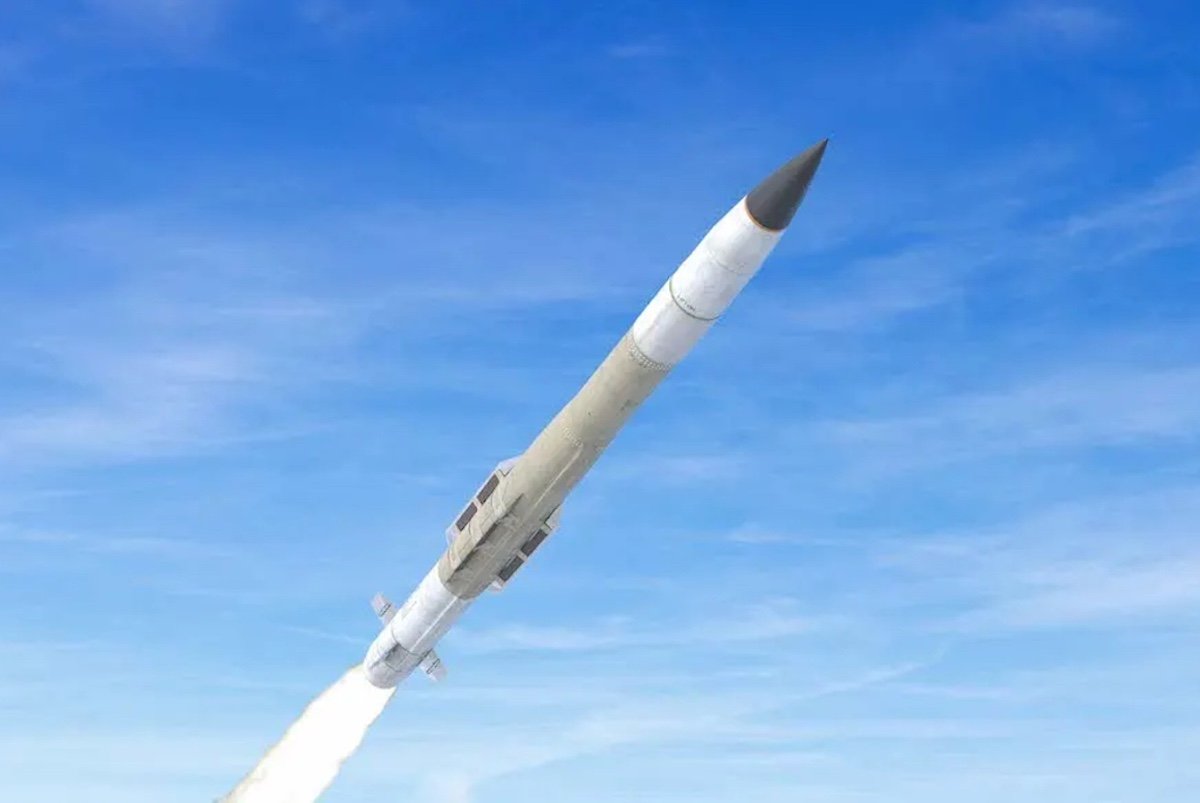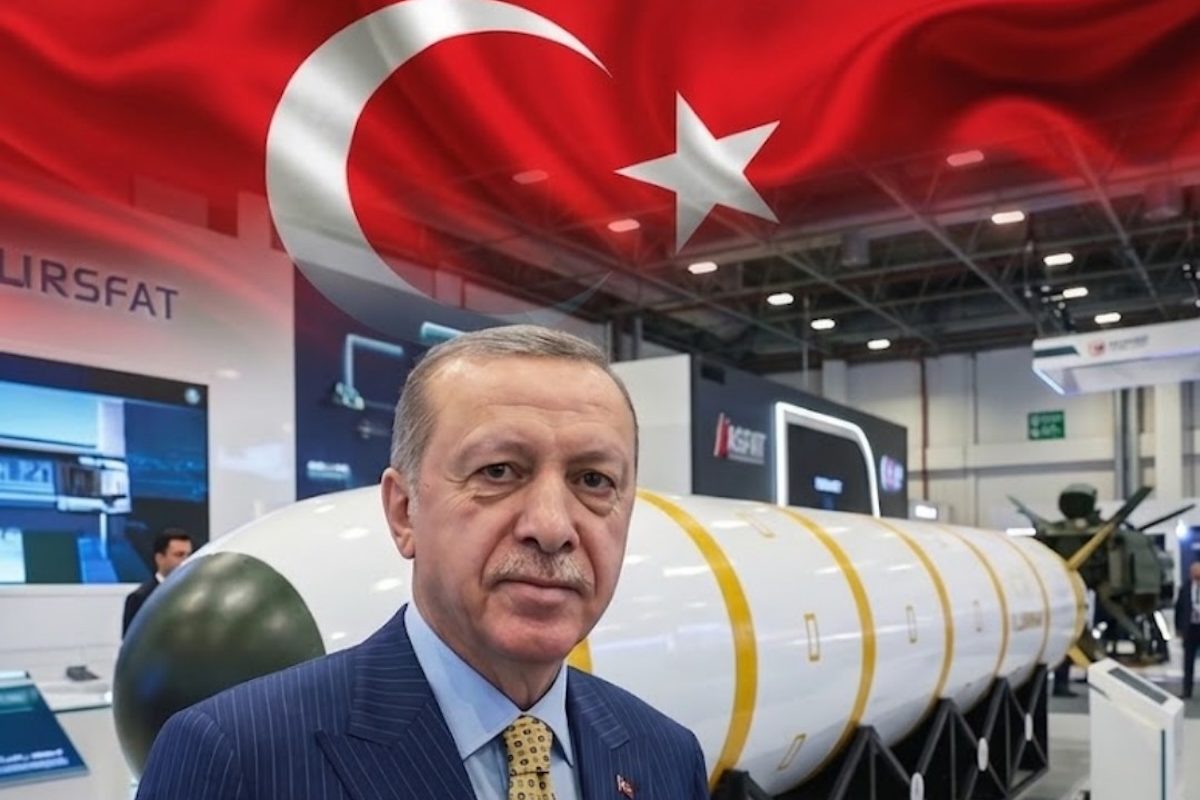
At Istanbul's SAHA 2026 defense expo, Turkey unveiled the Yildirimhan intercontinental ballistic missile (ICBM), a system that defense analysts say reveals more about Ankara's strategic ambitions than its technical capabilities. Turkish officials claimed the 18-meter missile can deliver a 3,000-kilogram warhead over 6,000 kilometers at speeds up to Mach 25—a performance that, if real, would place Turkey among a small group of nations with ICBM-class weapons. Yet those same officials later acknowledged that no operational prototype has completed full testing, prompting skepticism from Western defense experts who describe the project as highly ambitious and beyond Turkey's current missile expertise.
Drivers Behind the ICBM Push
The Yildirimhan program is part of a broader Turkish drive toward strategic autonomy, shaped by the US-Israeli war on Iran, rising regional instability, and growing doubts about the reliability of NATO deterrence. In an April 2026 report for the International Institute for Strategic Studies (IISS), analysts Sıtkı Egeli and Arda Mevlütoğlu trace Turkey's missile evolution from Cold War dependence on NATO and US nuclear guarantees to an indigenous effort fueled by regional missile threats, lessons from the Gulf War, and a desire for defense-industrial self-sufficiency.
The Iran conflict has provided a powerful rationale. Nima Gerami, writing in a February 2026 War on the Rocks article, notes that while US and Israeli strikes severely damaged Iran's enrichment facilities, Tehran's stockpile of highly enriched uranium (HEU)—440 kilograms enriched to 60%, according to an International Atomic Energy Agency (IAEA) report—remains largely untouched. Gerami warns that these reserves, stored in intact tunnel complexes, could potentially yield up to ten nuclear weapons if further enriched. He argues that two US-Israeli military campaigns have made that stockpile harder to locate, allowing Iran's nuclear program to survive through concealment and dispersal.
Sinan Ciddi, in a March 2026 article for The National Interest, reports that Iran launched ballistic missiles against Turkey during the early stages of the Iran War, presumably targeting Incirlik Air Base, a major Turkish and NATO facility that stores 20–50 US B-61 nuclear bombs. Ciddi suggests that a successful strike on Turkish territory could compel Ankara to retaliate with force. In a February 2026 CNN interview, Turkish Foreign Minister Hakan Fidan indicated that Turkey might be forced to develop nuclear weapons if Iran proceeds with acquiring them.
Doubts Over US Security Guarantees
Concerns about Iran coincide with growing uncertainty over the durability of US security guarantees. In a recent Council on Foreign Relations (CFR) article, Liana Fix argues that the Trump administration's decision to withdraw 5,000 troops from Germany weakens the credibility of US deterrence in Europe, while depleted US stockpiles from the Iran War threaten delays in missile and interceptor deliveries to allies. This context reinforces Turkey's desire for sovereign deterrence, independent of NATO's nuclear umbrella.
Russia's use of the Oreshnik conventional intermediate-range ballistic missile (IRBM) against Ukraine offers a potential model. In an August 2025 article in the peer-reviewed Vojno Delo journal, Nenad Miloradović and co-authors argue that conventionally armed long-range missiles can create a non-nuclear deterrent capable of penetrating defenses and striking deep inside an adversary's rear areas. However, Sidharth Kaushal and Matthew Savill, writing in a December 2024 article for the Royal United Services Institute (RUSI), caution that while conventionally armed ICBMs or IRBMs are harder to intercept than shorter-range missiles, they often lack the accuracy needed for conventional payloads against military targets. They note that for building-size targets, cruise missiles or drones would be more effective, though large ICBM payloads could still be used against area targets like a group of buildings.
Using an expensive ICBM for conventional strikes makes little military or economic sense. As such, the Yildirimhan reveal may be more about signaling that Turkey has delivery systems for nuclear payloads if it chooses to pursue a nuclear weapons program. This aligns with broader regional trends: for instance, Pakistan's Saudi Deployment Signals Gulf Security Shift, highlighting how nuclear-capable states are recalibrating their postures in the Middle East.
Skepticism and Constraints
Not all analysts are convinced. Alexandr Svaranc, in a February 2026 article for New Eastern Outlook, argues that obtaining nuclear weapons as a NATO member would be impossible without coordination with the US and UK. He adds that Israeli opposition and US pressure would likely constrain any overt Turkish nuclear ambitions, warning that Turkey could otherwise become a potential Israeli military target. Svaranc also notes that Turkish nuclear ambitions would alarm Russia and China because of Turkey's NATO membership and Pan-Turkic ambitions near their borders.
Nevertheless, the Yildirimhan's debut underscores a strategic shift. As the US-Israeli campaign against Iran continues and doubts about NATO's reliability grow, Turkey is signaling that it is prepared to pursue its own deterrent—whether nuclear or conventional. The missile's symbolism, as much as its technical reality, positions Ankara as a rising power in a region where the boundaries of deterrence are being redrawn.