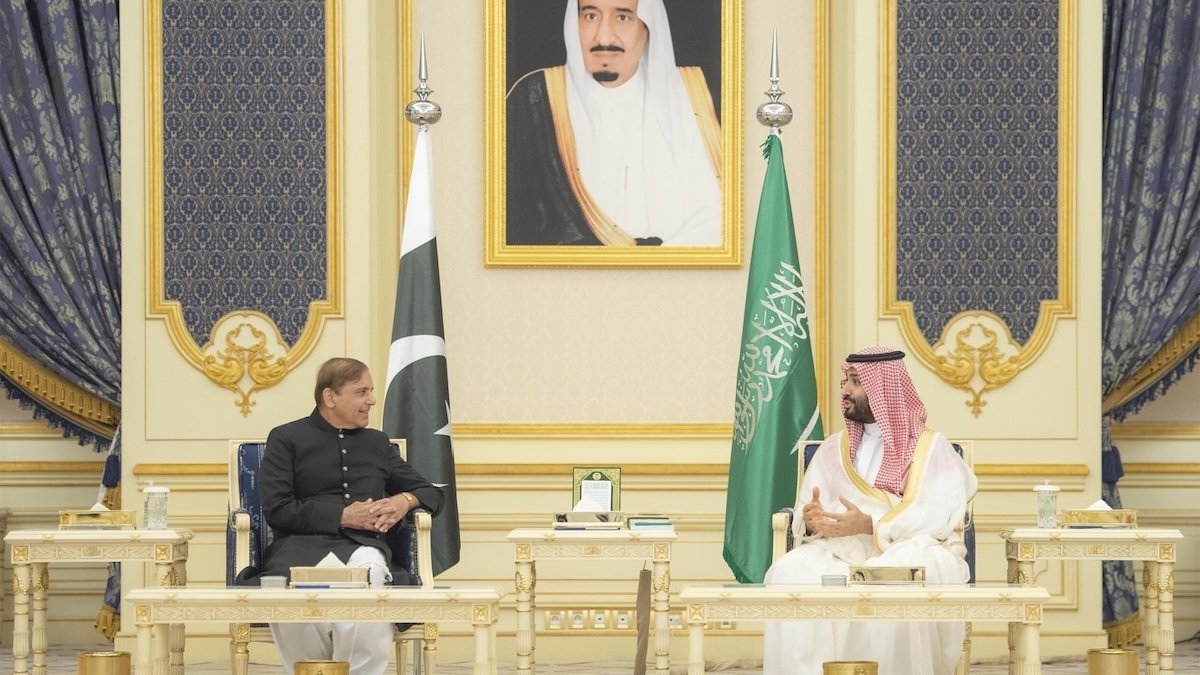
Reports that Pakistan has deployed thousands of troops, fighter aircraft, and advanced air defense systems to Saudi Arabia under a confidential mutual defense agreement mark a significant shift in Gulf security dynamics. According to a Reuters report citing security and government sources, Islamabad has sent approximately 8,000 personnel, a squadron of JF-17 fighter jets, drone units, and a Chinese-origin HQ-9 air defense system to the kingdom under a bilateral pact signed in September 2025. Neither Pakistan nor Saudi Arabia has officially confirmed the details, but the scale of the reported deployment suggests a far larger commitment than previous advisory missions.
The Saudi-Pakistan Mutual Defense Agreement, signed in Riyadh on September 17, 2025, by Crown Prince Mohammed bin Salman and Pakistani Prime Minister Shehbaz Sharif, emerged during an exceptionally volatile regional moment. Its announcement followed an Israeli strike targeting a Hamas delegation in Doha, Qatar—an operation that unsettled Gulf capitals far beyond Qatar itself. For Gulf monarchies, the Doha incident carried wider implications: many had assumed that close coordination with Washington would discourage unilateral Israeli military operations on Gulf territory. The strike challenged that assumption and exposed growing uncertainty surrounding regional deterrence and security guarantees.
Riyadh's Message to Washington
Riyadh's message to Washington was subtle but unmistakable: Gulf states may begin diversifying their strategic partnerships if existing security guarantees appear increasingly uncertain during periods of regional escalation. That does not mean Saudi Arabia is attempting to replace the United States with Pakistan. Such interpretations misunderstand both the structure of Gulf security and the scale of American military entrenchment in the region.
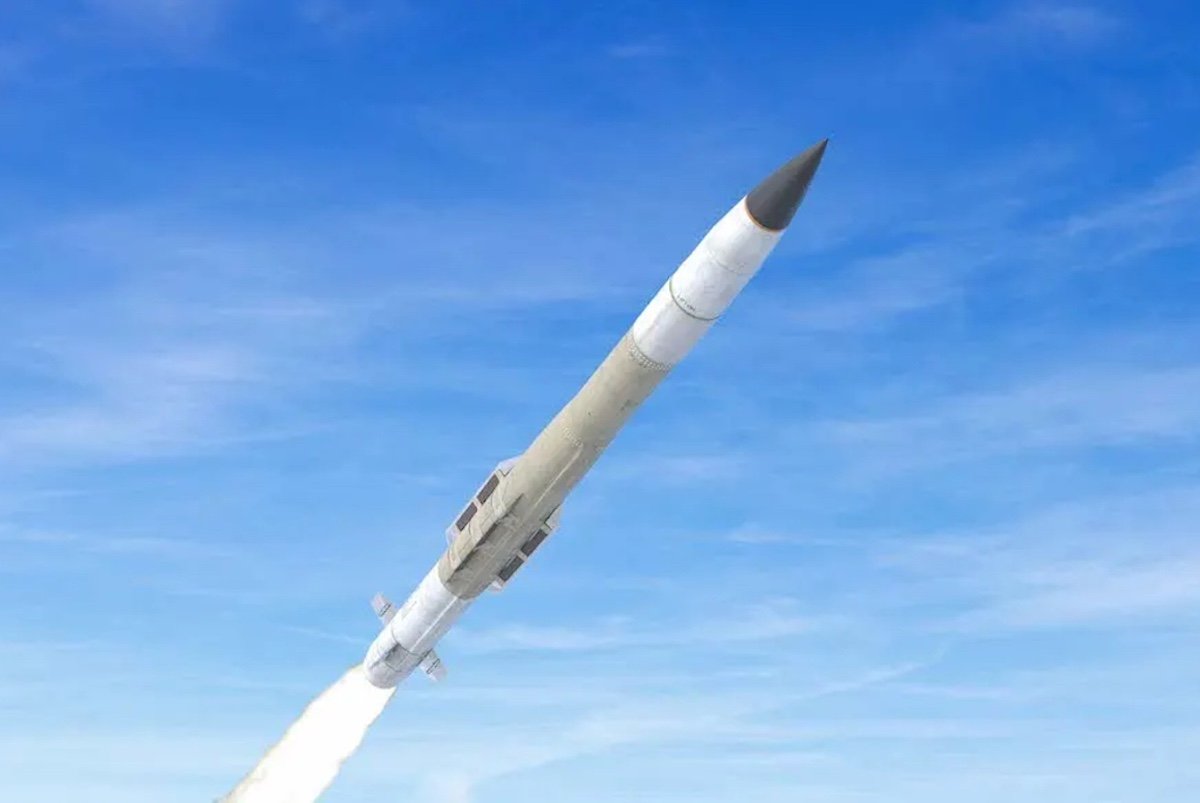
The United States retains an extensive and deeply institutionalized military presence across the Gulf. The Fifth Fleet remains headquartered in Bahrain. Qatar hosts the region's largest American air base. Thousands of US troops remain stationed in Kuwait, while Washington maintains strategic access agreements with Oman and the United Arab Emirates. Saudi Arabia itself continues to depend heavily on American military systems, intelligence cooperation, and regional deterrence structures. Pakistan cannot substitute for that architecture. But Gulf states increasingly appear interested in supplementing existing security arrangements rather than depending entirely upon a single external guarantor.
The reported numbers attracted attention, yet Saudi-Pakistani military cooperation itself is not new. Since the 1970s, Pakistani troops have periodically served in Saudi Arabia in training, border security, and advisory roles. Pakistani military personnel have maintained long-standing institutional ties with Gulf defense establishments, while Riyadh has repeatedly provided economic support to Islamabad during periods of financial difficulty. The relationship has historically extended beyond conventional defense cooperation into broader strategic understandings. For decades, analysts have speculated that Saudi financial assistance to Pakistan's nuclear program contributed to an informal expectation that Islamabad's strategic deterrent capabilities could ultimately support Gulf security if the regional balance deteriorated significantly. Pakistani Defense Minister Khawaja Asif's earlier remarks implying that Saudi Arabia falls under Pakistan's “nuclear umbrella” reinforced such perceptions, even if no formal arrangement has ever been publicly acknowledged.
Pakistan's Delicate Balancing Act
Still, reducing the current agreement solely to the Iran factor would oversimplify the regional picture. Saudi concerns regarding Iran's regional posture and nuclear ambitions are longstanding. Yet when the Saudi-Pakistan pact was announced, Iran's nuclear infrastructure had already suffered major setbacks following the June 2025 Israel-Iran conflict and subsequent American strikes on Iranian facilities. The timing therefore suggests that the agreement reflects broader regional anxieties about unpredictability rather than an immediate fear of Iranian expansion alone.
The Israeli operation in Doha demonstrated that Gulf territory itself could become vulnerable to external escalation dynamics. That realization likely accelerated efforts among Gulf states to diversify partnerships, strengthen deterrence redundancy, and reduce overdependence on any single security framework. As Saudi Arabia's cold realism: hedging as strategy, not sentiment explores, Riyadh has long pursued a pragmatic approach to security, balancing ties with Washington, Beijing, and regional players.
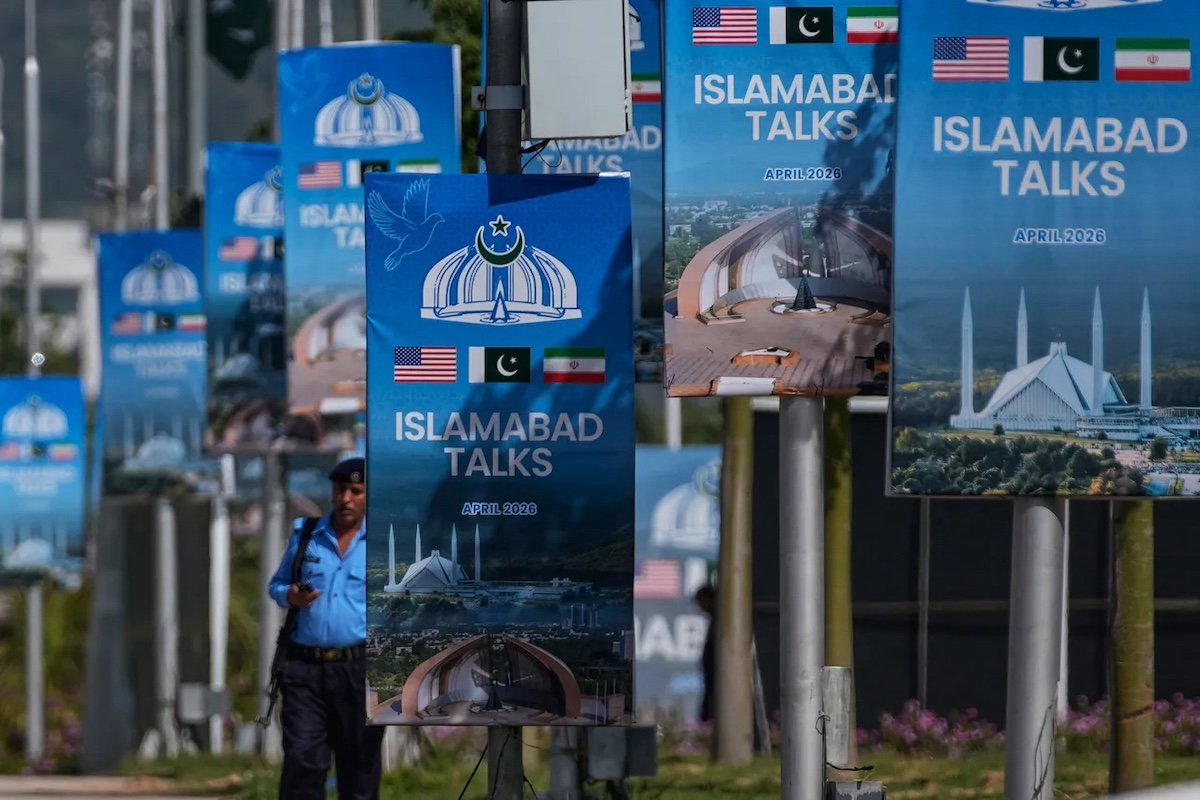
Pakistan's position within this evolving environment is particularly delicate because Islamabad simultaneously occupies the role of military partner to Saudi Arabia and diplomatic intermediary between Washington and Tehran. Pakistan reportedly played an important role in facilitating the ceasefire that has held between the United States and Iran over recent weeks and hosted the only direct round of talks between both sides. Few regional actors maintain working channels with Riyadh, Tehran, Beijing, and Washington simultaneously. Iranian Foreign Ministry spokesperson Esmaeil Baghaei recently stated that indirect diplomatic engagement with the United States over the nuclear file remains continuous rather than episodic.
The deployment also has implications for Pakistan's own strategic posture. As Pakistan's diplomatic pivot: how Islamabad became an indispensable middle power notes, Islamabad has increasingly positioned itself as a key interlocutor in regional crises, leveraging its ties with both Gulf states and Iran. Meanwhile, the reported use of Chinese-origin HQ-9 air defense systems underscores the deepening defense relationship between Islamabad and Beijing, a trend that could further complicate the security landscape. The Pakistan's Fatah-3 missile could extend Chinese reach to Gulf analysis highlights how Pakistani military capabilities increasingly serve as a vector for Chinese influence in the region.
For now, the reported deployment remains unconfirmed by either government, but its implications are already reverberating across the Gulf. Whether this marks the beginning of a broader realignment or a temporary hedge against uncertainty, one thing is clear: the era of relying solely on a single external guarantor for Gulf security is giving way to a more complex, multipolar reality.