Ukrainian President Volodymyr Zelensky has confirmed that ground robots—unmanned ground vehicles (UGVs)—seized a Russian position in what he described as the first such operation in the war. The announcement, made in late March 2025, marks a symbolic milestone in the conflict, though military analysts urge caution about extrapolating too broadly from a single event.
Since Russia's full-scale invasion began in February 2022, Ukraine has extensively deployed aerial and maritime drones, but the use of ground robotics has received less attention. This operation, however, underscores a quiet but significant evolution in battlefield tactics. The robots involved were remotely operated, not fully autonomous, and the terrain and conditions likely favored their use. Still, the achievement signals a shift in how unmanned systems can be employed in direct combat.
Obstacles to Full Autonomy
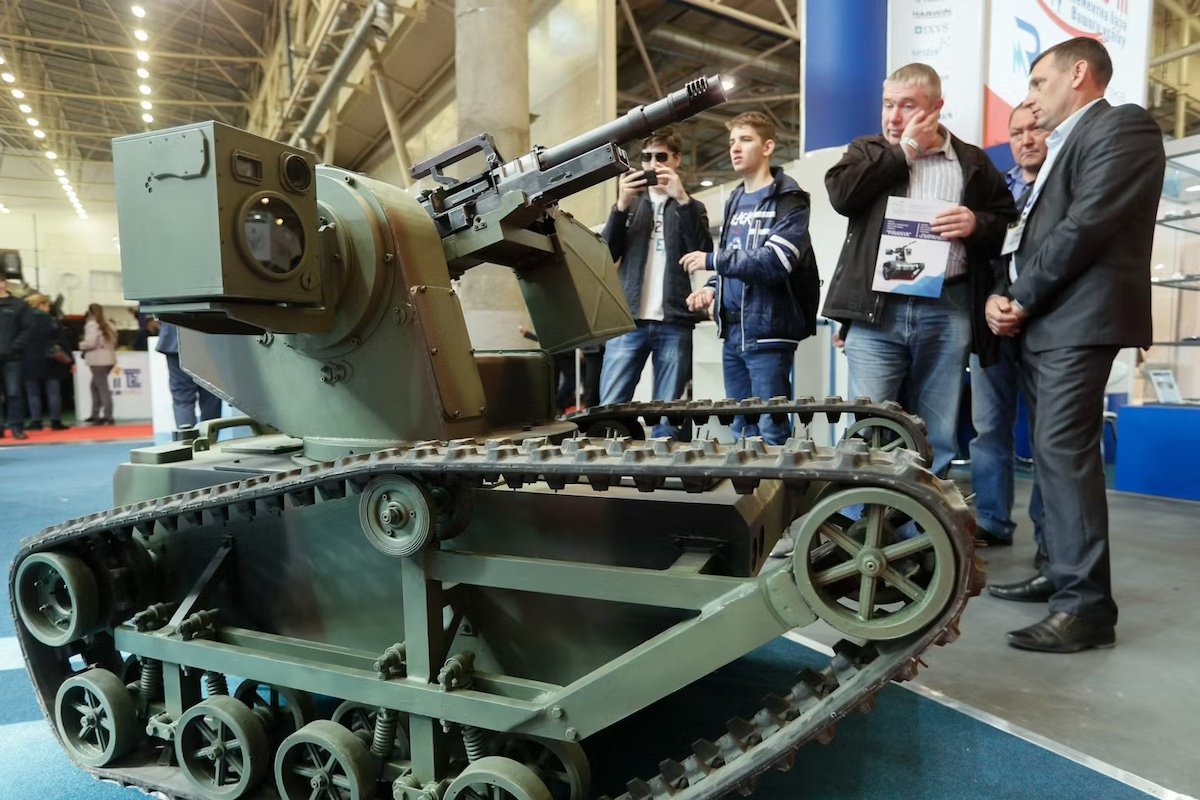
Despite this success, ground robots face formidable challenges before they can replace infantry soldiers. The first is physical terrain. While demonstrations show robots navigating controlled environments, real battlefields are littered with rubble, trenches, mud, and debris. Most UGVs rely on wheels or tracks for mechanical simplicity and cost-effectiveness, limiting their ability to traverse broken ground. Human soldiers can climb, jump, and wade through obstacles that remain beyond the reach of current machines.
The second major hurdle is the electromagnetic environment. Most UGVs are still remotely operated via radio links, which are vulnerable to jamming, weather, or terrain interference. Fiber-optic cables offer a jam-proof alternative but restrict range and can be severed by shrapnel or rough ground. Autonomous navigation remains a distant goal: even civilian self-driving cars, like Waymo's cabs in London, struggle with complex urban environments. Battlefields add unpredictable threats, requiring immense onboard processing power that drives up cost and complexity.
Support Roles Prove Their Worth
Where ground robots excel is in support tasks. Ukraine has used them for casualty evacuation, front-line resupply, combat engineering, mine laying, and mine clearing. In these roles, their smaller size, lower cost, and reduced detectability offer clear advantages over crewed vehicles. While they do not eliminate the need for human operators—who control them remotely—the loss of a robot does not mean the loss of a soldier. This is a critical consideration for Ukraine, which faces a numerically larger Russian force and struggles to maintain troop levels after four years of war.
The strategic imperative is clear: on a battlefield where nearly any movement within 20 kilometers of the front line can be detected and targeted, replacing irreplaceable humans with cheap, replaceable machines is essential for sustaining the fight. As exiled Russians build transnational resistance networks and Moscow threatens European drone suppliers, Ukraine's robotics push reflects a broader adaptation to attritional warfare.
This milestone should not be overinterpreted. The capture of a single position by robots does not herald the end of human infantry. But it does demonstrate that unmanned ground vehicles are becoming a practical tool in modern warfare, particularly in support roles. For Ukraine, the race to field more such systems is not just about innovation—it is about survival.