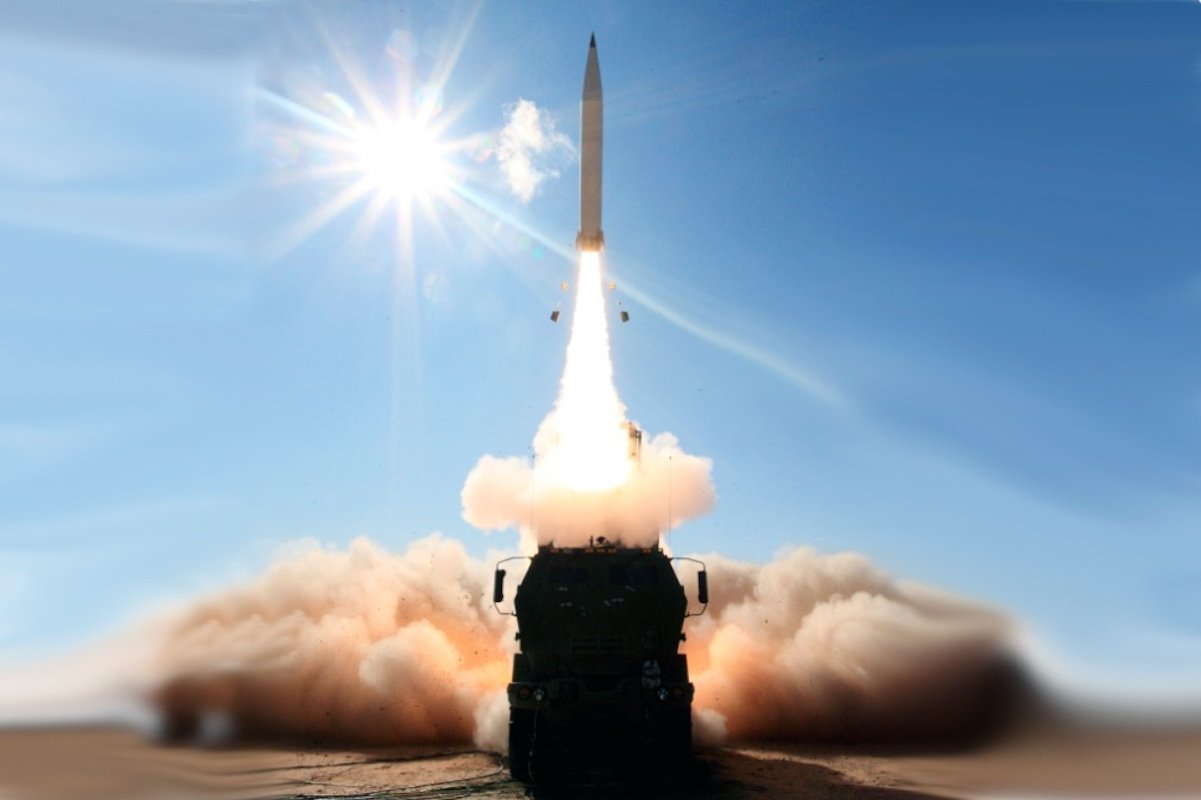
The US Army is pushing forward with a new anti-ship variant of its Precision Strike Missile (PrSM), known as Increment 4, designed to engage maritime targets at ranges up to 1,000 kilometers. The effort, part of the service's broader long-range fires modernization, aims to equip High Mobility Artillery Rocket System (HIMARS) units with ground-based maritime strike capabilities deployable across contested littoral environments in the Indo-Pacific.
The missile is engineered to operate in GPS-denied conditions and strike both moving ships and relocatable land targets, addressing capability gaps identified in potential conflict scenarios. This initiative comes amid heightened US focus on countering China's naval power, with plans to deploy HIMARS units on austere islands near key maritime chokepoints to deny access. Joint US-Philippine exercises such as Balikatan 2026 have demonstrated deployment concepts, though the capability is not yet widely fielded.
Tactical Advantages and Production Hurdles
Anti-ship ballistic missiles like the PrSM offer significant advantages over cruise missiles. They can travel at hypersonic speeds throughout their terminal phase, exceeding Mach 5 upon reentry, whereas cruise missiles are restricted to low-altitude subsonic flight. This high terminal speed may be necessary to overcome layered ship defenses, such as those on China's carrier strike groups (CSGs).
Daniel Rice, in a July 2024 report for the China Maritime Studies Institute (CMSI), describes the People's Liberation Army-Navy's (PLAN) carrier strategy as a three-tiered defense system. The outer defense zone (185–400 km) is defended by submarines and J-15 fighters; the middle zone (45–185 km) by destroyers and frigates; and the inner zone (100 meters–45 km) by close-in weapons and point-defense systems.
Despite these tactical advantages, the PrSM's high cost relative to cruise missiles may limit its availability. Seth Jones notes in a January 2023 report for the Center for Strategic and International Studies (CSIS) that the PrSM takes more than 15 months to produce. Mark Cancian and Chris Park, in an April 2026 CSIS report, state that each PrSM costs US$1.6 million per round. They estimate the US had only 90 rounds before Operation Epic Fury in Iran, fired 40-70 rounds, and would need up to 46 months to replenish stocks.
Operational Deployment and Vulnerability
At the operational level, the anti-ship PrSM could complement US systems already deployed along the First Island Chain spanning Japan, Taiwan, and the Philippines. With its 1,000-kilometer range, the PrSM fills a gap between the long-range Typhon (2,000 km) and the short-range Navy-Marine Expeditionary Ship Interdiction System (NMESIS, 185 km). Deployed in southern Japan, it could cover substantial parts of the East China Sea; from the northern Philippines, much of the South China Sea. Shorter-range systems like NMESIS could cover chokepoints such as the Miyako Strait and the Bashi Channel.
However, land-based launchers may be vulnerable in austere island environments. Limited area, sustainment facilities, and poor road infrastructure restrict movement routes and deployment locations for large systems like the PrSM, making them relatively easy to locate using space-based intelligence, surveillance, and reconnaissance (ISR).
Beyond geographic constraints, limited allied air and missile defense capabilities in Japan and the Philippines may not suffice to protect PrSM launchers from drone and missile attacks. Both countries may need to allocate their limited interceptor stocks to protect critical infrastructure—power plants, fuel storage, population centers—rather than US assets on their territory. Even if the US stations additional missile defense assets like Patriot and Terminal High Altitude Air Defense (THAAD) in these countries, Operation Epic Fury showed that Iran could overwhelm such systems with drone and missile saturation attacks. This raises serious questions about effectiveness against a far more capable adversary like China.
Strategic Implications for Taiwan
At the strategic level, the anti-ship PrSM could reinforce US conventional deterrence by denial in the Pacific by increasing the possible costs of a Chinese invasion of Taiwan. In a January 2023 CSIS wargame, Mark Cancian and other writers show that even in scenarios favoring China, China lost 327 aircraft and 113 ships, alongside thousands of personnel killed, wounded, missing at sea, or captured as prisoners of war on Taiwan.
This logic assumes conventional conflict and that China continues to prefer coercion over invasion in Taiwan. The missile's deterrent value will ultimately hinge on production capacity, launcher survivability, and the broader strategic calculus in the region. As the US and its allies deepen defense cooperation—such as the Japan-Australia frigate deal—the PrSM represents one piece of a larger effort to maintain a credible deterrent posture in the Indo-Pacific.



