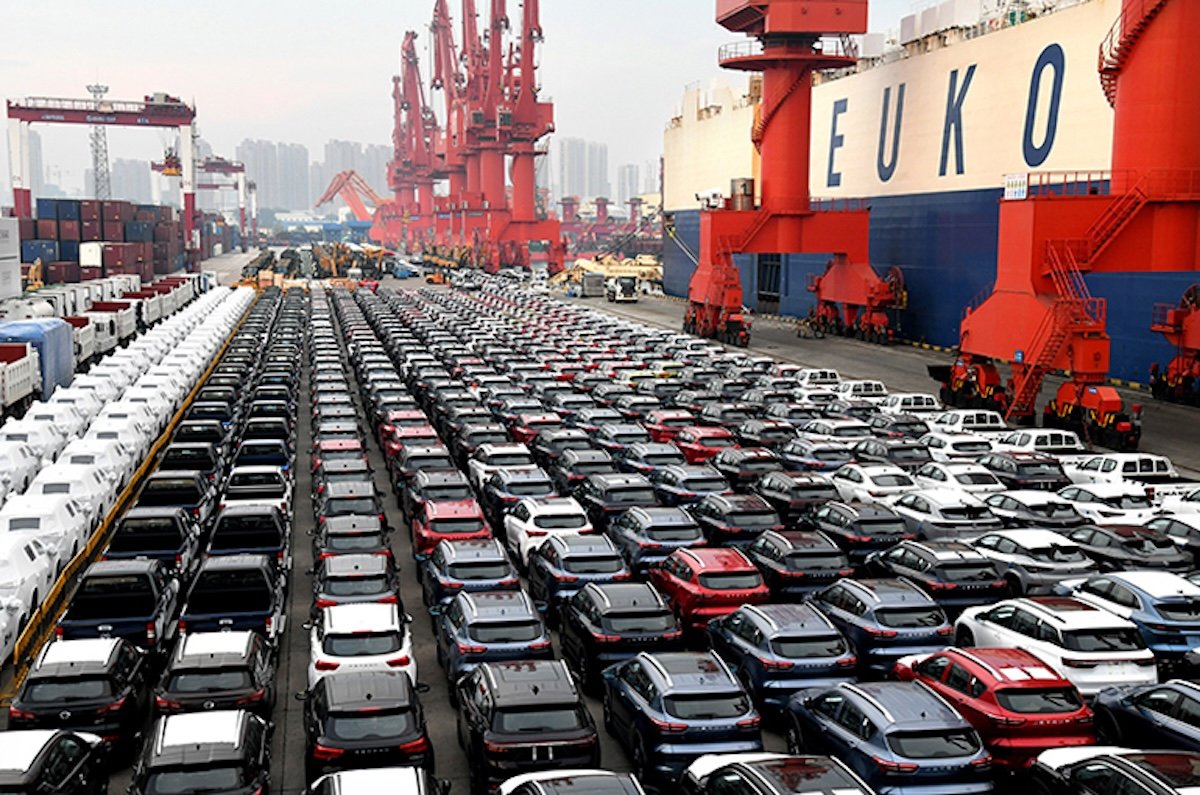
For years, policymakers and executives from Detroit's Big Three automakers have watched warily as China's automotive industry grew into a global powerhouse, anticipating the eventual arrival of low-cost, high-quality Chinese vehicles in the US market. The conventional assumption was that these vehicles would enter through Mexico. A new and unexpected route is now being considered: Canada.
The scenario of car haulers carrying Chinese-branded vehicles across the Ambassador Bridge or the new Gordie Howe International Bridge into Detroit remains speculative. Both the US, under President Donald Trump, and Canada currently maintain prohibitive 100% tariffs on Chinese electric vehicles. However, the geopolitical landscape is shifting rapidly due to escalating trade tensions between Washington and Ottawa.
A Fractured Partnership Seeks New Allies
Trade relations between the US and Canada have deteriorated sharply. The situation worsened after the province of Ontario aired a television advertisement during the World Series featuring former US President Ronald Reagan praising free trade. President Trump, incensed by the ad, called off trade negotiations and announced an additional 10% tariff on Canadian-made goods entering the United States.
Facing this pressure, Canadian Prime Minister Mark Carney is actively pursuing alternative economic partnerships. Reports suggest Ottawa is considering removing its 100% tariff on Chinese EVs as part of a broader strategy to deepen trade relationships with China and other Asian nations. This move is a direct response to what Canadian officials view as an unpredictable and hostile trade environment from its southern neighbor.
The stakes are particularly high for Michigan. Canada is the state's largest trading partner, with annual exports exceeding $23 billion. A recent poll for the Detroit Regional Chamber found nearly 60% of Michigan voters believe tariffs on Canadian goods harm the state's economy. The economic strain is already visible: truck traffic on the Ambassador Bridge, the busiest US-Canada crossing, has fallen by more than a third this year compared to 2024.
"They believe tariffs are increasing their costs, hurting the state’s auto industry – and that placing tariffs on Canada hurts Michigan," said pollster Rich Czuba.
An Existential Threat to the Detroit Three
The auto industry sits at the epicenter of this dispute. President Trump has publicly stated the US does not "need anything" from Canada, including the 1.8 million vehicles it exports south annually—many built in Canadian plants owned by General Motors, Ford, and Stellantis. In response to political pressure, GM and Stellantis have recently cut production of several models in Canada.
This has triggered a defensive move from Ottawa, which has limited the number of vehicles the two automakers can ship into Canada tariff-free. The future of the USMCA trade agreement, negotiated during Trump's first term and crucial to Detroit's integrated supply chains, is now in doubt as it comes up for review next year.
"Maintaining the USMCA can create an even stronger North American trading bloc, ready to compete with China at every turn," said Glenn Stevens, executive director of MichAuto.
Facing the potential loss of investment from the Detroit Three and over 100,000 associated jobs, Canada is looking to China as a possible replacement partner. Removing the tariff barrier would not only allow China to export its vehicles to Canada but could also pave the way for establishing production facilities there. This presents a significant strategic advantage. While Mexico—long seen as the logical entry point—plans to raise its tariffs on Chinese vehicles from 20% to 50%, a tariff-free Canada would become the most attractive North American beachhead for Chinese automakers.
This shift occurs against the backdrop of China's massive industrial overcapacity, particularly in electric vehicle production, driving its search for new export markets. Industry experts widely agree it is only a matter of time before Chinese vehicles, especially EVs where China holds a dominant technological and cost advantage, become available to American consumers. A study by AutoPacific Inc. found nearly 60% of American car buyers under 40 would seriously consider a Chinese vehicle.
The potential for Chinese vehicles to enter the US market through its northern border represents an existential threat to Detroit's automakers, who are already grappling with a costly transition to electrification and intense global competition. What began as a bilateral trade dispute between the US and Canada may have the unintended consequence of redrawing the competitive map of the entire North American auto industry, handing a strategic victory to Beijing. This development underscores how regional trade frictions can have cascading effects, empowering global actors like China to exploit new openings. The situation also highlights the complex interplay of trade policies, as seen in other global hotspots like the Strait of Hormuz, where US actions influence Chinese diplomatic positioning.