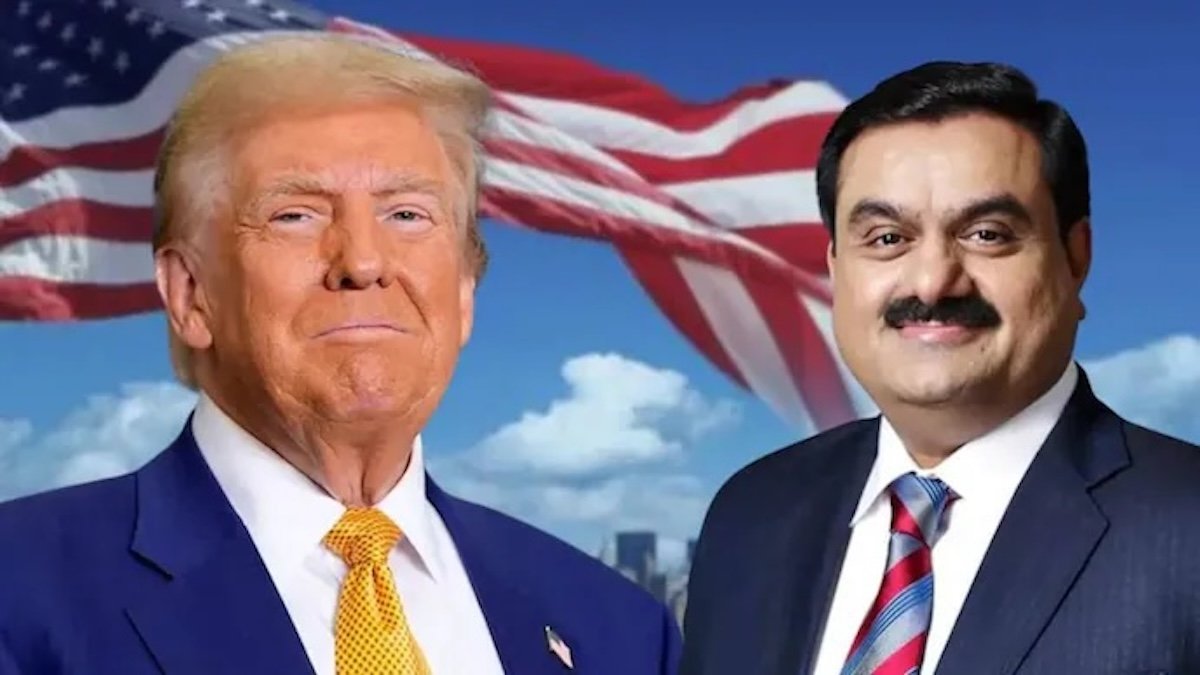
The United States Department of Justice is reportedly preparing to drop fraud charges against Indian billionaire Gautam Adani, just weeks after he retained a lawyer who is also representing President Donald Trump in his criminal cases. The move, first reported by The New York Times on Thursday, has drawn sharp criticism from observers who see it as a clear case of political favoritism.
Adani, the chairman of the Adani Group and one of the world's richest individuals with an estimated net worth of $82 billion, was indicted in November 2024 alongside two colleagues. The DOJ accused them of conspiring to commit securities and wire fraud, alleging that Adani orchestrated a scheme to bribe Indian government officials to secure energy contracts worth billions of dollars, and then misled US investors about the scheme.
The reversal comes after Adani hired a legal team led by Robert Giuffra Jr., a prominent attorney who is currently working to overturn Trump's 34 felony convictions for falsifying business records in New York. According to The New York Times, Giuffra's efforts culminated in a meeting last month at DOJ headquarters in Washington, where he proposed that if prosecutors dropped the charges, Adani would invest $10 billion in the US economy and create 15,000 jobs.
Bloomberg reported on Thursday that the DOJ could announce the dismissal of charges as soon as this week, and that the Securities and Exchange Commission is also moving to settle a parallel civil fraud case it brought against Adani and others in November 2024.
Quid Pro Quo Allegations
The timing of the DOJ's decision has fueled accusations of corruption. Given Trump's history of pardoning white-collar criminals—including a cryptocurrency magnate who helped boost the value of the president's personal meme coin—critics argue that the Adani case exemplifies how the Trump administration rewards those with political connections.
Jeremy Horpedahl, an economist at the University of Arkansas, commented on social media that the case shows "the way to avoid fraud charges under the Trump administration is to hire Trump's personal lawyer and engage in bribery."
In India, the political fallout has been immediate. Manish Sharma, leader of the Indian Youth Congress, suggested in a post on X (formerly Twitter) that Indian Prime Minister Narendra Modi was involved in the effort to get charges dropped for Adani, a longtime political ally. "Perfect timing, just months after Modi signed that one-sided trade deal with Trump," wrote Sharma. "Quid pro quo delivered: Compromised PM sells out Indian interests, Trump admin returns the favor to Modi's favorite billionaire."
Sharma's claims, while lacking detailed evidence, tap into long-standing suspicions about the close ties between Modi and Adani, who have been linked in business and political ventures for years. The Adani Group has denied any wrongdoing, and the Indian government has not commented on the DOJ's reported decision.
Elie Mystal, justice correspondent for The Nation, criticized The New York Times for describing Giuffra's offer as an "unusual offer." In a pointed response, Mystal wrote: "'UNUSUAL OFFER??' No, headline writers," and suggested a more accurate headline: "Charges Dropped Against Indian Billionaire Accused of Bribery, After Offering Trump A Bribe."
The case has broader implications for US-India relations, particularly as the Trump administration pursues a trade deal with New Delhi. The DOJ's decision could be seen as a signal that the US is willing to overlook corporate misconduct in exchange for economic benefits, a pattern that critics say undermines the rule of law. For more on how the Trump administration is reshaping economic ties with Asia, see our analysis on Trump's tariffs and export controls.
As the story develops, the focus will remain on whether the DOJ's move sets a precedent for other wealthy defendants seeking to avoid prosecution by leveraging political connections. For now, the Adani case stands as a stark example of how the intersection of money, law, and politics can produce outcomes that many see as deeply troubling.