Washington is escalating pressure on Beijing over allegations of covert nuclear testing and a rapid expansion of China's strategic arsenal, a confrontation that is now colliding with an intense domestic debate in the United States over whether to abandon its decades-long test moratorium.
US officials have raised concerns in confidential diplomatic channels about suspected low-yield nuclear tests and a buildup across at least seven secret domestic sites, according to multiple media reports. The discussions have taken place on the sidelines of multilateral forums in Geneva, New York, and Casablanca, and come against the backdrop of high-stakes summit diplomacy between US President Donald Trump and Chinese President Xi Jinping.
In February 2026, the US formally accused China of conducting a yield-producing nuclear test in June 2020 at the Lop Nur facility in northwest China, allegedly using underground “decoupling” techniques to evade seismic detection. The accusation was made during the Conference on Disarmament, shortly after the New START treaty expired.
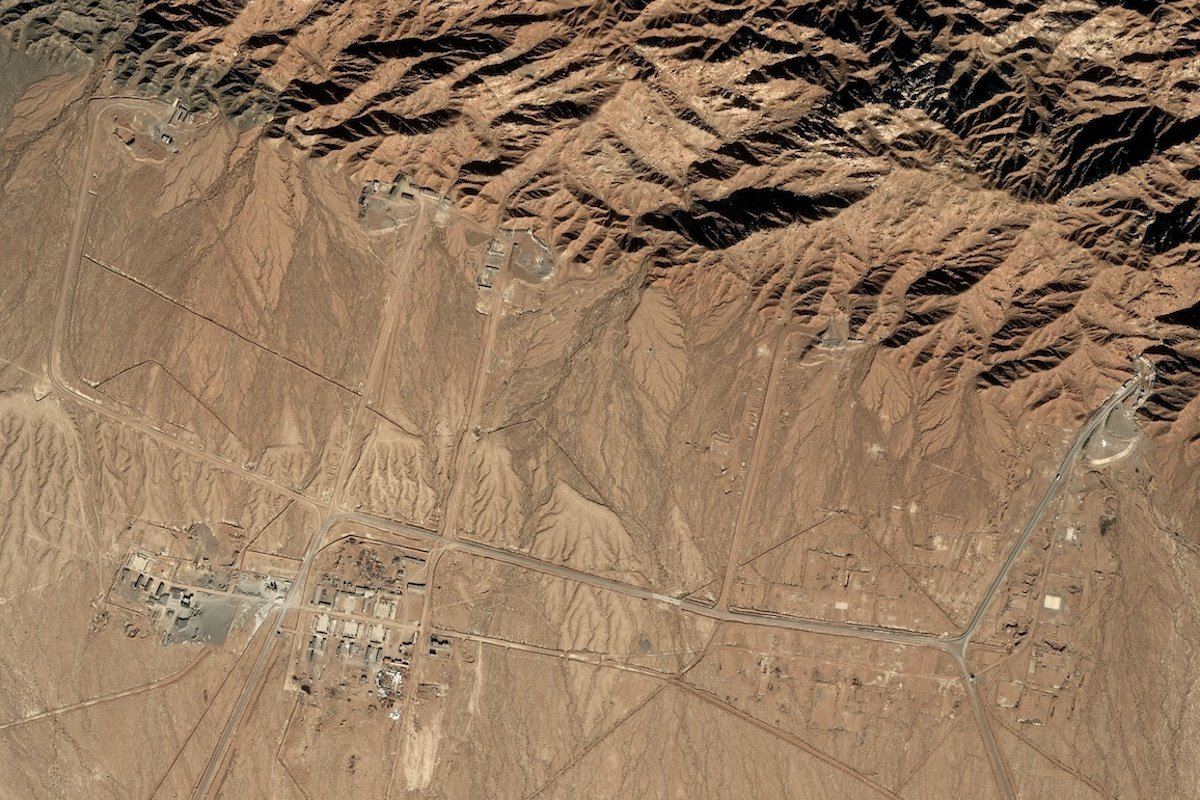
Geospatial satellite imagery has revealed extensive upgrades at Chinese installations, including pit fabrication in Pingtong, blast testing in Zitong, fuel reprocessing in Jiuquan, Jinta, and Guangyuan, and a major expansion of laser fusion capabilities in Mianyang. Much like the US National Ignition Facility at Lawrence Livermore National Laboratory, where most laser shots serve stockpile stewardship, China's Mianyang complex enables advanced thermonuclear modeling without live underground detonations.
While laser simulation remains permissible under existing rules, China's parallel physical infrastructure supports an arsenal that has surpassed 600 warheads and is projected to reach 1,500 by 2035. The US is pursuing confidence-building verification measures, including enhanced seismic and radiological detection, while Trump has warned that Washington could resume nuclear testing on an “equal basis” if breaches persist.
China continues to deny conducting explosive tests or pursuing an arms race, maintaining its defensive “no first use” stance and rebuffing formal caps by citing the massive disparity with US and Russian stockpiles.
Technical skepticism over US claims
Yet these charges face serious technical skepticism. In an August 2026 report for the German Institute for International and Security Affairs (SWP), Philipp Rombach notes that US claims remain unproven because of high physical detection thresholds and a persistent lack of verifiable data. Although Rombach acknowledges that a June 2020 seismic tremor measuring magnitude 2.75 at Lop Nur displayed waveforms consistent with hollow underground “cavity decoupling,” the Comprehensive Nuclear-Test-Ban Treaty Organization's International Monitoring System is calibrated to reliably confirm blasts only above 500 to 1,000 tons of TNT equivalent.
Furthermore, as testing physics advances, micro-yield experiments will become even harder to detect against seismic background noise. Because the US withholds underlying sensor telemetry to shield intelligence methods, observers cannot separate ambiguous micro-yield detonations from permitted hydrodynamic experiments or industrial blasts. Without new technical benchmarks, unverified allegations may serve to pressure China into trilateral talks or provide domestic justification for the US to resume explosive nuclear testing.
From a Chinese perspective, Tianjiao Jiang, writing in a 2026 article for the Arms Control Association (ACA), observes that US strategists are determined to draw China into trilateral arms control alongside Russia to counter China's projected 1,500-warhead stockpile by 2035 and neutralize the prospect of facing two peer nuclear rivals simultaneously. Jiang explains that while the US's leverage-driven posture enhances conventional forward deterrence and prods China toward transactional risk-reduction mechanisms, such as missile launch pre-notifications and bilateral crisis lines, the overarching framework remains deeply counterproductive. He argues that the US approach is fundamentally flawed because it dismisses China's core demand to acknowledge mutual vulnerability, overlooks immense arsenal asymmetries, and pairs arms-control demands with missile-defense expansions like Golden Dome.
Tong Zhao echoes that analytical skepticism in a report published this month by the Carnegie Endowment for International Peace (CEIP). Zhao underscores that while US strategy correctly identifies workable operational convergence — such as reciprocal limits on theater-range strike systems in the Western Pacific and mutual inspection protocols for co-orbital space weapons — it collapses under the weight of the US's broader doctrine. By clinging to open-ended escalation dominance and deliberate first-use ambiguity to offset regional conventional shifts, Zhao says the US telegraphs an unconvincing, coercive posture under “America First” unilateralism that validates China's worst-case fears and locks both powers into a classic security dilemma.
This escalating external standoff over China's opaque buildup has reignited a fierce US domestic debate about whether it should break its decades-long moratorium and resume explosive nuclear testing. Robert Peters argues in a January 2026 Heritage Foundation article that the US must restart explosive nuclear testing to confirm that its rapidly aging stockpile remains functional and credible. Peters points out that while China and Russia field newly built systems, the youngest US weapon is now 36 years old, leaving its deterrent dependent on degraded, decades-old plutonium pits that were never tested across multi-decade lifespans.
On how aging could affect plutonium pits, a February 2024 US Government Accountability Office (GAO) report notes that as plutonium naturally degrades, it generates helium bubbles and chemical decay byproducts within the metal, altering the material's strength. The implications for deterrence are profound, and the debate is likely to intensify as the US weighs its options. For the broader Indo-Pacific, the standoff adds another layer of strategic uncertainty, particularly as US-China summit diplomacy seeks to manage the rivalry. Meanwhile, North Korea's recent hypersonic test has already sent warnings to Japan's own nuclear debate, and the new US-China AI hotline aims to curb dangerous incidents. The path forward remains uncertain, but the stakes for regional stability are clear.