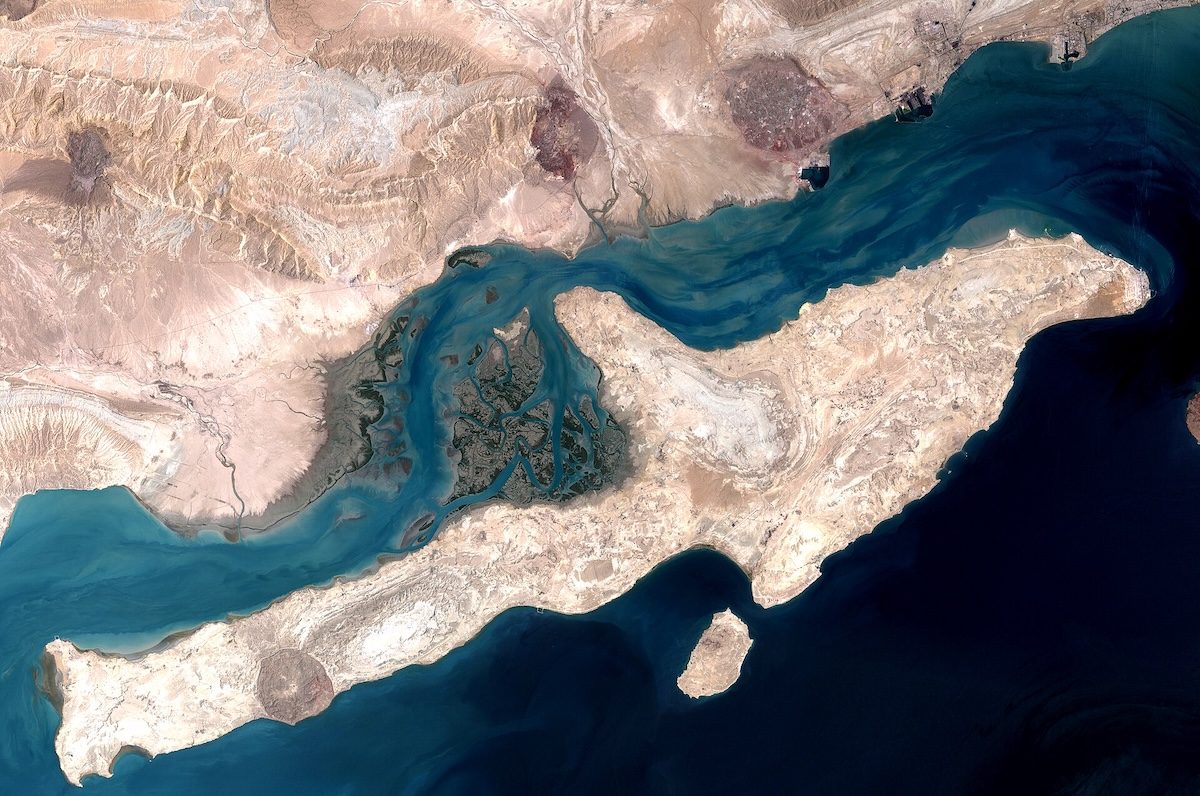
The Trump administration carried out a bombing attack on Iran's Qeshm Island in the Strait of Hormuz on Monday night, just hours before American voters headed to the polls for the midterm elections. The strike, first reported by The Wall Street Journal, was described by a US official as a “defensive measure” in response to Iranian surface-to-air missile fire against American forces, which have been engaged in a war with Iran since February.
According to the Journal, the Islamic Revolutionary Guard Corps fired a surface-to-air missile at a US fighter jet on Monday, prompting the American aircraft to respond in self-defense. The US military did not publicly announce the Qeshm Island attack, and the administration has reportedly been keeping its recent series of smaller-scale strikes on Iran deliberately quiet to avoid signaling any intention of resuming major combat operations.
Breaking a pre-election pledge
The timing of the strike is particularly sensitive. Last month, President Donald Trump vowed that the US would “not be attacking Iran at any time prior” to the midterms, and claimed that the two sides were engaged in “productive discussions.” Vice President JD Vance echoed that optimism on Monday, saying he and Trump “both feel really good about the prospect of potentially coming to a negotiated settlement” to end the unpopular and destructive war.
But the Qeshm Island strike suggests otherwise. Kazem Gharibabadi, Iran's deputy foreign minister, said Tuesday that “Iran is prepared for any scenario” and stressed that the country “retains its right to legitimate self-defense until the military aggression has been brought to a complete and permanent end.”
Jamal Abdi, president of the National Iranian American Council, expressed alarm. “After eight months of an illegal war, there was finally some hope that a diplomatic agreement might be within reach and this war could end through negotiations rather than spiral into the violent scenarios being threatened after the midterm elections,” he said. “But these deeply alarming revelations suggest we may be heading in precisely the opposite direction.”
Abdi called on Congress to intervene immediately, saying, “Every day that Congress fails to intervene is another day this administration is allowed to wage an unauthorized war, conceal its military operations, and gamble with millions of lives. Congress must immediately demand answers, oppose further military action, and use its power to cut off funding for this unauthorized war.”
Fears of a post-election escalation
The latest strikes come days after Senator Chris Murphy (D-Conn.) warned that the Trump administration was considering an “insane” plan to resume major attacks on Iran after the midterms. Murphy, who spoke based on a classified briefing, said such a move “will lead to devastating escalation and the likely destruction of our commitment to the rule of law.”
Concerns about an even graver escalation grew over the weekend when far-right commentator Tucker Carlson, a vocal critic of the war, claimed the administration “may be within days of launching a nuclear strike on Iran.” While Murphy did not specifically mention nuclear weapons, the National Iranian American Council responded, “Whether these allegations reflect serious military planning or reckless posturing, the very possibility of a US nuclear attack on Iran is an unconscionable horror.”
The Qeshm Island strike also carries significant implications for the wider Indo-Pacific region. The Strait of Hormuz is a critical chokepoint for global oil shipments, and any escalation in the Iran conflict could disrupt energy markets that Asian economies, including China, Japan, and India, heavily depend on. As Middle East actors brace for Trump's final year, hedging against unpredictable US policy, Asian capitals are watching closely.
The timing of the attack, on the eve of the midterms, has also drawn attention to the broader state of American democracy. As billionaire cash corrupts US midterms, the ability of the executive to wage war without congressional approval raises questions about checks and balances that resonate far beyond Washington.
For now, the immediate focus is on the aftermath of the strike and whether the administration will follow through on threats of a larger campaign. With the midterms now underway, the world waits to see if the promised “negotiated settlement” will materialize or if the conflict will spiral further. As senators warn of an 'insane' plan, the window for diplomacy appears to be closing.