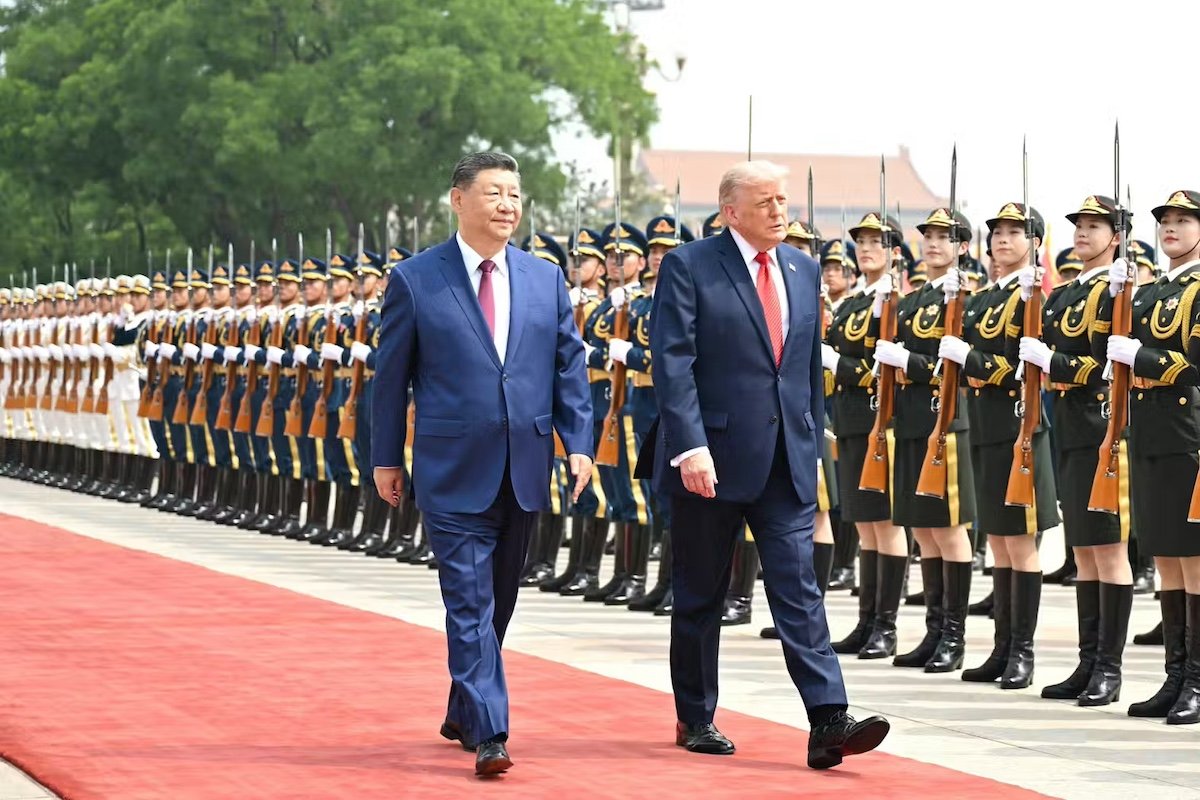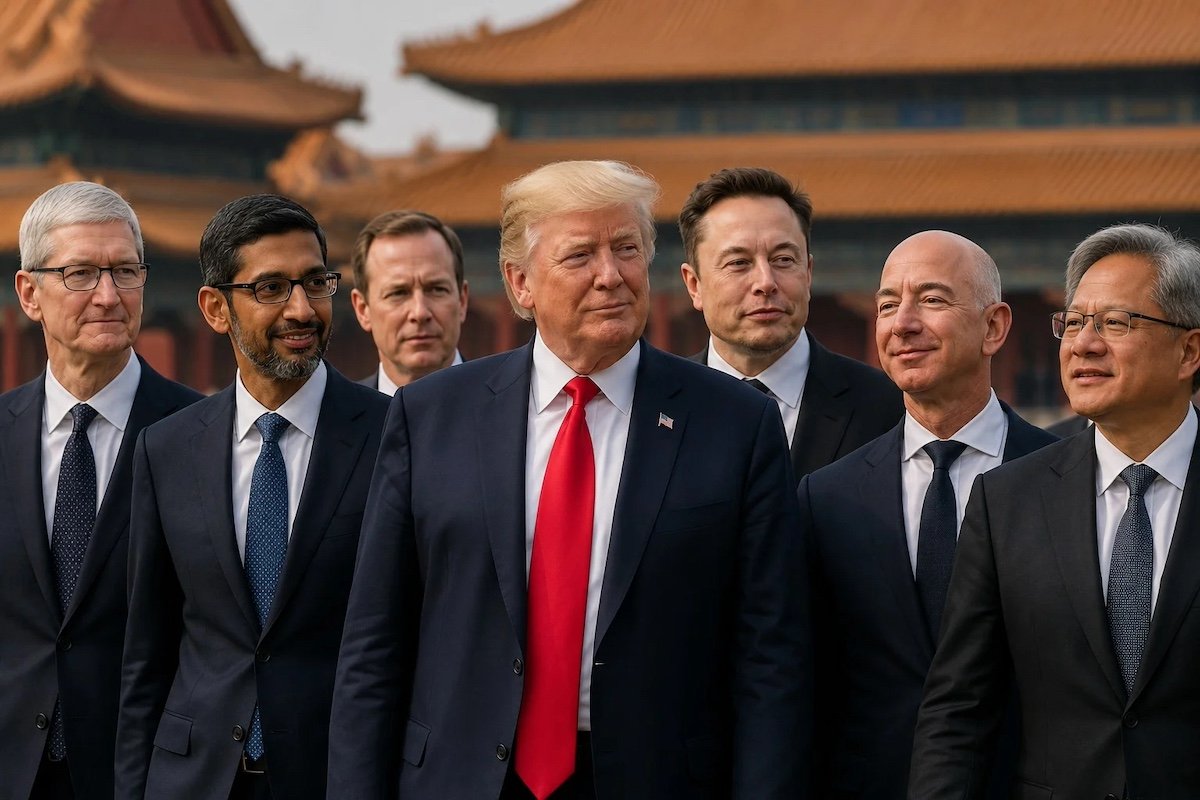
TOKYO — The billionaire CEOs who accompanied US President Donald Trump to Beijing last month are likely experiencing a sharp reversal of expectations. Trump's own erratic posture—from campaign rhetoric against China to public admiration for Xi Jinping—is disorienting enough. But the more consequential whiplash comes from Beijing's rapid retreat from the promises Xi made to the American business delegation.
During the summit, Xi assured Apple's Tim Cook, Tesla's Elon Musk, Nvidia's Jensen Huang, and other corporate titans that China would "open wider" and offer "broader prospects" for US firms. Those assurances now ring hollow. Instead of liberalization, Beijing has imposed tighter controls on cross-border capital, erected barriers around its artificial intelligence sector, and reduced transparency—a direct contradiction of Xi's words.
Markets Reflect the Mismatch
The gap between promise and reality is visible in market performance. China's CSI 300 index has risen just 7% this year. By contrast, South Korea's benchmark has surged 108%, Taiwan's 57%, and Japan's 33%, even amid energy disruptions from the conflict with Iran. The divergence underscores investor skepticism about China's commitment to reform.
Beijing's decision to restrict overseas travel for Chinese AI experts further undermines its stated goal of tapping into the global tech rally. The move echoes Soviet-era practices of confining talent, and it sends a clear signal: China is building a wall around its AI sector, not opening it to international collaboration.
As longtime China watcher Bill Bishop noted, the "burst of positive energy among analysts following May's Xi–Trump summit cooled somewhat towards the end of the month." Chinese Consul General in New York Huang Ping had described the moment as "a narrow strategic window for China to engage different US interest groups and secure a place in global AI governance." That window now appears to be closing.
Beijing is also making it harder for retail investors to buy US stocks, accelerating a broader shift toward tighter capital controls. Vey-Sern Ling of Union Bancaire Privée warned that this "may potentially reduce funds to ADRs listed in the US." The crackdown is "far tougher and more systematic" than previous efforts, according to Dan Wang, head of China analysis at Eurasia Group.
Henry Gao of Singapore Management University added that it is becoming "increasingly difficult for Chinese investors to invest abroad independently of state oversight," reflecting rising concern in Beijing over capital outflows and pressure on foreign-exchange reserves.
China recorded a record US$1 trillion in capital outflows in 2025—double the levels since 2021 and the largest annual outflow since data began in 2006. To stem further losses, Xi has tolerated a stronger yuan, which is up more than 3% in 2026. A stable or rising yuan serves three purposes: reducing default risk for heavily indebted property developers, supporting Xi's ambition to position the yuan as a credible reserve currency, and lowering trade tensions with the Trump White House.
Economist Larry Hu at Macquarie Group noted that if China's domestic demand strengthens on the back of forceful stimulus, "the yuan carry trade will start to unwind as business confidence improves and the US-China yield gap narrows." This would allow the yuan to appreciate more forcefully against the dollar.
The broader context includes fiscal turmoil in Washington, with US national debt approaching $40 trillion—twice China's annual GDP. As Creon Butler of Chatham House observed, the "Trump shock" has China plotting "longer-term resistance to some critical international economic norms." The European Central Bank reported this week that gold has overtaken US Treasury securities as the main reserve asset held by central banks globally, with gold's share reaching 27% versus 22% for Treasuries. ECB President Christine Lagarde noted that "forces of fragmentation are becoming more pronounced" and that geopolitical tensions continue to drive strong central bank demand for gold.
For the US CEOs who returned from Beijing expecting a new era of cooperation, the reality is a deflating turn. Xi's open door has closed, and the message to global business is clear: China's market will open only on its own terms, and those terms are increasingly restrictive.