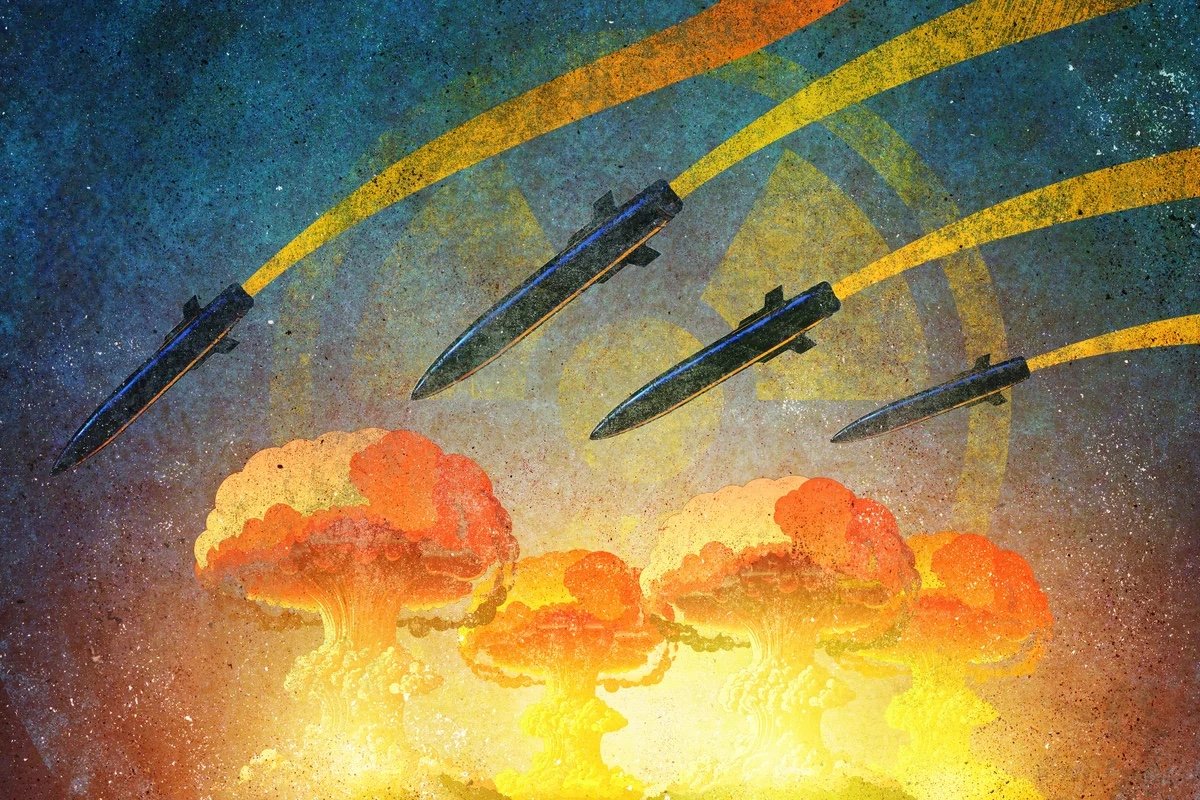
The recent conflict involving the United States, Israel, and Iran has underscored a fundamental transformation in modern warfare. Artificial intelligence has moved beyond merely augmenting military capabilities; it is now actively reshaping the tempo of conflict, dramatically shortening the time available for leaders to prevent escalation.
From Enhancement to Acceleration
In that Middle Eastern conflict, AI-driven decision-support systems analyzed immense volumes of data from satellites, drones, and signals intelligence to facilitate rapid strike planning. Operations that once required months were executed in days. This acceleration is not confined to one theater. Defense analyses globally now highlight how AI is compressing operational timelines and speeding up targeting cycles—a development with profound implications for regions already on a hair-trigger.
For informed observers of the Indo-Pacific, the critical question is not just about the scale of AI's use, but its speed. In a nuclearized environment like South Asia, where India and Pakistan maintain a precarious deterrence balance, increased velocity is not merely an advantage; it acts as a potent risk multiplier. The debate often fixates on fully autonomous weapons, but this overlooks the more immediate, pervasive shift: AI is transforming warfare upstream, by filtering information, identifying patterns, and generating recommendations long before a human commander makes a final call.
The India-Pakistan Preview
The multidomain standoff between India and Pakistan in May 2025 offers a stark preview of how these dynamics could unfold. Following the Pahalgam attack, tensions escalated rapidly into a conflict involving airstrikes, missile exchanges, and cyber operations. Both nations leveraged advanced digital technologies for surveillance and targeting, enabling near-instantaneous decision-making.
Indian officials later disclosed the use of a data-driven targeting system during Operation Sindoor, which reportedly achieved around 94% accuracy. This system fused real-time data from drones and satellites with two decades of historical intelligence. The significance lies less in the claimed precision and more in the process: AI drastically shortened the interval between detecting a target and authorizing a strike, eroding the time available for political calibration and diplomatic outreach.
Pakistan is pursuing a parallel path. The Pakistan Air Force has established a Centre for Artificial Intelligence and Computing, and exercises like Gold Eagle 2026 reflect a deepening commitment to networked, data-driven warfare. During the 2025 crisis, Pakistan demonstrated a unified civil-military operational approach, choosing to defend its territory without broadening the conflict—a restraint that helped contain escalation. For more on how regional conflicts prompt strategic reassessments, see our analysis on Indo-Pacific nations reassessing nuclear postures.
Convergence and Complexity
These trends point toward a dangerous convergence. Both India and Pakistan are building systems designed to accelerate decision-making within an environment already defined by deep mistrust, political pressure, and historically short crisis timelines. India's modernization draws on its strengthening strategic partnership with the United States, while Pakistan's trajectory is shaped by its deepening technological ties with China. This adds a complex, great-power layer to an already fragile regional deterrence architecture.
The risks embedded in this convergence are significant. First is the risk of scale. Even a system with 94% accuracy misidentifies a portion of targets. In a high-tempo conflict involving hundreds of strikes across a region dense with dual-use civilian and military infrastructure, a small percentage of errors can have catastrophic strategic consequences.
A second, more insidious risk is automation bias. Under the extreme stress of a crisis, military operators may begin to treat AI system outputs as inherently reliable, treating verification steps as mere formalities. This is compounded by cognitive offloading—as reliance on AI grows, the human capacity for critical assessment and questioning of data may atrophy precisely when it is needed most. Furthermore, the "black box" nature of many advanced AI systems creates opacity, making it difficult to audit how a specific targeting conclusion was reached, complicating both internal accountability and crisis communication with an adversary.
The Nuclear Overhang
In most regions, these risks are serious. In South Asia, they are existential. India and Pakistan operate under a constant nuclear shadow, where even limited conventional exchanges carry inherent escalation risks. Their crises are shaped not just by military calculations, but by volatile domestic politics, sensationalist media narratives, and decades of mutual suspicion. The 2025 standoff showed how quickly signaling can turn into kinetic action across multiple domains. Escalation was contained then due to deliberate restraint, backchannel diplomacy, and external mediation.
The new generation of AI-enabled systems threatens to erode that fragile balance. By accelerating targeting and compressing decision timelines, they reduce the crucial space for leaders to pause, reassess, and pursue de-escalation. This pushes crises toward dangerous, high-speed feedback loops where one side's accelerated action prompts an equally rapid reaction from the other. The problem is acutely magnified in the context of dual-capable delivery systems and shared early-warning networks. As regional powers integrate AI, the foundational strategies of nuclear deterrence, based on assured second-strike capabilities and clear communication, are being stress-tested. This technological shift occurs alongside other regional security challenges, such as those explored in our report on the flux in US counterterrorism strategy and Asian security.
The path forward requires recognizing that in South Asia, technological "advancement" does not automatically equal strategic stability. The margin for nuclear error is not a fixed entity; it is a political and temporal space that emerging technologies are actively shrinking. Mitigating this risk will demand not just technical safeguards and explainable AI, but renewed investment in diplomatic crisis management channels and bilateral dialogues focused on crisis stability, lest the quest for a decisive conventional edge inadvertently makes nuclear conflict more likely.