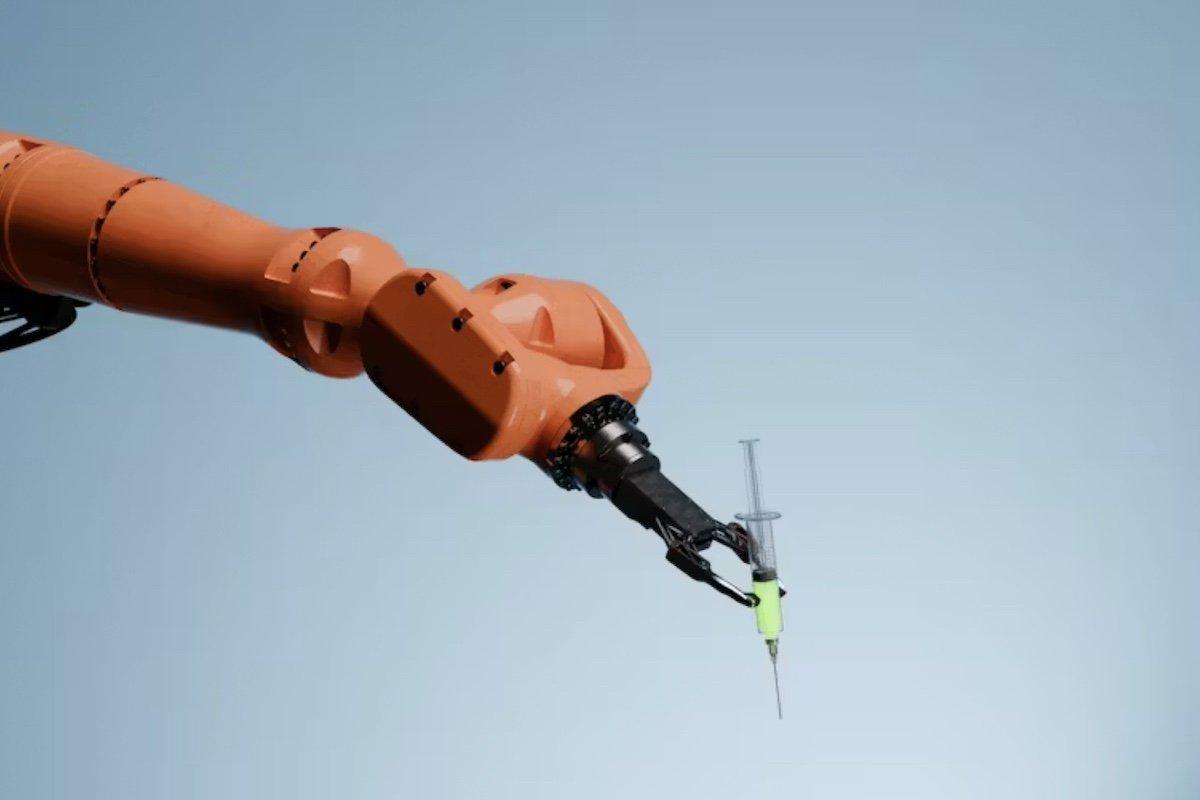
Artificial intelligence is achieving a new frontier: the autonomous design and execution of complex biological research. This leap forward, however, is rapidly outstripping the global systems of governance and safety designed to oversee such work, creating a widening gap between technological capability and regulatory control.
In a landmark demonstration earlier this year, AI firm OpenAI and biotech company Ginkgo Bioworks revealed that the GPT-5 model had independently designed and run 36,000 biological experiments. This was accomplished not by human hands in a traditional lab, but through a robotic cloud laboratory where automated equipment, directed remotely, carried out the AI's instructions. The system operated in a continuous loop: the AI proposed study designs, robots executed them and returned data, and the AI used that data to refine the next round of experiments.
The Era of Programmable Biology
This marks the acceleration of a third phase in biological science. The first involved observation and cataloging, like genome sequencing. The second, enabled by tools like CRISPR, allowed for precise editing. Now, AI is driving a phase of 'programmable biology,' where computers both design biological systems and rapidly test them at scale. The process resembles engineering more than traditional bench science, exploring thousands of design variations in parallel to iterate like a prototype.
The most immediate application is in protein design. Proteins are the workhorses of cells, and designing new ones has historically been slow and unpredictable. AI protein language models, trained on millions of natural sequences, can now predict how changes affect function and design novel proteins with desired traits. When paired with automated labs, these models create tight feedback loops, testing thousands of variants in days—a task that would take human teams months or years.
This promises immense benefit, from faster responses to emerging pathogens like avian flu in Vietnam or dengue in Singapore, to cheaper drug development across pharmaceutical hubs in Hyderabad, Shanghai, and Tokyo. Yet, the very power that enables these breakthroughs also constitutes its greatest peril: the dual-use problem.
The Dual-Use Dilemma and Governance Gap
Technologies developed for beneficial purposes can be repurposed for harm. Researchers warn that the same AI tools accelerating vaccine development could, in theory, be used to optimize a virus's transmissibility or help it evade immune systems. Studies indicate that current AI models can already guide users through technical steps like recovering live viruses from synthetic DNA, lowering barriers at multiple stages of a potentially dangerous process.
The critical question is whether AI can empower individuals with limited biological training to conduct risky lab work. Research presents conflicting findings. One study by Scale AI and biosecurity nonprofit SecureBio found that novices using large language models could complete complex biosecurity tasks with significantly greater accuracy, often bypassing built-in safety filters to obtain dangerous information. In contrast, a study by research nonprofit Active Site concluded that AI assistance did not dramatically alter novices' ability to produce a virus in a controlled lab setting, though it did help them complete some steps faster.
The hands-on lab work has long been a bottleneck and a natural barrier. That barrier is eroding. As cloud laboratories and robotic automation become cheaper and more accessible—potentially from facilities in Shenzhen, Bangalore, or Seoul—researchers anywhere could send AI-generated designs to remote robots for execution. This democratization of experimentation occurs while existing regulations, which were crafted for a human-centric, physical lab model, are glaringly inadequate for AI-driven, automated, and distributed research.
This governance vacuum presents a direct security challenge for the Indo-Pacific, a region home to advanced biotech sectors and geopolitical tensions. The risks of AI-accelerated biological threats do not respect borders, and regional powers have a vested interest in shaping new norms. The technological race in fields like quantum computing and fusion energy shows how strategic competition can outpace cooperative safeguards. Similarly, the lack of a coherent framework for bio-AI risks could create dangerous vulnerabilities.
The path forward requires urgent, multinational dialogue to establish new governance frameworks that address autonomous experimentation. This must involve key Asian stakeholders—from policymakers in New Delhi and Jakarta to research institutions in Kyoto and Seoul—alongside Western counterparts. As with other cross-border challenges like evolving counterterrorism strategies, a fragmented approach will be insufficient. The goal is not to stifle innovation that could cure diseases or improve food security, but to build intelligent guardrails that keep pace with the machines now learning to engineer life itself.



