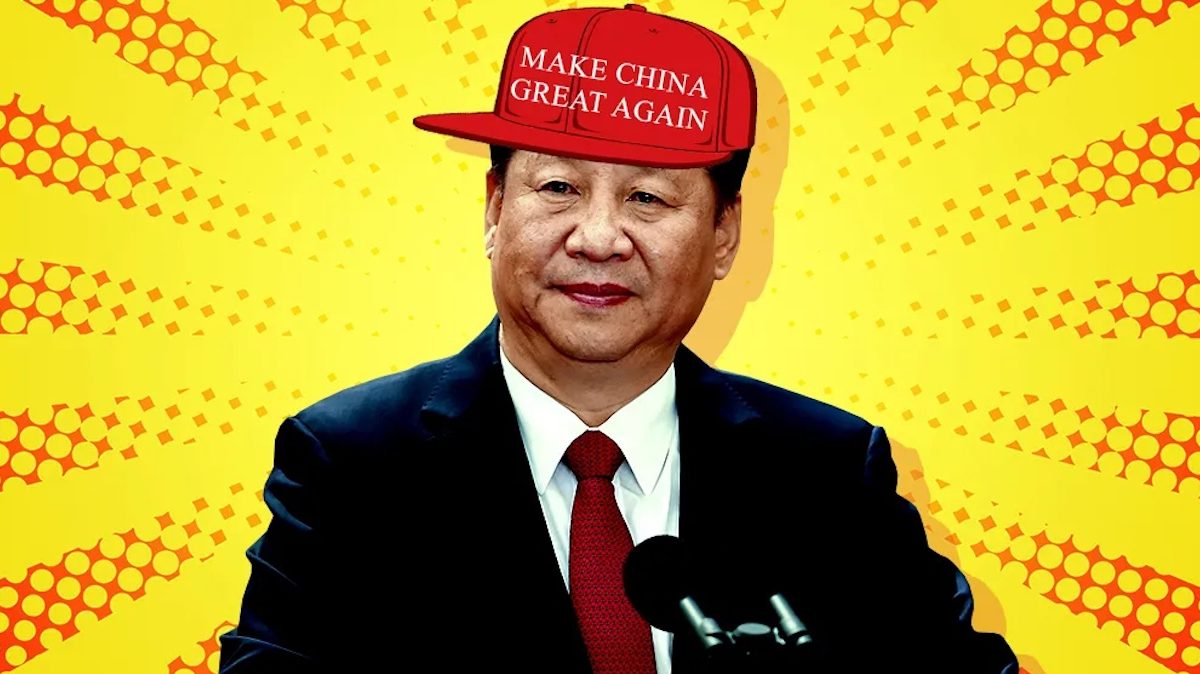
The global landscape of cultural influence is shifting, but measuring the rise of one nation's soft power often involves assessing the perceived decline of another's. A recent social media trend dubbed "Chinamaxxing" has sparked debate: does it signal a genuine surge in China's cultural appeal, or does it primarily reflect growing disillusionment with Western, particularly American, cultural hegemony?
The 'Chinamaxxing' Phenomenon: Surface-Level Fascination
On platforms like TikTok, a wave of primarily Gen Z creators from the United States and Europe have begun showcasing routines they associate with Chinese life. This includes drinking hot water, practicing traditional exercises like tai chi, wearing specific styles of jackets, and extolling the virtues of early bedtimes. The aesthetic splits into sub-genres like "wellness and longevity mode" and "uncle core," which romanticizes the leisurely habits of Chinese retirees. Framed as an alternative to Western hustle culture, the trend expresses a fascination with Chinese daily life from a considerable distance.
Yet, analysts note a critical gap. This trend involves few authentic Chinese cultural products. Participants are generally not consuming Chinese cinema, television dramas, or popular music. The viral Adidas jacket is a product of a German corporation. The phenomenon appears to be based on Western interpretations of Chinese stereotypes—practices that might have been criticized as cultural appropriation a decade ago—now viewed as a form of respectful, if shallow, admiration.
The Struggle for Authentic Cultural Export
Despite China's immense economic and technological footprint, its creative industries have not achieved the global penetration seen with South Korea's K-pop and K-dramas or Japan's anime and video games. Major Chinese cinematic releases, such as the animated blockbuster Ne Zha 2, continue to earn the overwhelming majority of their revenue domestically. Similarly, the highly anticipated video game Black Myth: Wukong drew over three-quarters of its Steam sales from within China, indicating limited breakout success in Western markets.
This disconnect highlights a persistent challenge. China's closed political system, characterized by extensive internet censorship via the Great Firewall and tight control over media and speech, creates an environment that often stifles the kind of artistic ferment that resonates globally. While individual creativity exists, the state's preference for "anodyne, cautious artistry" limits China's ability to set global cultural trends, despite its other forms of power. This internal dynamic complicates any direct comparison to the organic, bottom-up cultural waves from Seoul or Tokyo.
Infrastructure as Spectacle and Strategic Messaging
Parallel to the lifestyle trends, a separate stream of content focuses on China's physical modernity. Western social media influencers and some academics post breathless videos and analyses praising the scale, efficiency, and futuristic appeal of Chinese cities like Shanghai, Shenzhen, and Chongqing. They contrast this with perceptions of urban decay and infrastructure stagnation in parts of the United States and Europe.
However, this narrative often appears orchestrated. Observers point out that many accounts promoting Chinese urban supremacy are one-note, suggesting a coordinated publicity effort amplified by a few genuine enthusiasts rather than purely organic admiration. This form of influence—showcasing developmental prowess—is a traditional soft power tool, but its reception is filtered through growing global debates about governance models. As global economic institutions reassess state-led growth models, China's physical achievements are wielded as evidence of its system's efficacy.
A Question of Relative Decline
The "Chinamaxxing" discussion cannot be divorced from the context of perceived American cultural and political fatigue. For many young Westerners, the trend may be less about a deep affinity for China and more about seeking alternatives to a domestic culture they find lacking. The idealized Chinese habits presented—communal living, wellness focus, and impressive public infrastructure—serve as a critique of perceived American individualism, poor work-life balance, and public neglect.
This dynamic suggests that what is being interpreted as a rise in Chinese soft power might, in part, be a symptom of America's soft power erosion. The United States' internal political divisions, foreign policy missteps, and social challenges have tarnished its image for many international audiences. In this vacuum, curiosity about alternative systems naturally grows. However, this does not automatically translate into wholesale adoption of Chinese values or political alignment, as nations across the Indo-Pacific carefully navigate their ties between Beijing and Washington. For instance, Indonesia's foreign policy calculations highlight the complex balancing act many regional powers face.
The Geopolitical Undercurrent
The soft power contest is inextricably linked to hard security realities. China's growing military capabilities and assertive actions in regions like the South China Sea create a friction that its cultural outreach must overcome. Perceptions of China as a strategic competitor or threat can limit the appeal of its cultural products. Concurrently, the United States' security commitments in Asia remain a cornerstone of its influence, even as its cultural cachet may waver. The ongoing US Navy's next-generation fighter development is a direct response to pacing challenges in the Pacific, underscoring how hard power competition frames the soft power environment.
Furthermore, China's economic policies, such as creating industrial overcapacity that reshapes global trade, generate mixed reactions. While development projects can build goodwill, trade practices can create resentment, complicating a purely positive soft power narrative.
In conclusion, the "Chinamaxxing" trend reveals more about the current moment of global cultural searching than it does about a definitive shift in soft power primacy. It indicates a burgeoning curiosity about China, fueled by its undeniable material achievements and a comparative critique of the West. However, until China's homegrown creative industries can produce content that achieves authentic, widespread global resonance beyond its borders—and until its political system allows for more open cultural exchange—its soft power will likely remain niche, aspirational, or instrumental. The true story is not a simple transfer of influence from Washington to Beijing, but a more fragmented global landscape where cultural appeal is increasingly decoupled from geopolitical alignment, and where fascination does not necessarily imply endorsement.