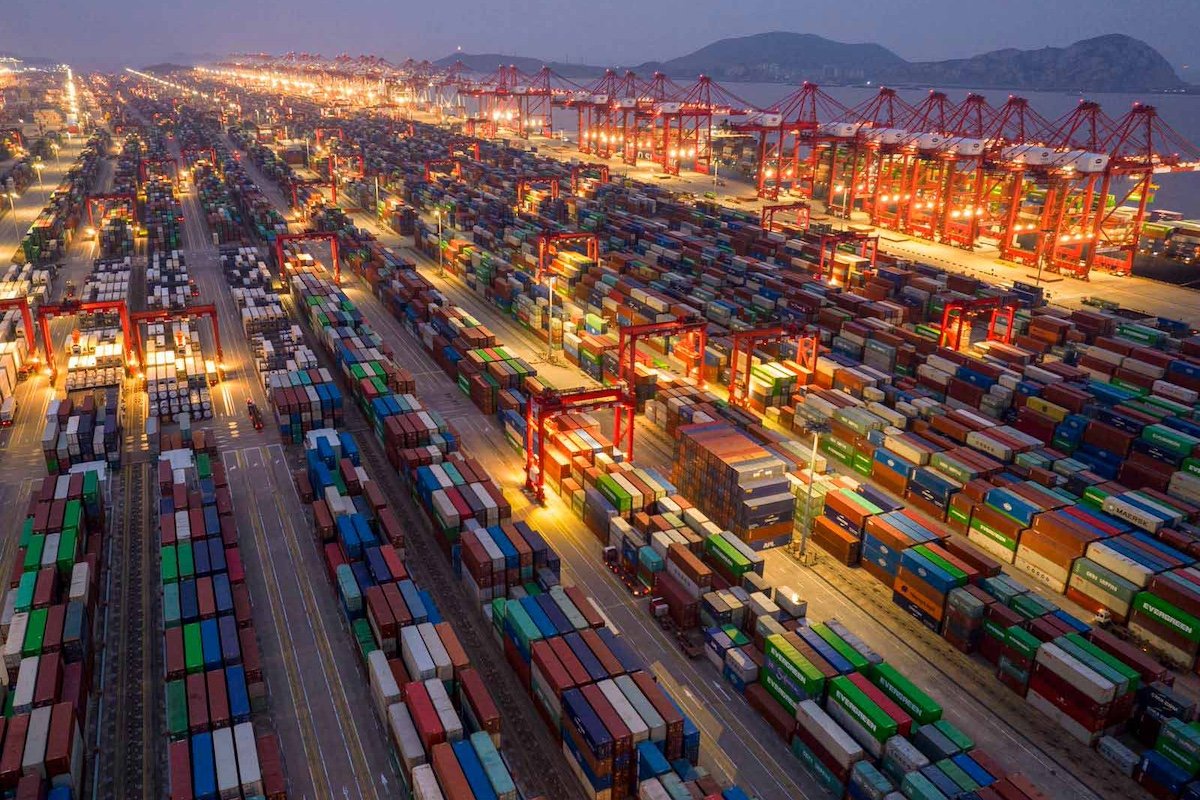
Beijing has enacted a sweeping new law that effectively penalizes foreign companies for reducing their reliance on Chinese supply chains, escalating the regulatory stakes for multinationals operating in the world's second-largest economy. The Industrial and Supply Chain Security law, which took effect in early April, introduces broad oversight over cross-border commercial activity, targeting decisions such as sourcing shifts, production relocation, and technology transfers that could be deemed disruptive to China's supply chain stability.
While the Chinese government frames the legislation as a measure to safeguard economic resilience, it represents a direct response to growing global efforts to decouple from China—a trend driven by both US-led technology restrictions and European Union initiatives to reduce strategic dependencies. For EU-based multinationals, whose cumulative investment in China exceeds €140 billion (US$164 billion), the law creates a stark regulatory conflict: compliance with EU sanctions, export controls, and due diligence rules may now expose firms to enforcement risks in China.
German Industry in the Crosshairs
German automotive and chemical manufacturers are particularly vulnerable given their deep integration into Chinese production ecosystems. European carmakers have invested heavily in China not only as a market but as a hub for electric vehicle and battery innovation. The new law may constrain their ability to shift parts of their supply chain to other regions, even when such moves are driven by EU industrial policy aimed at reducing dependency on Beijing. For example, efforts to localize battery production in Europe or source critical minerals from alternative partners could be interpreted as destabilizing Chinese supply networks, triggering administrative hurdles or informal pressures.
Similarly, German chemical giants with large-scale integrated production sites in China—often embedded in local industrial clusters—now face higher costs and risks when adjusting these networks, even for legitimate commercial reasons like risk diversification or sustainability goals. The ambiguity of the term “supply chain stability” grants Chinese regulators broad discretionary power, turning routine business decisions into potentially politically sensitive actions.
The law's chilling effect extends to corporate governance. Multinational companies may become more cautious in implementing global policies affecting their China operations, particularly those related to compliance with foreign regulations. Internal processes may need to be restructured to incorporate China-specific risk assessments, with decision-making authority shifting toward localized management teams. This fragmentation of governance models threatens the global integration that has historically characterized multinational operations.
Contractual relationships are also affected. Chinese counterparties may leverage the new regulatory framework to renegotiate terms or resist changes initiated by foreign partners. The possibility that regulators could intervene in commercial disputes on grounds of supply chain stability adds uncertainty to contract enforcement, prompting EU companies to reconsider joint ventures, supplier agreements, and investment structures in favor of arrangements offering greater flexibility or legal protection.
From a broader strategic perspective, the law embeds geopolitical considerations into commercial regulation, signaling that business decisions cannot be insulated from international relations. For EU multinationals, this underscores the need to integrate geopolitical risk analysis into core business strategies—a shift that parallels challenges faced by other Asian economies navigating US-China tensions. As Singapore's AI neutrality model cracks under US-China pressure, and South Korea seeks hedging strategies, the new Chinese law adds another layer of complexity for firms operating across the Indo-Pacific.
The law also has implications for regional financial ties. China's issuance of sovereign bonds in Indonesia deepens its financial influence, while the supply chain law reinforces Beijing's leverage over foreign firms. For EU companies, the choice is increasingly stark: adapt to a regulatory environment that penalizes strategic realignment, or risk being caught between competing legal regimes.