For decades, the US-South Korea alliance has been the bedrock of security in Northeast Asia. But a combination of Washington's aggressive trade policies and the economic fallout from the US-Israeli war on Iran has made the case for Seoul to diversify its strategic dependencies harder to ignore. As veteran Korea analyst Bruce Klingner puts it, "While the biggest threat to the alliance remains North Korea, the biggest challenge to the alliance now comes from the United States."
Klingner, a former CIA officer, argues that the Trump administration has bullied Seoul into a disadvantageous trade deal that violates the US-South Korea free trade agreement and the US Constitution, while demanding more and promising less to its security and economic partners. This has degraded military deterrence by undermining the perception—in the minds of both allies and adversaries—that Washington is a dependable security partner.
This sense of unreliability is not unique to South Korea. As Washington Post columnist Fareed Zakaria recently wrote, the United States has used allied security dependence "to squeeze them hard." The response, according to British historian Lawrence Freedman, is not to break ties but to accept that interests are no longer as aligned as they once were, and that accommodating American wishes cannot be a high priority. Zakaria concludes that allies "have decided to buy insurance, to protect themselves from an unreliable America."
Accelerate CPTPP Membership
The most straightforward step for South Korea is to expedite its application to join the Comprehensive and Progressive Agreement for Trans-Pacific Partnership (CPTPP). This twelve-member trade pact, which includes Japan, Australia, Canada, and the United Kingdom, offers a framework for supply chain cooperation, digital trade, and state-owned enterprise reform. As Asan Institute for Policy Studies President Choi Kang wrote in Joongang Ilbo, "For Korea, a mid-sized trading nation, survival now depends on diversifying markets and stabilizing supply chains. The CPTPP offers a network well suited to those goals."
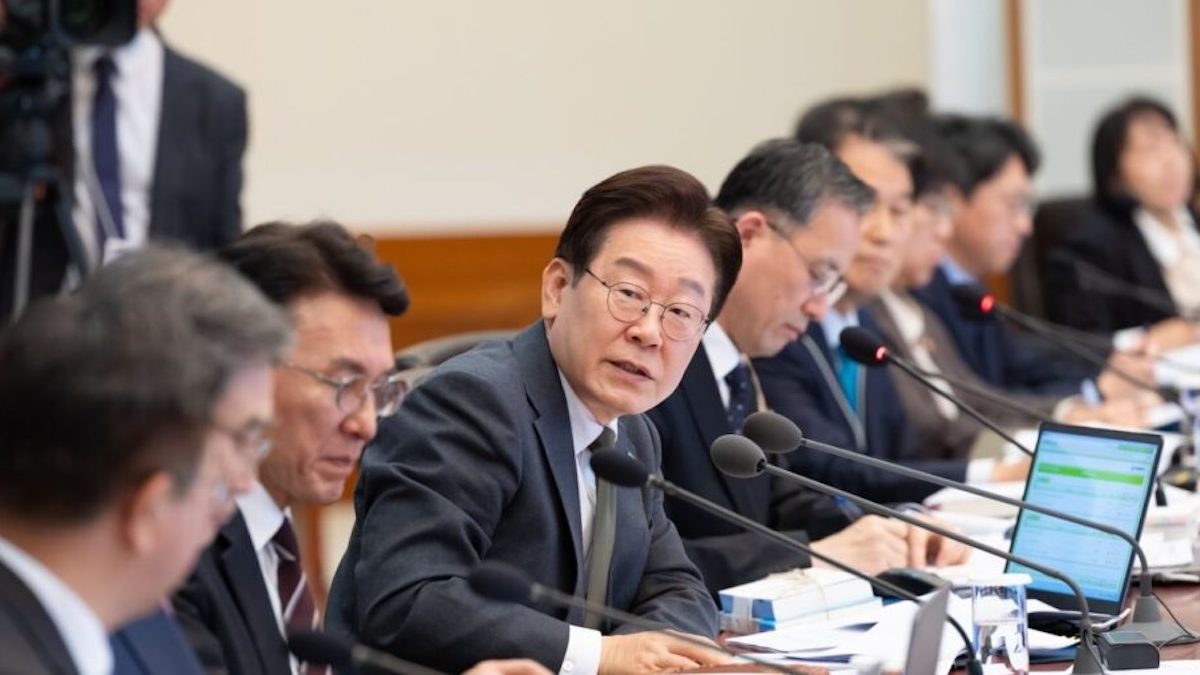
Membership would also cement the strategic partnership between Seoul and Tokyo. Earlier this decade, Japan gave South Korea a cold shoulder on entry, but warming ties under Prime Minister Sanae Takaichi have shifted that stance. Former US Assistant Trade Representative Michael Beeman notes that a recent joint statement between President Lee Jae-myung and Prime Minister Takaichi indicated Japanese support. The main obstacle now is domestic: fears from agricultural producers and auto manufacturers about competition from Japanese and other foreign producers. Supporters argue that structural adjustment assistance could mitigate these effects and catalyze much-needed industrial restructuring.
Lift Restrictions on Arms Sales to Ukraine
A more controversial move would be for South Korea to lift its long-standing restrictions on selling lethal weapons to countries in active combat, particularly Ukraine. Seoul has so far provided indirect support—selling weapons to Poland and non-lethal systems to Kyiv, as well as participating in NATO mechanisms to finance US weapons. But the Trump administration's decision to cut military assistance to Ukraine and divert weapons to the Iran war creates an urgent need for intensified support, especially in missile defense.
Changing this policy would signal Seoul's readiness to take positions independent of Washington and strengthen ties with the European Union. Rather than acting as a US proxy, as some South Korean progressives argue, this would demonstrate independence of action and self-defense. It would also serve South Korea's own security interests by preventing a Russian victory that would drive Pyongyang and Moscow closer together. Morally and strategically, it would balance the impact of North Korea's participation in the Ukraine war.
Pursue Independent Diplomacy with Iran
The Lee administration has taken tentative steps toward shaping an independent policy response to the US-Israeli war against Iran and maritime security in the Strait of Hormuz. South Korea, as a major energy importer, is acutely vulnerable to disruptions in oil shipments from the Middle East. The US-Iran stalemate in Hormuz has already strained alliances and reshaped Asian energy security. Seoul could engage directly with Tehran to secure energy shipments, bypassing US-led sanctions regimes that have proven costly and unpredictable.
Such a move would align with broader trends in the region. As Iran Conflict Accelerates Southeast Asia's Strategic Recalibration Away from US, many Asian nations are reassessing their dependence on Washington. For South Korea, an independent approach to Iran would not only protect its energy security but also demonstrate that it can navigate complex geopolitical waters without relying solely on the US security umbrella.
These three strategies—joining the CPTPP, arming Ukraine, and engaging Iran directly—offer Seoul a way to buy insurance against an unreliable America without rupturing the alliance. As Klingner warns, the perception of US dependability is eroding, and South Korea must act now to secure its future.