The week began with the Iran ceasefire appearing less as a straightforward peace effort and more as a negotiation over what the war itself meant. It ended in a similarly ambiguous position, with Tehran accusing Washington of continued strikes and the US describing its actions as purely defensive. Reports of a possible 60-day extension circulated alongside denials, counterclaims, and disputes over the Strait of Hormuz, the blockade of Iranian ports, and conditions for resuming commercial shipping.
As the fighting has slowed, the politics of the war have become more visible. Ceasefires are often treated simply as pauses in violence. However, their real impact is that they reveal the point at which violence has started to run into political limits. Carl von Clausewitz famously wrote that war is a continuation of political intercourse with other means added. A ceasefire sits inside this continued political intercourse. It is the moment when leaders begin to question whether force is still helping them achieve their goals, or whether continued force now threatens something they need more.
That question is unusually difficult in the current conflict because the American objective has never been especially clear. At different moments, the war has looked like a campaign of deterrence, a punishment operation, a nuclear pressure campaign, and a maritime crisis over Hormuz. These aims overlap but do not imply the same kind of war or a clear fundamental political aim. More importantly, they do not imply the same kind of ceasefire. A ceasefire after punishment requires a claim of restored deterrence. A ceasefire after a maritime crisis requires arrangements that shipowners and insurers believe. A ceasefire after nuclear pressure requires a diplomatic sequence. A ceasefire after regime pressure requires something much larger and much harder to sustain.
Historical Lessons: Korea and Yom Kippur
History suggests that a ceasefire generally comes from one of three conditions: the parties have reached a military gridlock; the fighting has opened a diplomatic path; or the continuation of war has begun to threaten the political project it was meant to serve. The 1950s Korean War, the 1973 Arab-Israeli Yom Kippur War, and the 1980s Iran-Iraq War show how conflicts only stop when force no longer gives politics what it wants.
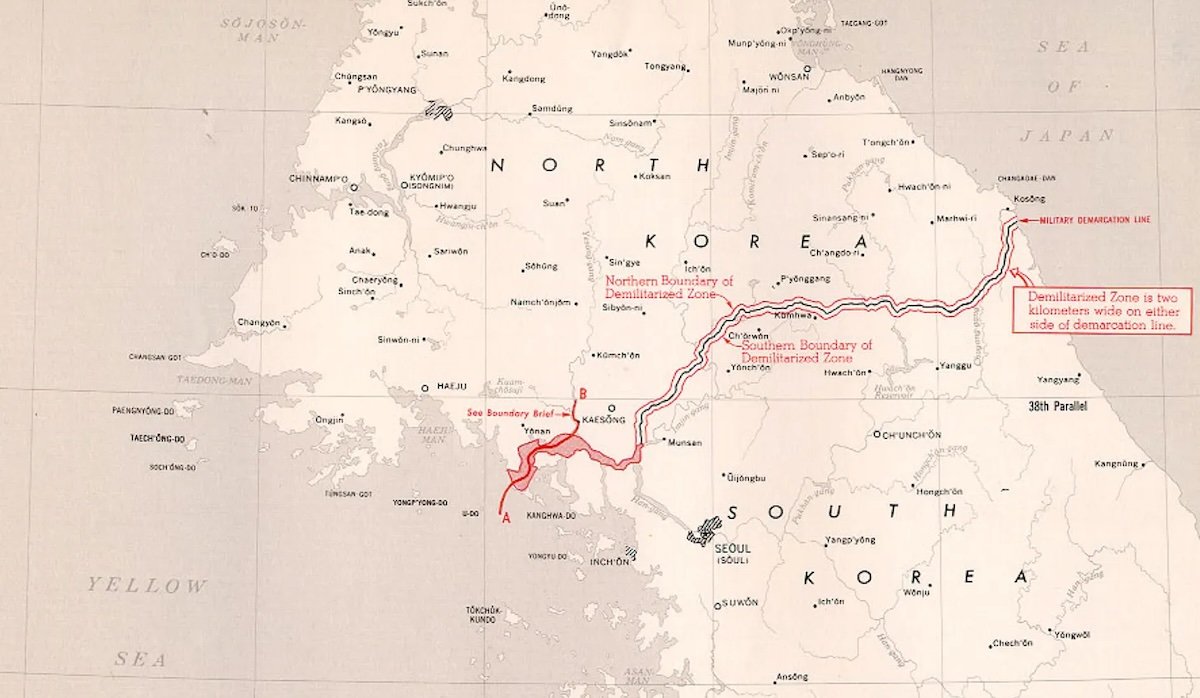
Korea was a ceasefire born from the exhaustion of ambition. The war began with North Korea's attempt to reunify the peninsula by force, expanded when the US and its allies moved from repelling the invasion to rolling back communist control in the North, and changed again when China entered to prevent that outcome. By 1953, after three years of enormous loss, the front had settled close to where the war had begun, leaving the armistice to formalize a truth that the battlefield had already made plain: neither side could impose reunification at a price it was prepared to keep paying. The armistice signed in July 1953 ended the fighting without producing a peace treaty. That was its great limitation, but also the source of its durability. It reduced the violence by accepting that the political question would remain unresolved. The Korean peninsula became a place where the war had stopped but the conflict had continued, managed through a line, a zone, forces on alert, and the grim discipline of deterrence. The ceasefire has survived because it asked less of politics than the war had asked of force. For more on this dynamic, see One Year On: Indo-Pak Ceasefire Holds, But Hostility Deepens Across the Region.
The Yom Kippur War gives a different lesson. Egypt and Syria attacked Israel in October 1973, breaking the confidence that had settled over Israel after 1967 and restoring a degree of Arab agency through force. Israel recovered militarily, but the early shock of the war changed the political atmosphere around the conflict. It created danger, including the risk of superpower escalation, but also opened a path for diplomacy. The ceasefire called for by UN Security Council Resolution 338 quickly led to negotiations, disengagement agreements, and American mediation. In this case, the structure of the ceasefire agreement allowed diplomatic escape for all parties. Egypt could present the war as the restoration of honor and the crossing of the Canal. Israel could present the outcome as survival and military recovery. The US could turn a dangerous regional war into a diplomatic opening. The ceasefire became more than a pause because it gave each side a way to describe the political meaning of restraint. It did not resolve the more pernicious Arab-Israeli conflict, but it created movement where the previous order had hardened.
The Current Standoff: Political Limits of Force
A similar dynamic exists within the current ceasefire between Iran, Israel, and the US. All sides can still inflict damage, yet none appears able to turn that damage into a settled political result. Israel can strike and degrade Iranian capabilities. Iran can retaliate, disrupt shipping, and raise the cost of regional instability. The US can bring enormous force to bear from the air and sea. But the question is no longer whether each side can hurt the other. It is whether additional hurt improves the political position of the side inflicting it.
This is where the American position becomes difficult. Air and naval power are politically available to Washington in a way that a ground war with Iran is not. That does not mean a ground war is imminent, or even likely. It means that the next major rung on the escalation ladder is politically far harder to climb. If the aim is deterrence, strikes may be enough. If the aim is to compel lasting changes in Iranian behavior, secure the Strait on terms Iran accepts, or force a durable nuclear bargain, the available instruments start to look less decisive. The US has military capacity, but the politically usable portion of that capacity narrows as the objective expands. This fragility is underscored by reports that US weapons depletion drives fragile Iran ceasefire, raising questions for Asia.
That is the more hopeful reading of the current 60-day proposal. The timeframe itself is less important than what the parties try to put inside it. If the ceasefire can be used to open a diplomatic channel, as in 1973, it might produce a more stable outcome. If it merely formalizes a stalemate, as in Korea, it may last but leave the underlying conflict unresolved. The danger is that the ceasefire becomes a pause without purpose, where each side uses the time to rearm and reposition, waiting for the next round of violence. For Asia, the implications are clear: the Iran conflict is not isolated. It affects energy flows through the Strait of Hormuz, which directly impacts oil prices for major Asian economies like Japan, South Korea, and India. The stability of the ceasefire will shape regional security calculations from Tokyo to New Delhi. As multiple actors and grievances undermine the fragile US-Iran ceasefire, the region watches closely.
The ceasefire in Iran is not an end. It is a moment of political reckoning. Whether it leads to a durable peace or merely a temporary respite depends on whether the parties can find a political meaning for restraint that matches the costs of continued war. For now, the war has stopped, but the conflict continues—by other means.