Beijing has taken an unprecedented legal step to shield its independent oil refiners from United States sanctions, invoking a five-year-old statute for the first time to block enforcement of penalties on five Chinese petrochemical firms. The Chinese Ministry of Commerce announced on May 2 that the US sanctions—which placed the companies on the Treasury Department’s Specially Designated Nationals (SDN) list, froze their assets, and banned transactions—"shall not be recognized, enforced or complied with" within China.
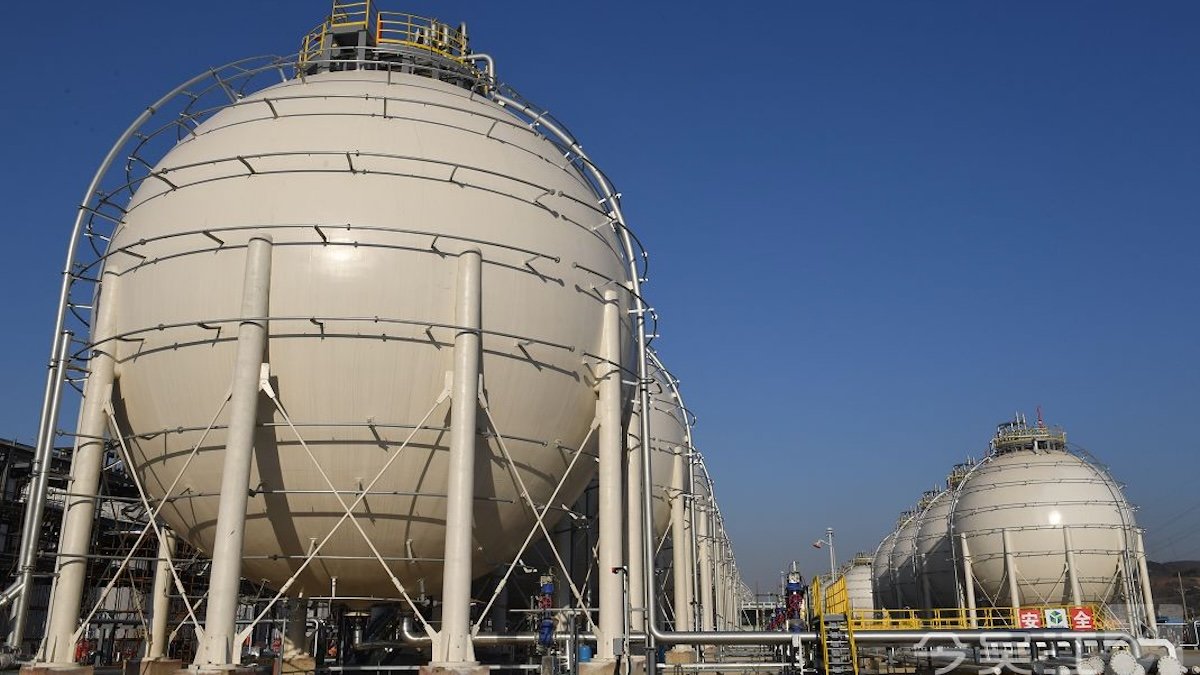
The move directly targets US measures against what Washington calls "teapot" refineries: smaller, independent processors that have become major buyers of Iranian crude oil. Among the sanctioned entities is Hengli Petrochemical (Dalian) Refinery Co Ltd, which the US Treasury’s Office of Foreign Assets Control (OFAC) described on April 24 as one of Tehran’s most valued customers. The other four firms—Shandong Shouguang Luqing Petrochemical, Shandong Shengxing Chemical, Hebei Xinhai Chemical Group, and Shandong Jincheng Petrochemical Group—were designated between March and October 2025.
Legal Framework and First Use
The instrument Beijing deployed is the Rules on Counteracting Unjustified Extraterritorial Application of Foreign Legislation and Other Measures, commonly referred to as the Blocking Rules. Adopted in 2020, the rules had remained largely dormant until now. The Commerce Ministry’s directive orders Chinese companies and banks to refuse participation in the US sanctions, though it did not specify whether the prohibition extends to Hong Kong, a key settlement hub for China-Iran oil transactions.
Liu Chunsheng, an associate professor at the Central University of Finance and Economics, told the Hong Kong China News Agency that the invocation was a response to Washington’s "frequent abuse of unilateral sanctions and long arm jurisdiction." He characterized the US actions as "economic and trade bullying" and said the Blocking Rules provide a mechanism to "protect the legitimate overseas business rights of Chinese companies, safeguard the security of industrial and supply chains, and maintain a fair international economic and trade order."
Cui Fan, a professor at the University of International Business and Economics and chief expert at the China Society for World Trade Organization Studies, argued that the US sanctions have ignored Chinese companies’ claims to legitimate rights and expanded in scope. "If China allows this to continue, this will disrupt the stability of China’s energy supply chain and harm its energy security and development interests," he said. He noted that the US SDN list now includes roughly 18,900 entities and individuals, with over 1,100 linked to mainland China and more than 400 connected to Hong Kong.
Escalating Tensions
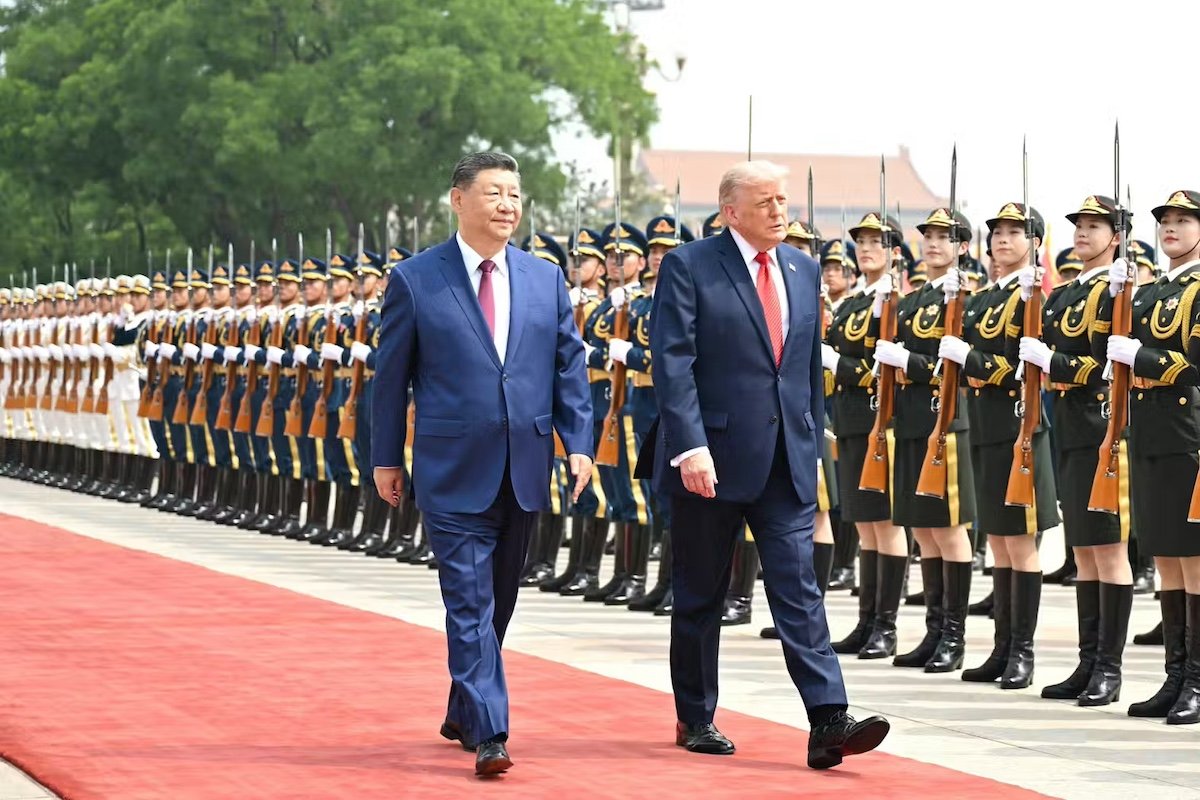
The dispute has added a new layer of friction to US-China relations ahead of a planned meeting between US President Donald Trump and Chinese President Xi Jinping in China on May 13–14. The two leaders are expected to discuss trade frictions, export controls, and conflicts in Ukraine and Iran. The timing of the Blocking Rules’ activation suggests Beijing is unwilling to yield on energy security even as it seeks broader diplomatic engagement.
On April 15, Treasury Secretary Scott Bessent disclosed that the US had sent letters to two Chinese banks warning of secondary sanctions risks if they facilitated Iran-linked transactions. He did not name the banks. On April 24, OFAC also sanctioned around 40 shipping firms and vessels it said were part of Iran’s "shadow fleet." The agency warned financial institutions on April 28 that it is "prepared to deploy secondary sanctions against foreign financial institutions that continue to support Iran’s activities."
The US Treasury’s 50% rule further complicates compliance: any entity owned 50% or more by a sanctioned party is automatically treated as blocked, even if not explicitly listed. This effectively prevents sanctioned firms from using subsidiaries or affiliates to circumvent restrictions.
Implications for Energy and Diplomacy
China’s teapot refineries have become a critical channel for Iranian oil exports, processing billions of dollars’ worth of crude despite US restrictions. The Blocking Rules’ activation signals that Beijing is willing to escalate legal countermeasures to protect these flows. The move also sets a precedent for other nations facing similar sanctions, as Liu Chunsheng noted: "China has set an important example, providing a useful reference for other countries, especially developing economies, to respond to such economic sanctions and trade bullying."
The broader context includes ongoing tensions over energy supply chains and the Iran conflict’s impact on global commodity markets. Meanwhile, the US-China rivalry continues to reshape trade and security dynamics across the Indo-Pacific, with Beijing increasingly using legal tools to counter what it sees as extraterritorial overreach. The Blocking Rules’ activation may also influence how other Asian economies, such as Singapore, navigate the growing pressure to choose sides in the US-China contest.
For now, the immediate effect is a direct challenge to US sanctions enforcement in China. Whether the Blocking Rules will deter US actions or provoke further escalation remains to be seen, but the move underscores Beijing’s determination to defend its energy interests and push back against what it views as unilateral coercion.