President Donald Trump has suspended "Project Freedom," the U.S. military operation intended to restore commercial shipping through the Strait of Hormuz. In a social media post days after the operation was announced, Trump said the pause would allow American negotiators time to reach a deal with Iran to end the ongoing war.
Iranian state media quickly framed the suspension as a U.S. failure. Tehran had previously warned it would target vessels attempting to enter the waterway and subsequently launched missiles and drones at civilian ships and the United Arab Emirates. The trajectory of the conflict remains uncertain, but one factor is clear: China will play a decisive role in whatever comes next.
China's Economic Lifeline to Iran
Before the war, China accounted for up to 90% of Iran's oil exports, importing over one million barrels per day. That flow continued during the conflict's early stages. According to CNBC, at least 11.7 million barrels of Iranian crude were shipped to China between February 28 and March 10 alone.
Payments for these oil trades have been processed through institutions such as China's Bank of Kunlun and the Cross-border Interbank Payment System (CIPS). These alternatives to the U.S.-dominated SWIFT system allow transactions to be settled in yuan, effectively shielding Iranian oil revenues from the U.S. Treasury and enabling Tehran to bypass Western sanctions.
Since mid-April, when the U.S. imposed a naval blockade of Iranian ports, the volume of oil flowing from Iran to China has declined. Yet Beijing retains the ability to provide a revenue lifeline, albeit a more constrained one. On May 2, China's Ministry of Commerce ordered domestic firms not to comply with U.S. sanctions on five Chinese refiners linked to Iranian oil trade. This directive allows those refiners to continue processing Iranian crude that arrives by train or is already stored outside the blockade zone. As of April 21, roughly 160 million barrels of Iranian crude were in transit or floating storage at sea.
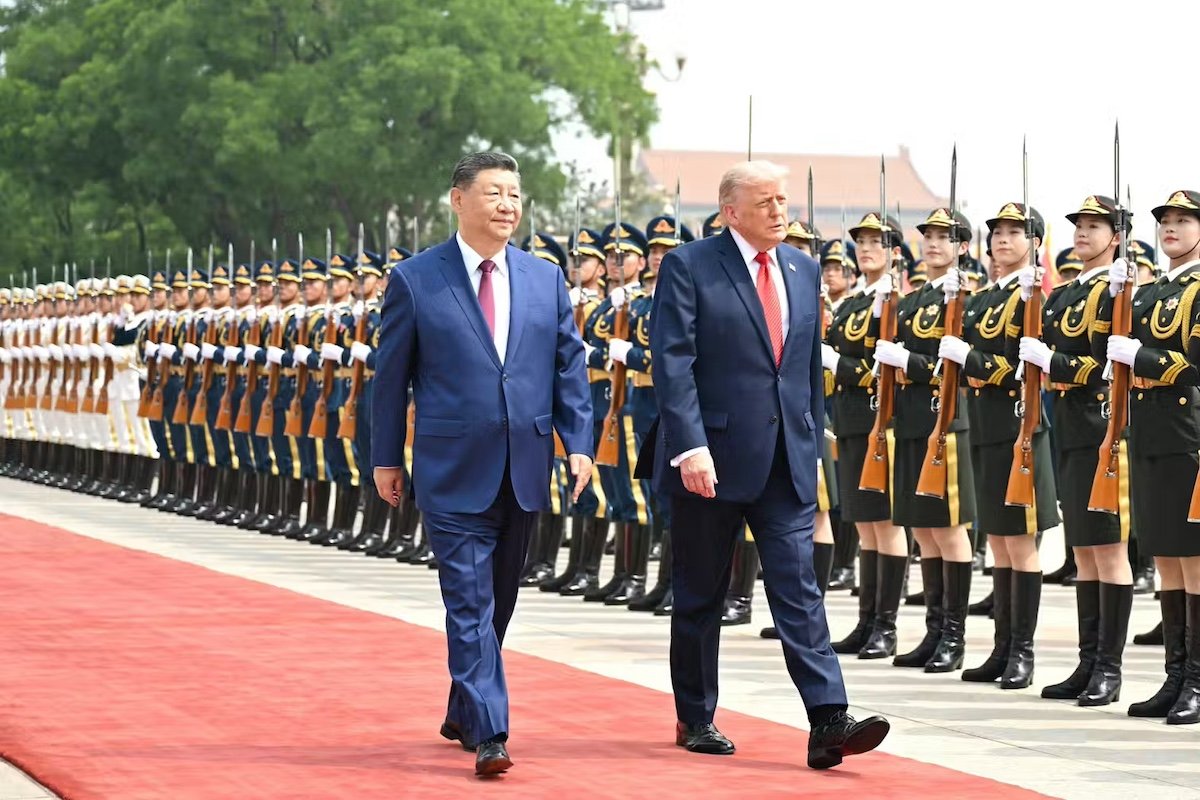
China's economic support for Iran has become a source of friction between Washington and Beijing ahead of Trump's upcoming summit with Chinese leader Xi Jinping. In a May 4 interview with Fox News, U.S. Treasury Secretary Scott Bessent accused China of funding global terrorism through its continued purchases of Iranian oil.
Diplomatic Leverage and Ceasefire Efforts
China's economic leverage over Iran also gives it diplomatic influence. Beijing appears to have an interest in ending the conflict. Rising energy prices are beginning to strain the Chinese economy, and a negotiated settlement would bolster China's efforts to present itself as a responsible global power.
China has already played a significant diplomatic role. While Pakistan has served as a key mediator between the U.S. and Iran, many analysts credit China as the driving force behind the April ceasefire. At that time, Iranian officials said Beijing had urged them to show flexibility and de-escalate tensions.
China seems to have continued pressing Iran to negotiate. Hours after Trump announced the pause of Project Freedom, Iranian Foreign Minister Abbas Araghchi met with his Chinese counterpart, Wang Yi, in Beijing. This was Araghchi's first visit to China since the war began. In a statement after the meeting, China's foreign ministry said: "China considers that a complete cessation of fighting must be achieved without delay … and that continuing to negotiate remains essential." Araghchi added that Iran would protect its "legitimate rights and interests in the negotiations" but would "accept a fair and comprehensive agreement."
Military Dimensions and Hedging
At the same time, there are signs that China is hedging its bets. A protracted U.S. involvement in the Middle East would divert American attention from the Asia-Pacific region, which benefits Beijing. According to U.S. intelligence, China has considered transferring air defense systems to Iran, possibly routing shipments through other countries to mask its involvement. CNN reported in April that the systems in question were shoulder-fired anti-air missiles known as Manpads. China responded by stating it "has never provided weapons to any party to the conflict."
Chinese technical assistance has also enhanced Iran's military capabilities. Since 2021, Iran has been implementing BeiDou, a Chinese satellite navigation system. As an alternative to the U.S.-run Global Positioning System (GPS), BeiDou has helped guide Iranian missile strikes and enabled more effective monitoring of U.S. military deployments.
China's role in the conflict has been multifaceted: economic sustainer, diplomatic broker, and potential military backer. Given its influence over Tehran, Beijing will be a leading factor in whether the war reaches a negotiated end or spills back into open conflict. For more on how China's strategic moves affect regional dynamics, see our analysis of Trump's Leaky Hormuz Blockade Needs Malacca Control to Work and the implications of the Trump-Xi Summit.