This weekend, two Iranian Very Large Crude Carriers—the HUGE and DERYA—slipped through the US Navy's blockade of the Strait of Hormuz and transited Indonesia's Lombok Strait, carrying 3.8 million barrels of crude bound for Asian markets desperate for supply. The successful passage, celebrated by opponents of US President Donald Trump's war on Iran, comes just days after a leaked plan revealed Washington's bid for unlimited overflight access to Indonesian airspace.
The events are drawing Indonesia deeper into the intensifying great-power rivalry between the United States and China, placing enormous strain on President Prabowo Subianto, who has sought to maintain a “multi-aligned” foreign policy between the two giants. The US Navy's interdiction of ships linked to the so-called shadow fleet is now raising fears that the Strait of Malacca—jointly administered by Indonesia, Malaysia, and Singapore—could be next.
Capital Finds the Path of Least Resistance
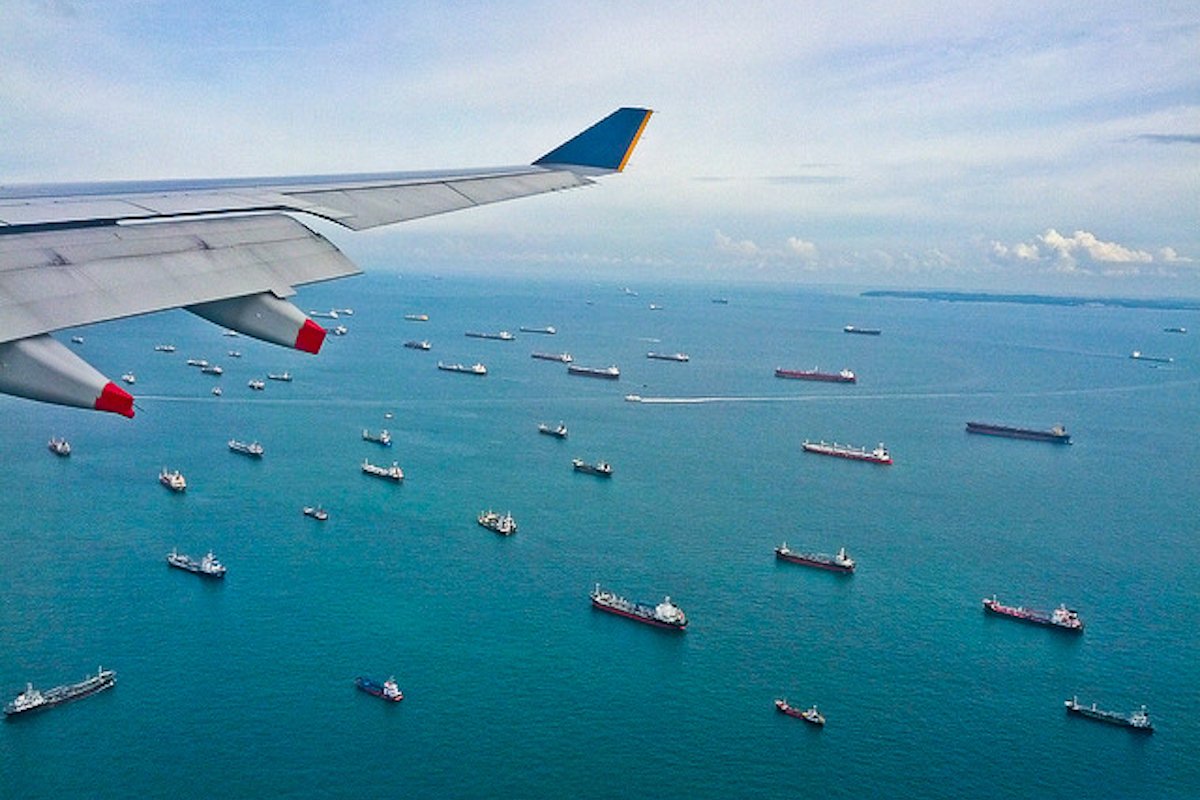
Maritime capital, like the water it floats on, seeks the easiest route when a channel is blocked by military posture or political interference. The Lombok Strait is deeper, wider, and less monitored than the Malacca Strait, adding only a few days of travel time. For VLCCs carrying millions of barrels of crude amid a supply crisis, the premium on their cargo easily offsets any extra costs. The longer Trump maintains his blockade, the more attractive and enduring this sanctions-proof route becomes.
The destination of the HUGE and DERYA—the Riau Archipelago—also reveals the limits of Washington's strategy. Over years of American sanctions, these islands have evolved into a clearinghouse for Iranian crude, coordinating transfers to smaller, re-flagged ships largely destined for China. This market exposes the core contradiction of America's vaunted naval hegemony: it is omnipotent but not omnipresent. Identifying a dozen ships sailing under as many flags is one thing; interdicting them and managing the political fallout is another.
Executing a military operation in congested waters near Indonesia's exclusive economic zone would be diplomatically risky. Even if the US Navy succeeded, the ship-to-ship market would simply relocate to another archipelago—there are thousands to choose from. This is why the Pentagon wants a blank check to operate in Indonesia. Trump needs to salvage his failing blockade by substituting air superiority for local naval control. If President Prabowo grants that access, the resulting airstrikes could trigger a humanitarian and environmental catastrophe.
While Indonesia technically controls its straits, it lacks the naval capacity to police these ship-to-ship markets. America intends to leverage this incapacity in coercive diplomatic negotiations: let the US operate in your airspace, or face the threat of sanctions. China should do everything in its power to support Prabowo in resisting these demands—offering economic guarantees to offset the threat of American sanctions, as well as direct investment in Indonesia's maritime industrial sector to bolster its sea and coast guard.
The navigation of Iranian VLCCs through the Lombok Strait portends a new era of American aggression in Indonesia. Trump has staked enormous political capital on this war, so any market that exposes the failures of his blockade will be treated as an existential threat. China should recognize this shifting paradigm and act decisively to safeguard its energy security. This means not only shielding Indonesia from American coercion but also ratifying the Code of Conduct and establishing a new regional maritime order—even if that means accepting tolls in the Malacca Strait.
For more on the broader energy crisis, see Asia Fractures Into Energy Security Haves and Have-Nots Amid Hormuz Crisis. On the diplomatic front, Trump-Xi Summit May Codify New Rules for US-China Coexistence could reshape the strategic landscape. Meanwhile, Iran Warns Trump's Hormuz Plan Is Pretext for Escalation underscores the risks of further confrontation.