Iranian officials have condemned US President Donald Trump's newly announced plan to assist commercial vessels stranded in the Strait of Hormuz, calling it a deliberate provocation designed to justify further military action. The plan, dubbed Project Freedom, was announced on Trump's Truth Social platform and confirmed by US Central Command (CENTCOM).
An unnamed senior Iranian official told Drop Site that the initiative "is primarily intended to provoke Iran into taking an initial step toward confrontation, thereby creating a pretext for escalation and enabling him to justify further military action in response to an Iranian initiative." The official warned that any commercial vessel attempting to transit through designated restricted routes without prior coordination "will be promptly intercepted by Iranian forces."
"Should US military vessels respond, such actions would be met with an immediate and corresponding response from Iran," the official added. "The US military vessels are far from the corridor area. If commercial vessels attempt to move, they would be engaged well before reaching any American ships. Trump has effectively turned them into bargaining tools in his political game."
Iranian Parliament Warns of Ceasefire Violation
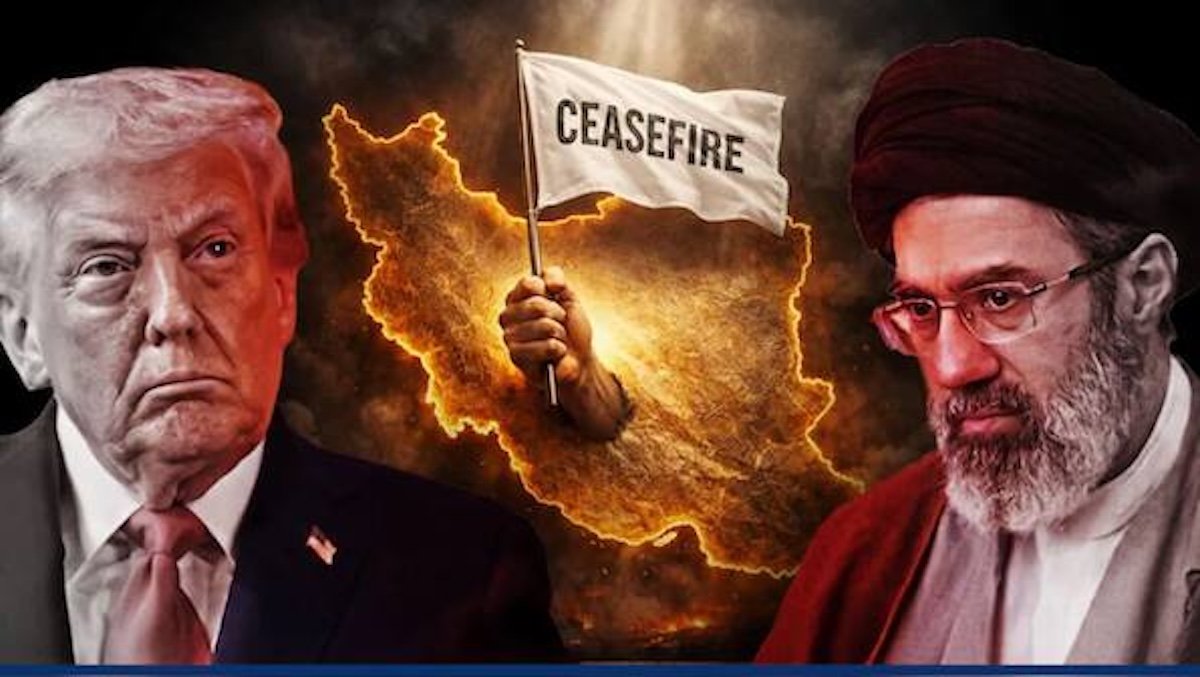
Ebrahim Azizi, who chairs the national security commission of the Iranian Parliament, warned that "any American interference in the new maritime regime of the Strait of Hormuz will be considered a violation of the ceasefire" that took effect in early April. He added that "the Strait of Hormuz and the Persian Gulf would not be managed by Trump's delusional posts."
Trump wrote on his social media platform that his administration has told countries with vessels stranded in the vital strait that "we will guide their Ships safely out of these restricted Waterways, so that they can freely and ably get on with their business." Iran closed the strait—through which roughly 25% of the world's seaborne oil trade and a third of global fertilizer trade flows annually—in response to the US-Israeli war and the Trump administration's naval blockade against Iran.
The US president characterized Project Freedom, set to take effect on Monday, as a "humanitarian gesture on behalf of the United States," but provided few operational details. CENTCOM said in a statement that military support would include "guided-missile destroyers, over 100 land and sea-based aircraft, multi-domain unmanned platforms, and 15,000 servicemembers." The command also announced the Maritime Freedom Construct, a diplomatic and military coordination initiative with international partners.
Brian Finucane, senior adviser to the US Program at the International Crisis Group, wrote that CENTCOM's statement makes the president's plan "sound like information-sharing backed by a vague threat of military action." The plan drew immediate support from US Senator Lindsey Graham (R-SC), a vocal advocate of confrontation with Iran, who said he "totally" agrees with Trump's decision. "I hope this conflict can end diplomatically," Graham said, "but it is now time to regain freedom of navigation and forcefully respond to Iran if they insist on terrorizing the world."
The Strait of Hormuz crisis has significant implications for Asian economies, particularly energy importers like Japan, South Korea, and India. Japanese parties are pushing Prime Minister Takaichi for stronger action on the energy crisis, while India's window for restraint is closing fast. Meanwhile, Thailand is pitching a land bridge as an alternative route amid mounting fears.
No Nuclear Negotiations Yet, Iran Says
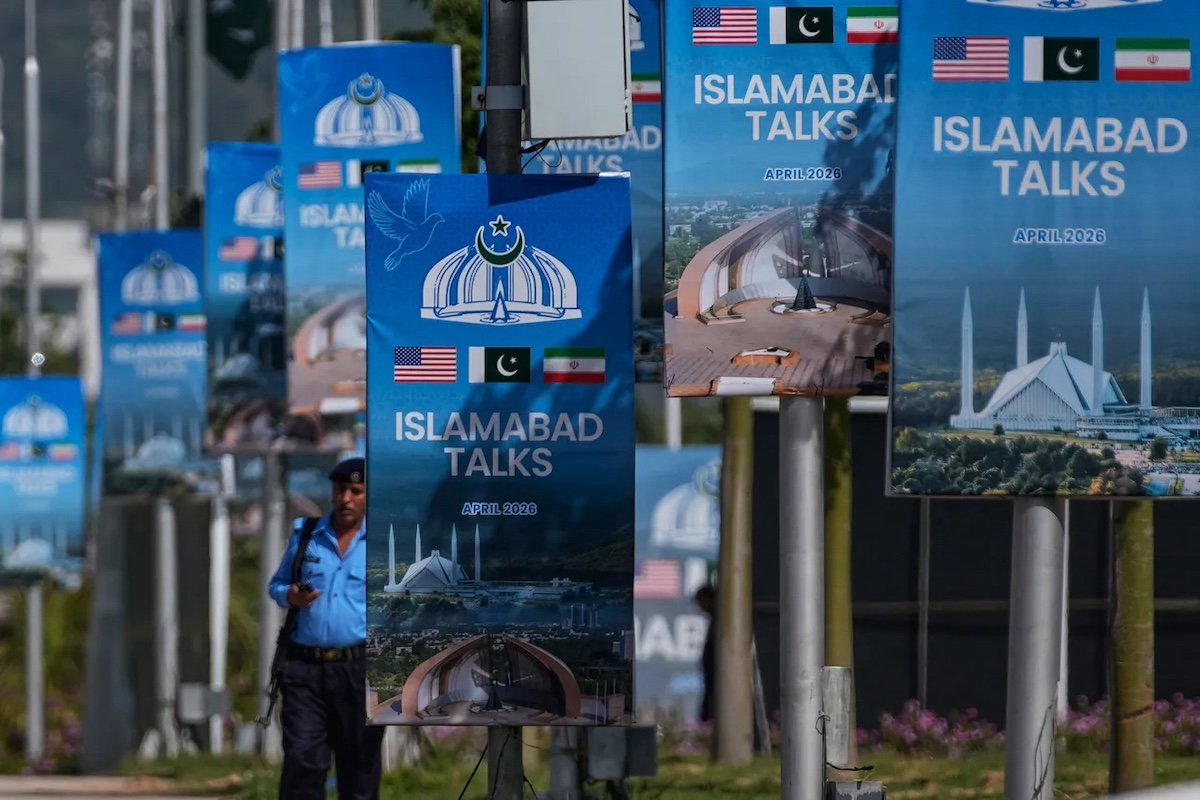
Separately, Iran's Foreign Ministry spokesman Esmaeil Baghaei said on Sunday that Tehran is reviewing the US response to its 14-point plan to end the war, now in its third month. "The Americans have given their answer to Iran's 14-point plan to the Pakistani side, and we are currently reviewing it," Baghaei said in an interview with Iranian television.
Baghaei emphasized that the framework is strictly focused on ending immediate hostilities and contains "absolutely no details regarding the country's nuclear issues," which he suggested could be discussed later. "We are not currently engaged in any negotiations over the nuclear issue, and decisions about the future will be made in due course," he said, despite Trump and US Secretary of Defense Pete Hegseth continuing to claim that preventing Iran from having a nuclear weapons program—which Tehran denies and US intelligence assessments have shown does not exist as described—is central to their war aims.
Trump said in a social media post on Saturday that he would "soon be reviewing the plan that Iran has just sent to us," but added that he "can't imagine that it would be acceptable in that they have not yet paid a big enough price for what they have done to Humanity and the World, over the last 47 years."
Trita Parsi, executive vice president of the Quincy Institute for Responsible Statecraft, assessed that Iran appears to be pursuing a grand bargain—without labeling it as such. "This is not merely a proposal aimed at securing a ceasefire, or even a formal end to the current conflict, but rather an attempt to resolve the broader US-Iran antagonism that has persisted for the past 47 years," Parsi said. The exact details of the 14-point plan remain murky, with different sources offering conflicting accounts.