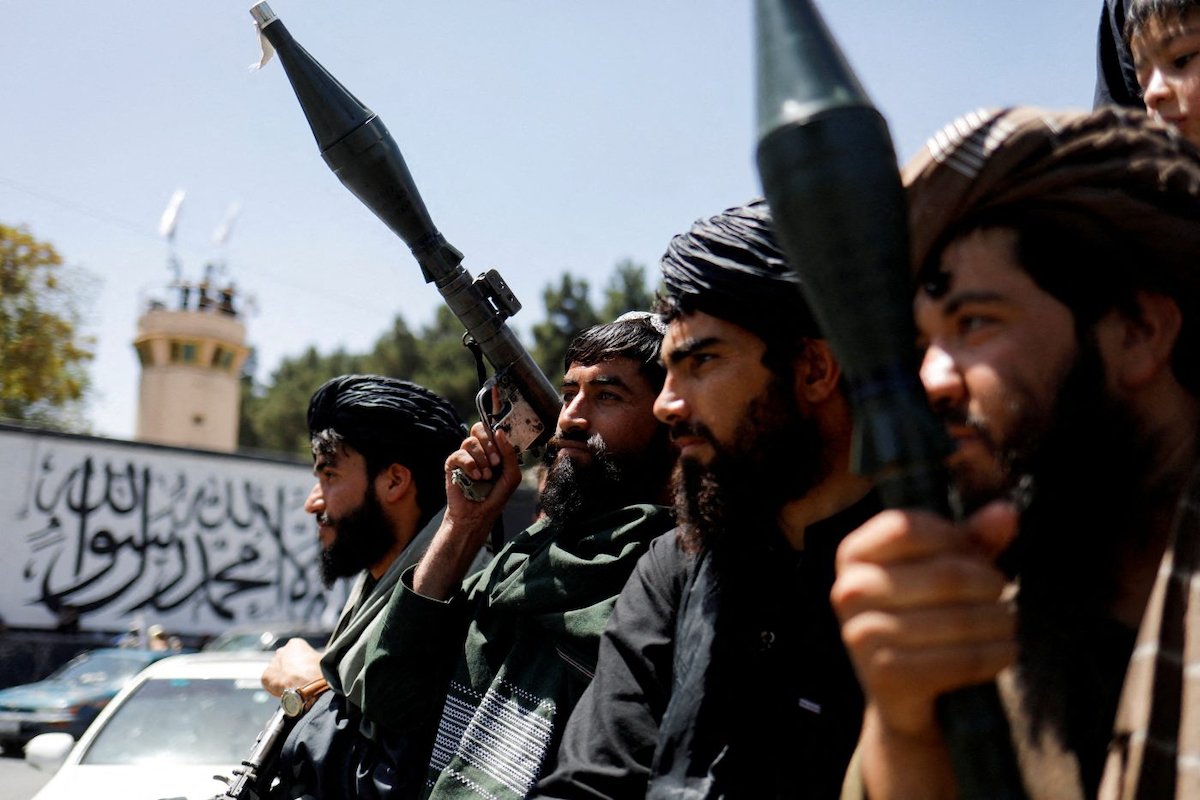
Five years after the Taliban swept back into power in Kabul, the group's dispute with Islamabad over the sanctuaries of Tehreek-e-Taliban Pakistan (TTP) is not merely a border quarrel. It is the clearest evidence yet that the Taliban has mastered the art of controlling Afghan territory without accepting what control is supposed to mean: responsibility for what happens within it.
That distinction—between holding ground and holding sovereignty in the fuller sense that neighboring states expect—is the real story of Afghanistan's first half-decade under Taliban rule. It is more useful than the anniversary clichés now circulating, and it explains why Pakistan, more than any Western capital, has become the country most exposed to the consequences of an unfinished transition next door.
Security Without Responsibility
The Taliban's core claim to legitimacy rests on ending the daily warfare that defined Afghanistan for two decades. Compared with the period before August 2021, when government forces, the Taliban, and a patchwork of armed groups fought continuously across the country, large-scale conflict has genuinely receded. That is not a small achievement, and ordinary Afghans notice it even when foreign observers don't credit it.
But security measured only as an absence of civil war is a low bar, and the Taliban has increasingly been graded against it. Islamic State Khorasan Province continues to mount attacks from Afghan soil. More consequentially for the region, Kabul has allowed—or been unable to prevent—Afghan territory from becoming a staging ground for groups whose targets sit across the border.
Pakistan has spent the better part of two years demanding that the Taliban act against TTP fighters operating from Afghan territory, pointing to a rise in cross-border attacks that has cost Pakistani soldiers and civilians their lives. The Taliban has consistently rejected the premise, insisting it does not support, and cannot be held responsible for, groups it says are not under its command.
Both positions can be sincerely held and still be incompatible. For the Taliban, sovereignty means immunity from outside pressure over how it governs its own territory. For Pakistan and Afghanistan's other neighbors, sovereignty is inseparable from an obligation: a state that controls its territory is expected to prevent that territory from being used against others. The Taliban wants the first without fully accepting the second—and that gap, not any single battlefield, is where the next phase of regional instability is likely to be written.
The Cost of Incomplete Sovereignty
It is worth being blunt about who pays for that gap. It is not the international community in the abstract. It is Pakistani border communities living with the near-daily reality of cross-border attacks, and it is Afghan civilians paying the economic price when donors and neighbors grow warier of engagement. The recent defense pact among Saudi Arabia, Turkey, and Pakistan underscores how regional security dynamics are shifting, but it does little to address the immediate threat from across the Durand Line.
The Taliban's refusal to accept the obligations of governance is not confined to security. Afghanistan remains the only country in the world formally barring girls from secondary and university education—a policy the Taliban defends as consistent with its reading of Islamic law, and one that most of the Muslim world's own religious and educational institutions do not share or endorse.
The costs compound quietly. A country excluding half its population from higher education and most formal employment is not simply making a social choice; it is deliberately shrinking its own future capacity in healthcare, teaching, administration, and business—the very capacity any government needs to convert territorial control into functioning governance. Economic recovery and the rights question are not parallel tracks. They are the same track.
Afghanistan's finances tell a similar story of managing rather than building. The Taliban administration has improved domestic revenue collection and kept basic state functions running, which is a genuine administrative accomplishment given where it started. But millions of Afghans remain dependent on humanitarian assistance, and dependence on aid is not a substitute for an economy capable of employing a population—particularly one whose largest untapped labor pool the state has chosen to exclude.
Engagement With Conditions
None of this argues for isolating Afghanistan further; humanitarian collapse would be no one's victory, least of all Pakistan's, which would absorb any resulting refugee and security fallout first. But engagement without conditions has already been tried in slower motion over the past five years, and it has produced exactly the outcome one would predict: territorial consolidation with no corresponding movement on the obligations that come with it.
A more honest approach ties economic and diplomatic engagement explicitly to the two areas where the Taliban has shown it will act when it judges the incentive real: verifiable steps against groups operating from Afghan soil, and a credible pathway—even a gradual one—back toward girls' education. Aid to Afghan civilians should continue regardless. Recognition and deeper economic integration should not.
Kabul has proven it can hold Kandahar and hold Kabul. What it has not yet proven is that it can hold Afghanistan's border with Pakistan, or its own population's future, to the same standard. Until it does, "sovereignty" will remain something the Taliban claims for itself and withholds from everyone affected by how it governs.