When the United States and Israel launched a coordinated military campaign against Iran in late February 2026, the Islamic Republic appeared doomed. Facing two nuclear-armed powers with overwhelming technological superiority, Tehran’s leadership—including Supreme Leader Ayatollah Ali Khamenei—was decapitated by precision strikes. Its air force, navy, missile launchers, air defenses, and nuclear facilities were systematically destroyed. Yet three months later, Iran has not only survived but forced its adversaries to a ceasefire. How did the weaker side turn the tables?
The answer lies in asymmetric warfare. As Jerusalem-based analyst Daniel Sobelman explains, in such conflicts the weaker actor must tilt the “balance of vulnerability” by preserving critical capabilities and exploiting the enemy’s weaknesses. Iran did exactly that. Despite losing much of its conventional arsenal, it retained enough missiles and drones to strike Israel, US bases in the Gulf, and energy infrastructure in Arab Gulf states. These attacks undermined Washington’s promise to protect its allies and shattered the region’s reputation as a stable energy hub.
Closing the Strait of Hormuz
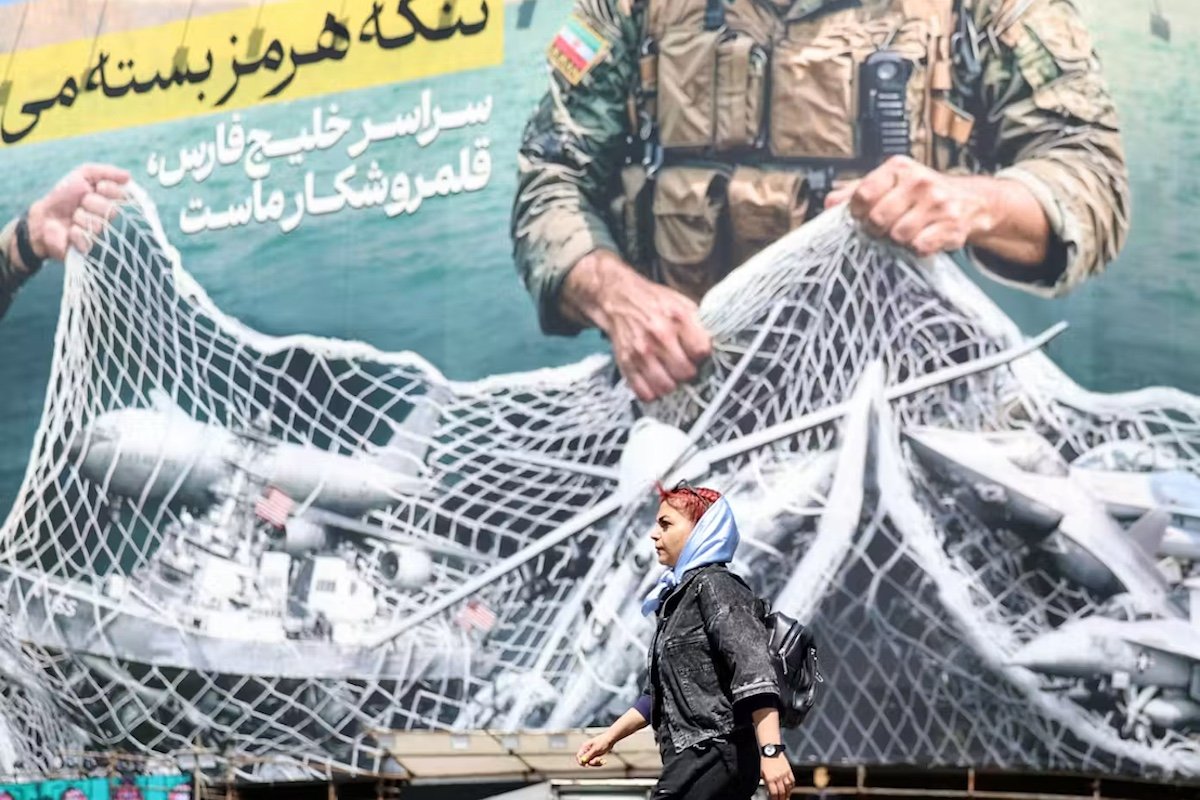
Iran’s most potent move was closing the Strait of Hormuz to commercial shipping. This chokepoint handles about a fifth of global oil and gas supplies. By cutting it off, Tehran triggered a global energy and fertilizer crisis, driving up prices and threatening food security from Tokyo to New Delhi. The move also forced Gulf states to reconsider their alignment with Washington, as support for the US became a liability rather than an asset.
Meanwhile, Iran forced its adversaries to burn through expensive, slow-to-replenish munitions—a vulnerability the Pentagon rarely acknowledges publicly. The US and Israel may have achieved tactical objectives, such as degrading Iran’s nuclear program, but they failed to achieve strategic goals: regime change, capitulation, or the destruction of Iran’s missile and drone stockpiles.
Tehran also escalated threats. It warned of expanded attacks on Israeli and Gulf energy targets, undersea cables in the Strait of Hormuz, and coordination with its Axis of Resistance partners—including the Houthis in Yemen—to disrupt the Bab al-Mandab Strait. This created a multi-front crisis that stretched US and Israeli resources thin.
Politically, Iran forced President Donald Trump to seek an off-ramp. As strategic calculus over diplomacy took hold, Washington realized that continued bombing would not yield surrender. Iran’s resilience also reshaped the regional balance: Gulf states, once seen as havens of stability, now face heightened security risks and economic disruption.
Iran is now rebuilding its Axis of Resistance, announcing a “new security belt” and a “unified resistance front” doctrine, where any attack on one member triggers a coordinated response. This enhances Tehran’s leverage in both military and diplomatic arenas. The regime aims to use this moment of perceived advantage to negotiate from strength, as seen in Trump’s Iran deal where realpolitik prevailed.
For Asia, the implications are profound. Japan and South Korea, heavily dependent on Gulf oil, face energy supply risks. India, which imports much of its crude from the region, must navigate a volatile neighborhood. China, a key Iranian oil buyer, watches as its Belt and Road Initiative faces disruption. The war has also exposed the limits of US military power in the Indo-Pacific: if Washington cannot subdue Iran, its ability to deter China or North Korea may be questioned.
Iran remains militarily vulnerable to further strikes, but it has achieved a strategic victory. By imposing costs, exploiting vulnerabilities, and forcing a ceasefire, Tehran has demonstrated that even a severely weakened state can outmaneuver a superpower—if it understands the balance of vulnerability.