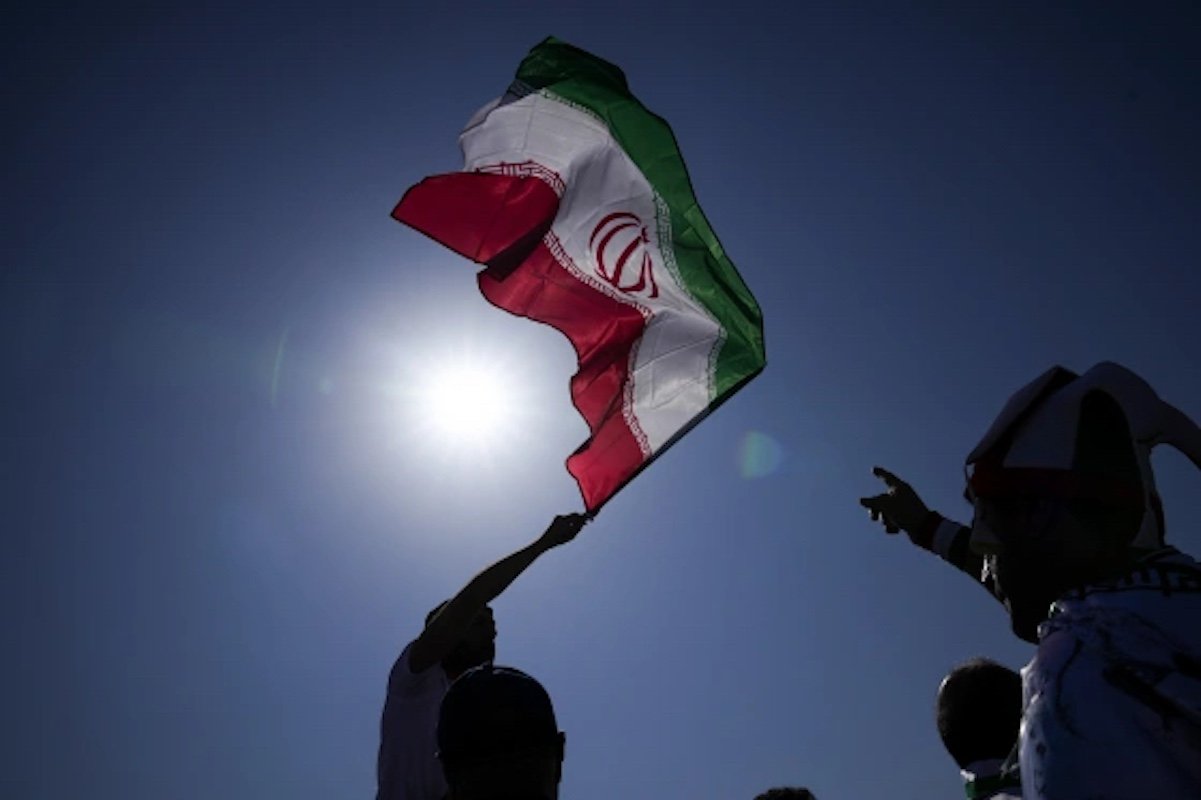
There is a bitter irony in the fact that the United States launched a war in February 2026 to dismantle Iran as a regional power and instead ended up solidifying its hegemony. This is not a paradox but a recurring pattern in American foreign policy in the Middle East over the past three decades.
As analysts have long warned, Washington's military interventions have consistently amplified Iranian influence. The 2003 invasion of Iraq eliminated Tehran's primary regional counterweight and handed the country's Shia majority a state. Now, the 2026 war has produced a similar outcome on a larger scale.
Iran's Strategic Victory
Iran did not defeat the United States militarily. No one claims the Islamic Revolutionary Guard Corps routed the Seventh Fleet. But Iran won in the sense that matters strategically: it preserved the regime, demonstrated the resilience of its military and industrial capacity, neutralized the political will of its adversaries, and emerged with enhanced legitimacy at home and elevated prestige across the region.
The mullahs whom President Donald Trump promised to sweep from power have been replaced by a harder, younger, more capable military leadership under Mojtaba Khamenei and the IRGC. This is not the Iran that signed the JCPOA. This is an Iran that has been to war and won.
Tehran survived the decapitation attempt, reconstituted its missile forces faster than anticipated, and now effectively controls the Strait of Hormuz in a way that gives it leverage over the global economy that no amount of American naval presence can easily negate. As How the Americas Are Reshaping Global Oil Markets Amid the Iran War details, this has forced major shifts in energy supply chains.
A Pattern of Miscalculation
Trump declared "total and complete victory" in early March. By June, the picture had changed entirely. This, too, is a pattern: American leaders have a remarkable talent for declaring victory at the moment the consequences of war are only beginning to accumulate.
The realist tradition in American foreign policy warned that states have national interests rooted in geography, history, and demography that cannot be bombed away. Iran, a civilization of three millennia with a population of 90 million and a strategic location astride the world's most important waterways, is not a problem to be solved by air campaigns. Regime change fantasies tend to produce not compliant successor governments but radicalized, nationalized, and militarized versions of the adversary one sought to eliminate.
The Gulf Arab states understood this. With the partial and characteristically cynical exception of Saudi Arabia, they denied Washington access to their airspace and made their opposition to the war unusually public. They live next door to Iran and cannot afford to mistake a temporarily weakened adversary for a permanently defeated one. They knew that a post-war Iran would still be there in the morning, and that they would have to negotiate the terms of their coexistence with it long after the American aircraft carriers had sailed home.
Intelligence Was Not the Problem
The miscalculations that produced this outcome were not intelligence failures. The intelligence was reasonably accurate about Iran's military capabilities, the robustness of its dispersed missile infrastructure, and the IRGC's preparations for a prolonged campaign. The failure was political and strategic—a failure of judgment at the highest levels, rooted in the same magical thinking that sent American troops into Baghdad in 2003 expecting to be greeted with flowers.
Washington convinced itself that Iran's restraint in 2024 and 2025 was evidence of weakness. It was evidence of patience. Iran's leadership had studied the 2003 Iraq war and the Libyan intervention of 2011. They drew the same conclusion that any serious strategist would draw: that American military operations in the region tend to be swift in their opening phases and increasingly purposeless thereafter, and that the optimal strategy for a targeted adversary is to survive the initial blow, preserve capacity, and wait for American political will to erode.
The consequences now being registered across the Middle East are predictable. American credibility with Gulf partners has been severely damaged—not because America launched a war, but because it launched a war over their explicit objections, inflicted collateral economic damage through Hormuz disruptions and insurance premium explosions, and then failed to achieve its stated objectives. A recent poll found that 61% of Americans now view Trump's Iran war as a mistake, reflecting the erosion of domestic political will that Tehran had counted on.
Iran has emerged from the 2026 war not as a broken state but as the preeminent power in the Persian Gulf. The United States, having set out to destroy its adversary, has instead crowned it.