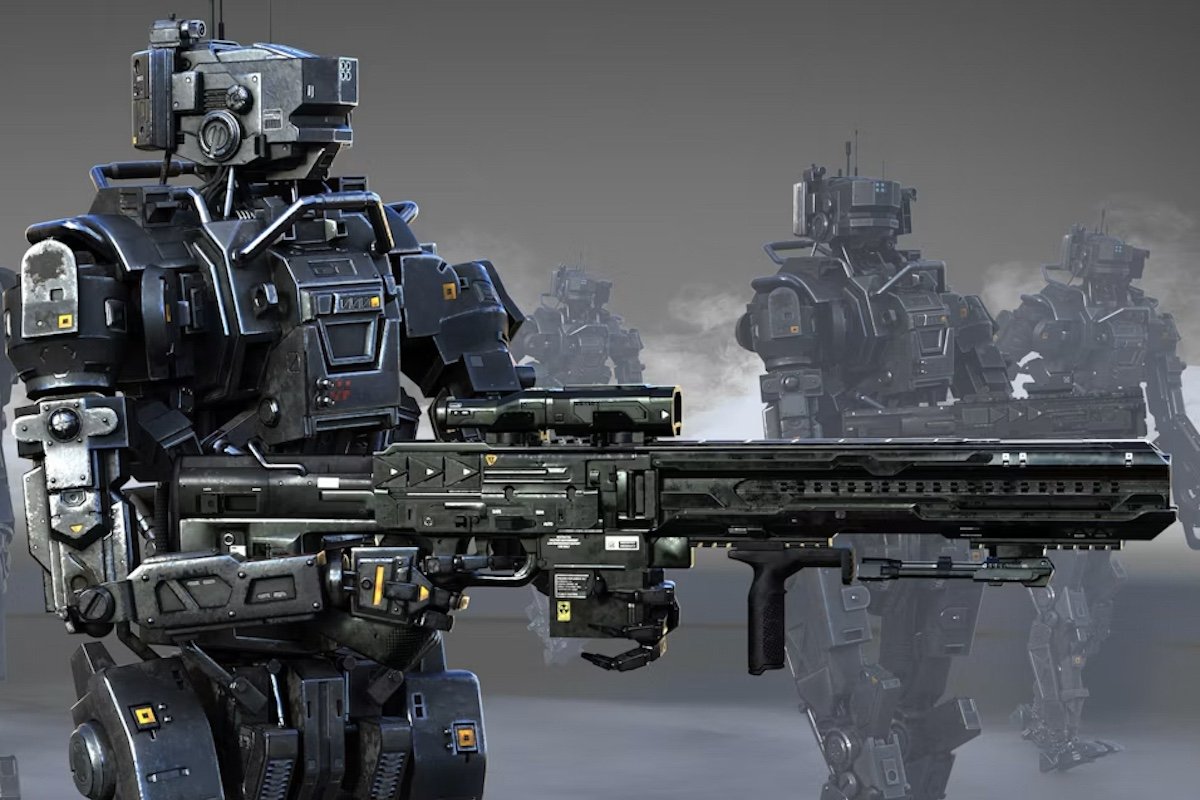
For decades, the idea of humanoid soldiers marching into battle belonged to science fiction. The war in Ukraine has changed that perception, at least for uncrewed ground vehicles (UGVs) that roll on wheels or tracks. Now, a more ambitious question is being asked: could bipedal robots—machines that walk like humans—soon take over frontline roles?
In September 2026, Mykhailo Fedorov, Ukraine's former defense minister and the architect of the country's drone revolution, called for an army of robots on the frontline. He set a bold target: achieve the first confirmed battlefield result using a humanoid robot within six months. Ukraine is not alone in this pursuit. After Beijing hosted the World Humanoid Robot Games—a kind of Olympics for two-legged machines—Reuters reported that China's military is working toward deploying humanoid robots in combat. The United States is also exploring the idea. San Francisco-based Foundation Robotics has secured US$24 million in research contracts to test its Phantom Mk1 humanoid with the US military, and two of those robots have reportedly been undergoing trials in Ukraine.
In an age of rapid AI advances, dismissing the potential of humanoid robots outright would be unwise. But the gap between concept and combat reality remains wide. The Ukrainian battlefield, while not the only indicator of future warfare, offers sobering lessons: cost matters, systems matter more than individual machines, and the most advanced technology is not always the most effective.
Why legs are a liability
Bipedal robots promise the flexibility of an infantry soldier—running, jumping, crawling, climbing, even swimming across obstacles. That adaptability is their key selling point. But human evolution took millions of years to produce a hardy, all-purpose species; mechanical engineering has not yet matched that feat.
There are two fundamental problems with legged robots. First, legs are complicated. Wheels and tracks are mechanically simpler, which makes them more resistant to damage and breakdown. A wheeled or tracked vehicle can also sit lower to the ground, reducing its visibility and exposure to enemy fire—both critical for survivability, as demonstrated in Ukraine. Simplicity also translates to lower production costs. A military that chooses a small number of legged robots may find itself overwhelmed by an opponent fielding large numbers of cheaper, wheeled units.
Second, there is the range problem. Anyone who drives an electric vehicle knows the anxiety of a limited battery. A humanoid robot on patrol would face the same issue, and the open battlefield is not known for its abundance of charging stations. In controlled environments, such as guarding a static facility, a robot could walk a prepared path and recharge regularly. But that task could be accomplished with simpler, proven methods—sensors, obstacles, and remote-controlled weapons—undermining the case for bipedal sentries.
Control is another hurdle. Despite advances in autonomy, UGVs on the frontline still require live links to human operators. That means choosing between radio, which can be jammed or blocked by terrain and weather, or fiber optic cables, which offer high-fidelity data but are vulnerable to being severed by blasts or shrapnel. For ground robots, the trade-offs are even more pronounced than for aerial drones.
None of these obstacles are insurmountable, but they are significant. Engineering solutions will add development cost, mechanical complexity, and unit price. The result is that humanoid robots, while captivating, are unlikely to replace soldiers in the near term.
Meanwhile, wheeled and tracked UGVs are already proving their worth in Ukraine. They evacuate casualties, perform combat engineering, and in limited cases, engage in offensive action. Drones deliver rations, weapons, and ammunition to frontline troops. Ukraine even marked their contribution with an Independence Day robot parade through the center of Kyiv.
As Ukraine's ground robots take over frontline tasks, the war is entering a new robotic age. But the future of military robotics may not be humanoid. As main battle tanks face an uncertain future, the same could be said for the human form on the battlefield. The Pentagon and other militaries are investing heavily in autonomy, but the most effective systems are often those that are simple, cheap, and plentiful.
China's push into humanoid robotics, as seen in Beijing's games and its military research, is part of a broader trend. China's humanoid robots sprint ahead, raising questions about their military applications. Yet, as with any technology, the gap between demonstration and deployment is vast. The same applies to Japan's quiet efforts to build battlefield medicine capacity, which focus on practical, near-term solutions rather than futuristic machines.
In the end, the humanoid robot may find its niche not in combat but in logistics and support roles, where its ability to navigate human environments is an asset. China's humanoid robots find real work in aging Asia's logistics, suggesting that the first widespread use of bipedal machines will be in warehouses and hospitals, not trenches. For now, the soldier's job remains safe—at least from robots that walk like us.