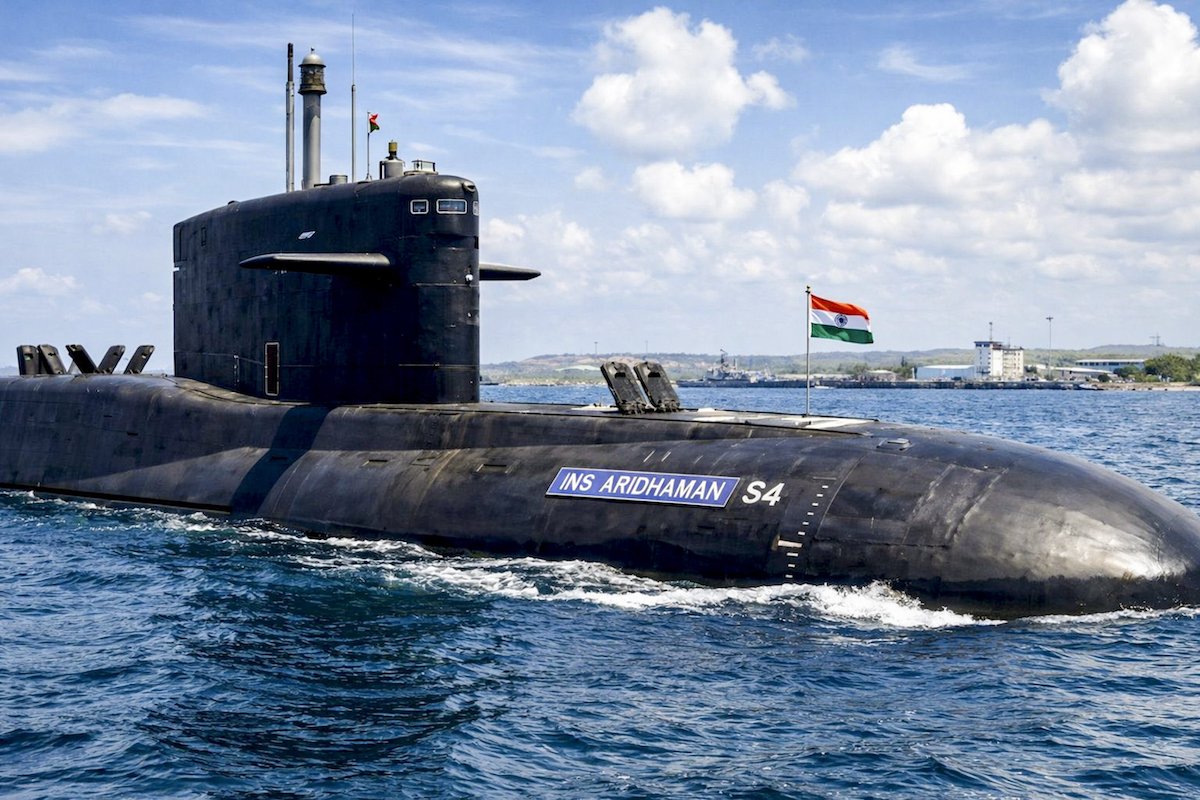
The Indian Navy has formally commissioned the INS Aridhaman, a nuclear-powered ballistic missile submarine (SSBN), signaling a substantive evolution in India's strategic maritime capabilities. This vessel represents more than a new asset; it embodies the maturation of India's sea-based nuclear deterrent, granting it greater credibility and resilience within the complex security architecture of the Indo-Pacific.
A Strategic Progression in Undersea Capability
INS Aridhaman is India's third SSBN, following the INS Arihant, commissioned in 2016, and the INS Arighat, which entered service earlier this year. This progression moves India's nuclear submarine force beyond a symbolic demonstration of technological prowess toward an institutionalized and operational deterrent posture. The development is a cornerstone of India's nuclear triad—the combination of land-based missiles, aircraft-delivered weapons, and submarine-launched systems.
The philosophy underpinning this build-up remains India's declared No First Use (NFU) policy, a pledge to refrain from initiating a nuclear strike while promising assured retaliation if attacked. The survivability of second-strike forces is therefore paramount. Ballistic missile submarines are considered the most survivable leg of the triad, as they can remain concealed in the vastness of the ocean, making detection and pre-emptive destruction exceptionally difficult for an adversary.
This shift also reflects a broader strategic reorientation under Prime Minister Narendra Modi's government, where maritime power has been elevated within India's national security calculus. The Navy is no longer viewed solely as a force for sea control or maritime diplomacy in the Indian Ocean. With the commissioning of these SSBNs, it has become a principal custodian of India's most secure nuclear retaliatory capability.
Enhanced Capabilities and Strategic Calculus
INS Aridhaman is reported to be larger than its predecessors in the Arihant class and is designed to carry longer-range submarine-launched ballistic missiles (SLBMs), such as the K-4. This extended range allows Indian SSBNs to patrol in more secure waters farther from potential threats while maintaining the ability to deliver a retaliatory strike. A submarine that can remain hidden while holding targets at risk is a fundamentally different strategic asset than visible surface fleets.
The strategic context for this advancement is clear. As the People's Liberation Army Navy (PLAN) increases its deployments, seeks port access, and maintains a steady presence in the Indian Ocean region, New Delhi's perceived need for a credible and survivable undersea deterrent grows more acute. INS Aridhaman strengthens India's hand not through overt display, but through the uncertainty it creates for any potential aggressor. Its value lies in ensuring that no adversary can be confident of neutralizing India's nuclear forces in a first strike.
A credible second-strike capability is the bedrock of stable nuclear deterrence. By moving toward a force of multiple SSBNs, India is building the foundation for a continuous at-sea deterrent. This requires a sufficient pool of vessels to allow for rotational patrols, maintenance, and crew training without creating gaps in coverage. The third boat is a significant step toward that sustainable posture, reducing operational strain and granting strategic planners greater flexibility.
This development occurs alongside other regional shifts in naval nuclear postures. For instance, North Korea continues to test its own sea-based deterrent systems, highlighting how submarine capabilities are viewed as critical by various actors in Asia. Furthermore, the integration of advanced technologies into military systems, as seen in the broader trend of AI acceleration in South Asian militaries, adds another layer of complexity to regional security dynamics.
The commissioning of INS Aridhaman ultimately signifies that India's SSBN program has transitioned from a one-off technological milestone to a durable component of national power. It advances India's deterrence capabilities in an increasingly militarized Indo-Pacific, positioning the Indian Navy at the heart of the nation's strategic defense. The most consequential shifts in the regional balance of power are often those that remain beneath the surface, and with this new submarine, India has made one such pivotal move.



