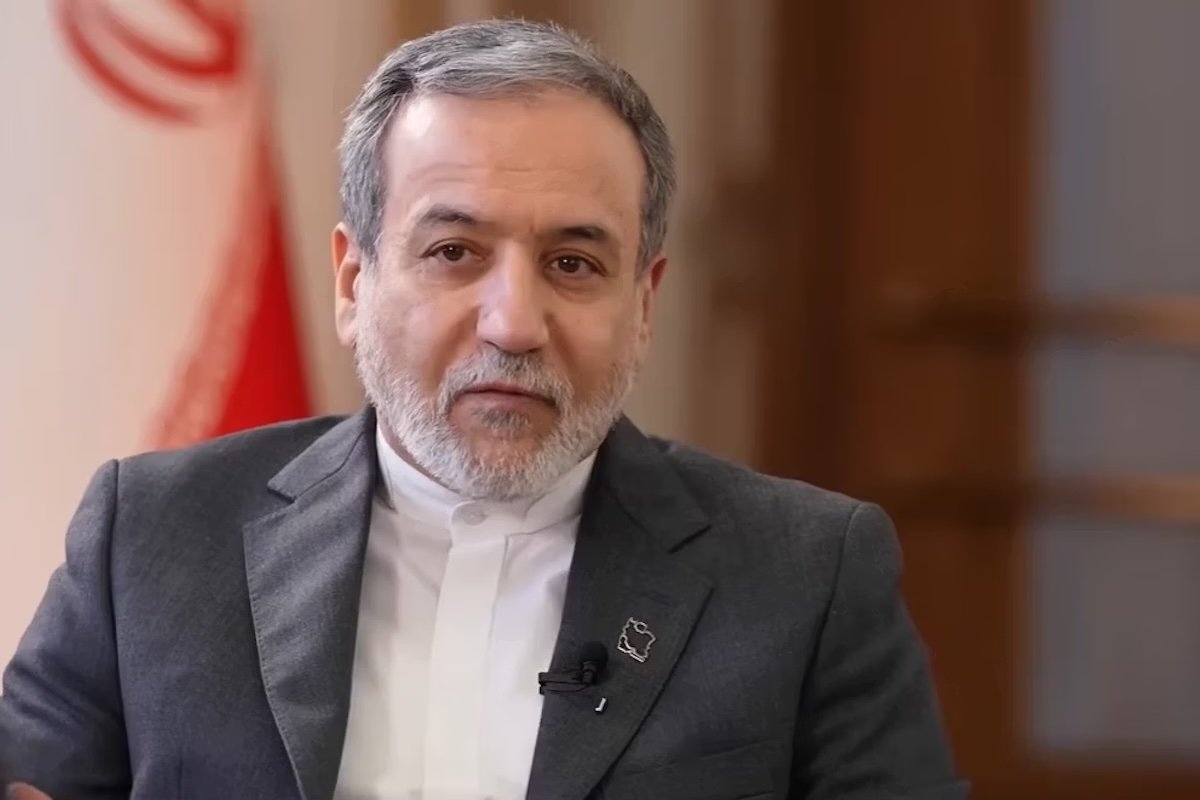
Iranian Foreign Minister Abbas Araghchi on Tuesday delivered a clear warning to Washington: the US-Iran peace deal requires an end to all hostilities, including Israel's occupation of southern Lebanon. Speaking after Israeli leaders declared they would not withdraw, Araghchi said the memorandum of understanding signed virtually between the United States and Iran mandates that “war will be ending everywhere, on all fronts, including Lebanon.”
“Due to the relations between war in Lebanon and the aggression of Israel on south Lebanon and the war on Iran, these two fronts – Iran and Lebanon – are quite connected to each other,” Araghchi explained. “End of the war will be the end of the occupation. And without retreating and withdrawing from the Lebanese occupied territories, then there will not be an end to the war.”
The statement from Tehran came a day after Israeli Prime Minister Benjamin Netanyahu asserted that Israeli forces would remain in Lebanon “for as long as necessary,” regardless of any agreement between Washington and Tehran. Netanyahu referred to a roughly 230-square-mile occupation zone where Israel has forcibly displaced over 1 million Lebanese civilians and systematically demolished dozens of villages. “We established deep security zones around the state of Israel,” he said. “I want to make it clear: We will remain in these security zones … to protect our country.”
Israeli Hardliners Reject US Pressure
Other Israeli officials were even more blunt. Security Minister Itamar Ben-Gvir stated flatly that “Trump’s agreement does not bind us. Israel is not subordinate to the United States. We are an independent and sovereign country.” Defense Minister Israel Katz said the occupation would continue “without any time limit” while villages would be “cleared of local residents,” adding that there would be no withdrawal “despite all the existing pressures” from the US.
President Donald Trump, who has often deferred to Israel's preferences and sided with Netanyahu as he derailed previous ceasefire talks, struck a notably different tone at the Group of Seven summit in France on Tuesday. Trump said he “didn’t like” the Israeli attack on the southern suburbs of Beirut on Sunday, where a five-story apartment building was bombed, killing three people. “I saw that attack. I saw where that bomb went,” he said, describing it as “vicious” and “too much.”
“You don’t need to knock down an apartment every time you’re looking for somebody,” Trump continued, making perhaps his most forceful criticism yet of Israel's attacks on civilian infrastructure. He added that “if Israel can’t do the job without killing everyone else, Syria should do the job” of fighting Hezbollah. “Without the United States, there would be no Israel,” he said. “Without me, there would be no Israel, because no other president was willing to do what I did.”
Referring to Netanyahu, Trump said, “I’ve had a great relationship with Bibi, but now Bibi has to be more responsible with respect to Lebanon.” He warned that the ongoing invasion “throws a negative light on the big deal, and that’s the deal with Iran.”
Commentators noted that this is hardly the first time a US president has vented anger at Netanyahu, only for nothing to change materially. Kenneth Roth, former executive director of Human Rights Watch, questioned, “The question is: why does Trump facilitate this obstruction by continuing to provide Israel with arms and military aid?”
One analyst described Trump's approach as “madly erratic,” saying he can “go from sounding like the most hawkish, pro-Israel president one day, to the most dovish, anti-Israel president the next day. Which is why listening to Trump is pointless; what matters is paying attention to what he does.”
The standoff has broader implications for the Indo-Pacific region, as the US-Iran deal affects energy markets and geopolitical alignments. For more on this, see our analysis on how the peace deal shakes China's energy calculus. Meanwhile, Israel's military expansion in Lebanon echoes patterns seen in Gaza, as discussed in our report on the Gaza peace plan. The historical context of Israel-Lebanon tensions is explored in this piece on the mirage of rapprochement.