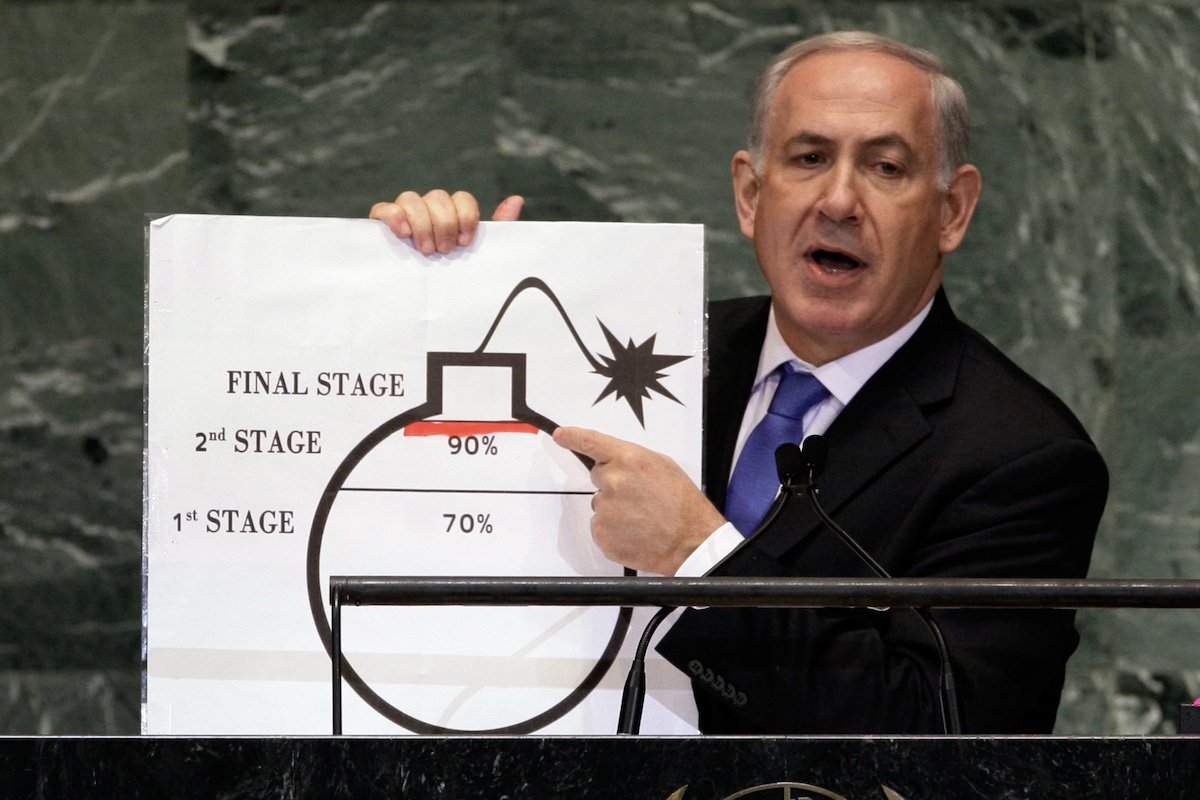
While international focus often centers on Iran's nuclear activities, a more established and tangible nuclear force has shaped the Middle East's security landscape for over sixty years: Israel's undeclared arsenal. This program operates outside the frameworks of global non-proliferation treaties, sustained by a policy of deliberate ambiguity and great-power protection.
The Architecture of Opacity
Israel's nuclear capability is centered on the Dimona complex in the Negev desert, a facility that has never been subject to International Atomic Energy Agency inspections. The state maintains this position through amimut, or nuclear opacity, a doctrine allowing it to benefit from nuclear deterrence while avoiding the formal responsibilities and scrutiny faced by signatories to the Nuclear Non-Proliferation Treaty (NPT).
This status was effectively legitimized in 1969 by a secret understanding between US President Richard Nixon and Israeli Prime Minister Golda Meir. Washington agreed to cease pressuring Israel to sign the NPT or open Dimona to inspections, provided Israel refrained from overt testing. This arrangement transformed the US into a diplomatic shield for an undeclared nuclear program—a stark contrast to the posture of President John F. Kennedy, who had directly challenged Israeli leaders on the issue.
A Regional Doctrine of Preemption
To preserve its regional nuclear monopoly, Israel has operationalized the Begin Doctrine, asserting a right to prevent any Middle Eastern state from acquiring weapons of mass destruction. This has translated into military actions against neighboring states' nuclear facilities, beginning with the 1981 destruction of Iraq's Osirak reactor in Operation Opera and later against a suspected Syrian site in 2007.
This posture creates a profound asymmetry. States like Iran, which are NPT signatories, face intense international pressure and economic sanctions for procedural deviations. Meanwhile, Israel, operating outside the treaty, maintains an estimated stockpile of 90 to 400 warheads and continues to receive advanced military technology from Western allies. This systemic inequity, described by many diplomats as a "compliance trap," undermines the legitimacy of the global non-proliferation regime.
This systemic inequity fuels instability, signaling that the most effective path to avoiding international pressure is not compliance but power.
The enduring focus on potential Iranian capabilities, contrasted with the silence on Israel's existing arsenal, represents a clear double standard. It has also stymied repeated initiatives, often led by Egypt, to establish a Middle Eastern zone free of weapons of mass destruction, as such proposals are routinely blocked by the US and its allies.
Indo-Pacific Repercussions
The stability of the Middle East is of direct consequence to Asia. The region is a critical energy supplier, and any conflict involving nuclear posturing or preemptive strikes disrupts global trade routes and energy security. Nations across the Indo-Pacific, from Japan and South Korea to India and China, are forced to reassess their own energy security and strategic calculations in the shadow of this unresolved nuclear dilemma.
Furthermore, the precedent set by Israel's exceptional status challenges the foundational norms of the NPT. For Asian nations observing this dynamic, it raises questions about the consistency and fairness of the international security architecture. The situation underscores how great-power politics can create enduring exemptions to global rules, a reality not lost on capitals from Tokyo to New Delhi.
As tensions persist, the role of major Asian powers in diplomatic efforts becomes more pronounced. China's position is increasingly seen as pivotal to any revival of the Iran nuclear deal, a agreement whose fate is inextricably linked to the unaddressed reality of Israel's nuclear weapons. The regional security architecture remains defined not by a future threat, but by a longstanding, unacknowledged one.



